Best Credit Cards for Grocery Spending (2020)
Make sure to read the tips and general advice in our Optimize Rewards by Using Different Cards for Different Purchases guide.

Almost everyone spends a significant amount of money on groceries, making it one of the top categories for bonus rewards. Be aware that the “supermarket” / “grocery” category usually doesn’t include groceries that are bought at general discount stores like Wal-Mart and Target (or at warehouse clubs like Costco). You’ll usually only get credit for purchases at standalone grocery stores.
Because the opportunity to travel has dropped due to the Covid pandemic, several credit card companies have made temporary changes to their travel-oriented credit cards. Many of these cards have boosted the rewards you earn at grocery stores.
- Most Chase cards earn bonus points on the first $1,500 per month you spend in May and June.
- The Sapphire Reserve earns 5x Ultimate Rewards points (8.5%).
- The Sapphire Preferred earns 3x Ultimate Rewards points (5.1%).
- The Hyatt card earns 3x Hyatt points (5.1%). You'll also receive 3 elite night credits for each $5,000 in spending during May and June, instead of 2. The same bonus points are available for the older Hyatt card, but it only earns 2 elite night credits during that time.
- The personal versions of the United, Southwest cards, and Avios cards earn 3x airline miles.
- The IHG cards (both Premier and Select) earn 3x IHG points (1.5%). But this is still a terrible reward rate.
- The Chase Bonvoy cards earn 6x Marriott points (4.2%) on $5,000 of total grocery store spending during May, June, and July.
- The Amex personal Bonvoy cards earn the same 6x Marriott points, but on a total of $7,500 of grocery spending during the same months.
- The Hilton Surpass and Aspire cards earn 12x Hilton points (5.4%) on grocery spending during May, June, and July. This is a great way to make progress towards the Hilton Surpass card's free night certificate. Bonus points are uncapped, but point transfers are currently "on hold" for people who have done a lot of spending.
- The personal versions of the Delta cards earn 4x Delta miles on grocery spending during May, June and July.
- The Freedom card normally earns 5x Ultimate Reward points up to $1,500 per quarter of spending in a rotating set of categories. The 2nd quarter categories happens to include grocery store spending.
- Ultimate Reward points can be used to offset grocery purchases (and restaurant and home improvement purchases) made with the Sapphire cards. With the Sapphire Reserve, points are worth 1.5 cents each. With the Sapphire Preferred, points are worth 1.25 cents. If you want to easily cash out your Ultimate Reward points, you might want to use these cards for some of your grocery spending. For example, you can use 40,000 points to "erase" $600 worth of charges on your Sapphire Reserve card.
- Grocery store charges count towards the Citi Prestige Card's $250 travel credit. But if you still have unused credit on your card, you are probably better off making restaurant purchases, which earn 5x ThankYou points per dollar and focusing your grocery spending on other cards.
Jump to
Jump to:
Card suggestions
|
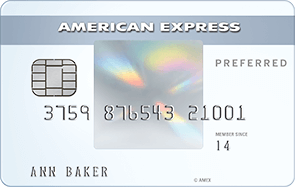
The Amex EveryDay Preferred Card earns the highest reward rate on groceries and gas—but comes with some added complexity. During any month that you make at least 30 purchases with this card, you’ll get a 50% points bonus, giving you 4.5x Membership Rewards points on grocery purchases, valued at 6.75 cents per dollar, and 3x points for gas, valued at 4.5 cents per dollar. This is higher than you get from any other card. While there are some tricks to make sure that you always make enough purchases to get the bonus rewards, it is something extra to worry about and can take some extra time and effort. $95 annual fee. Tips to Generate More than 30 Charges per Month | |
|
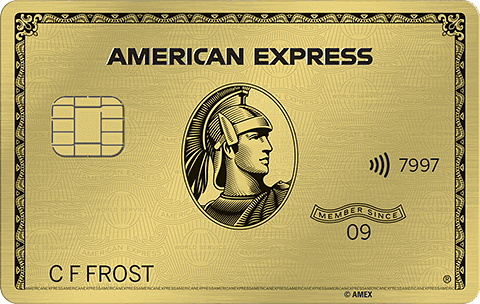
If you spend a lot at grocery stores, the Amex Gold Card is the best card for grocery spending. It earns 4x Membership Rewards, valued at 6 cents per dollar. But unlike the Everyday Preferred and Blue Preferred cards, bonus rewards are capped at $25,000 worth of spending instead of $6,000. If you are willing to put in the extra effort, you can augment your natural grocery store spending by buying gift cards at the grocery store and using them at other businesses—earning up to 100,000 Membership Rewards points per year. The card has a hefty $250 annual fee, but comes with a $100 airline incidental credit, a $10/month credit at a number of different restaurants, and a 4x Membership Rewards bonus reward rate on restaurant spending. | |
|
If you like using your points for frequent flyer tickets and aren't willing and able to get business credit cards, the Citi Double Cash combo is a great choice. The Citi Premier Card gives you 3x points on airfare, hotels, restaurants, groceries, and gas. You'd use the Citi Double Cash Card for everything else. With Amex, you would need to pay more than double the annual fees to earn good rewards on all these categories. | |
|
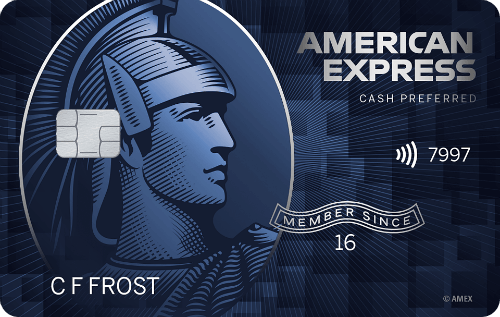
If you don't want to build up Membership Rewards points, the Blue Cash Preferred cards is a great option. It earns 6% cash back on groceries and streaming services (and 3% cash back on gas and transit). This isn’t as high as the EveryDay Preferred Card or the Gold Card, but you don’t have to worry about meeting the minimum transaction requirement, you get the rewards as cash, and you don't have to deal with frequent flyer programs to get good value from your points. $95 annual fee. | |
|
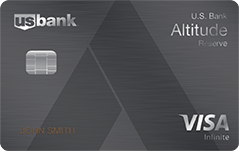
If you can use a "mobile wallet" at your grocery store, the Altitude Reserve is a great option. While its 4.5 cents per dollar is a little lower than you can get from other cards, you can get bonus rewards at many other businesses. Once you factor in the travel credit, its annual fee is lower than the best options and it comes with a nice set of additional features. | |
|
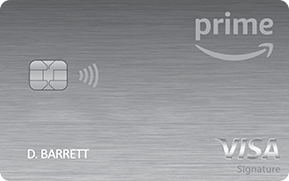
If you belong to Amazon Prime and shop at Whole Foods, you should consider the Amazon Prime Visa. It earns 5% back at Whole Foods and has no annual fee. It can be a good complement to another grocery store card or even a good alternative to getting any of these other cards. The card also offers the highest reward rate at Amazon. |

Quick comparison
The point values used in the table below are estimates based on a typical traveler. They may need to be adjusted for your individual preferences and travel patterns. For example, if you highly value premium cabin award tickets and are willing and able to build up large point balances, Ultimate Rewards, Membership Rewards, and ThankYou points are much more valuable and you should earn as many of those types of points as you can. If you have trouble finding good frequent flyer redemptions, you might want to focus on cards that earn points that can be used more like cash. Deciding What Type of Points to Earn
The annual costs in the table below reflect the annual fee minus any travel credits. For travel credits that are harder to redeem, we value the credit at 50% of the maximum credit amount. We value the Amex Airlines Incidental Credit at only 25% of the maximum credit amount. If you are willing to do the work or are otherwise able to get full value from these credits, the effective annual fee can be considerably lower.
Some cards waive the annual fee for the first year. But the table focuses on what you would pay in the longer term.
Grocery store rewards are often capped, partially to reduce the ability for people to use grocery store gift card tricks to earn extremely large amounts of rewards and partially to put a limit on the amount the credit card company needs to pay out each year. If you naturally spend more than the cap, you may want to get multiple of these cards.
| Card | Value | Earns | Cap | Annual Cost |
|---|---|---|---|---|
| Amex Everyday Preferred (with 30+ transactions per month) |
6.75% | 4.5x MR | $6,000 | $95 |
| Amex Gold | 6% | 4x MR | $25,000 | $30-250 |
| Amex Blue Cash Preferred | 6% | 6% | $6,000 | $95 |
| Amazon (at Whole Foods only) |
5% | 5% | - | $0 |
| Amex Everyday Preferred (without the transaction bonus) |
4.5% | 3x MR | $6,000 | $95 |
| US Bank Altitude Reserve (on mobile wallet purchases only*) |
4.5% | 3x | - | $75 |
| Citi Premier | 4.5% | 3x TY | - | $95 |
| Amex Everyday (with 20+ transactions per month) |
3.6% | 2.4x MR | $6,000 | $0 |
| BOA Cash Rewards | 2-3.5%† | 2-3.5x | $10,000 | $0 |
| Amex Everyday (without the transaction bonus) |
3% | 2x MR | $6,000 | $0 |
| Amex Blue Cash | 3% | 3% | $6,000 | $0 |
| AARP | 3% | 3% | - | $0 |
| Consumers Credit Union Cash Rebate | 3% | 3% | $6,000 | $0 |
* If your normal grocery store(s) accept mobile wallets, you’re set. If you have SamsungPay, you should be able to use it any store that has a swipe machine.
† Cardholders with more than $20,000 in combined balances at BOA / Merrill Lynch earn bonus rewards, maxing out at 3.5 cents on grocery store purchases.