Get Your Global Entry or TSA Precheck Membership for Free (2020)
Credit Card Reference, Airfare Booking Strategies

Even if you only travel a few times a year, you'll be grateful to have access to TSA PreCheck and Global Entry. TSA PreCheck significantly speeds up the security screening process at most US airports. Global Entry lets you skip the regular immigration lines when you return to the US.
For most travelers, membership is easily worth the fees. But thanks to travel credit cards, you can get the benefits of Global Entry and TSA PreCheck for free.
Many travel credit cards, including some of the cards you are likely to want anyway, pay for the cost of your Global Entry or TSA PreCheck fees. If you have one of these cards, it doesn't cost you anything to get a fast pass through security and immigration.
Jump to
Jump to:
Trusted traveler programs
There are four different trusted traveler programs run by the government and an additional privately-run program.
- TSA PreCheck. If you have TSA PreCheck, you can access special (usually shorter) security screening lines at over 200 US airports. Once you get to the screening area, you don't need to take off your shoes and belt or remove your laptop and 3-1-1 liquids from your bag. According to the TSA, 95% of PreCheck passengers wait less than 5 minutes to pass through security. Once you complete your application, you'll get a "Known Traveler Number" that you can attach to your airline reservations to activate your benefits. $85 per person for 5 years. Children under 13 don't need their own membership. TSA PreCheck website.
- Global Entry. Global Entry can let you skip the regular immigration lines when you return to the country. At most airports with international flights, you can scan your passport and fingerprints at a kiosk rather than waiting in potentially long lines to talk to an immigration agent. Global Entry also lets you special Nexus and Fast lanes when you enter the US at many land border crossings (but not when you are entering Canada and Mexico). In addition, there is a growing number of international airports where you can use Global Access to bypass their normal immigration lines. Global Entry website. The fee for Global Entry is $100 per person for 5 years, but it includes access to TSA PreCheck. Since you are only paying $15 more for the extra Global Entry privileges, we would only recommend getting only PreCheck if you need to short circuit the wait to finish your Global Entry interview—even if you were paying out-of-pocket.
- NEXUS. NEXUS is a joint program operated by the US and Canada. It speeds up both airport and land border crossings between the two countries. You'll get access to special Nexus lanes in both direction at most land border crossings and can use the Canadian-equivalent to the Global Entry kiosks at Canadian airports. To be approved, you'll need to be interviewed by Canadian immigration at a one of a limited number of locations. Nexus has a fee of $50 for 5 years and includes Global Entry and TSA PreCheck. There is no charge for children under 18. If you apply by mail, you'll only pay $50 CAD, instead of $50 USD. NEXUS website.
- SENTRI. SENTRI allows you to use special lanes when entering the US from Mexico. You'll also get access to Global Entry and TSA PreCheck. It costs $122.50 for 5 years. Children under 18 are free with two adult applications. SENTRI website.
Do you need one of these cards?
For most people, signing up for credit cards, just to receive travel benefits, good reward earning rates, or lucrative signup bonuses, isn't an irresponsible thing to do. It won't kill your credit rating—it just might improve it. But, if you have a problem with credit, or you aren't organized enough to avoid unwanted credit card fees, you'll need to stick to our other strategies for discounted travel. For more information, see our Credit Cards 101 guide.
- You probably don’t want to get a credit card just to get primary rental car coverage. However, all the cards that offer primary rental car coverage also have other valuable benefits, so there are other reasons you may want at least one of these cards.
- You may even have already decided to get one of these cards, such as the Chase Sapphire Reserve (for its airport lounge access and great reward earning rate), the United Explorer card (for its free checked bag on United), or the US Bank Altitude Reserve card (for its mobile payment bonus category and Gogo passes).
- If you do wind up getting one of these cards, you should always use it to pay for your car rentals, even if it offers a lower reward rate than one of your other cards. The value of the extra protection is worth more than the value of the extra reward points. If you are willing to be tricky, you can reserve the car with a card that includes primary rental car insurance. Then, when you return the car, if you haven’t had any problems, switch the charges to a card that earns a higher reward rate. We think this is a bit unfair, so we settle for a few less points.
All the “consumer” cards with primary car rental coverage
|
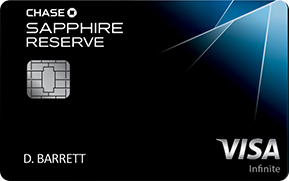
The Sapphire Reserve card is part of our simple plan. Along with the Freedom Unlimited card it is the best simple option for getting great credit card rewards and travel benefits. The annual fee is $550, but an automatic $300 travel credit and a $60 per year Door Dash credit reduces the effective annual fee to $190-250. Many travelers should (and will) get this card, and won’t have to look further for a card that has primary rental car insurance. Plus, you’ll earn the highest reward rate on your car rentals, along with getting the best protection. | |
|
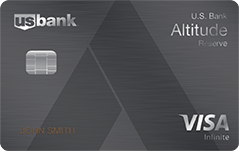
The Altitude Reserve card is the another high-end reward card that we recommend for many people. It helps boost your rewards by giving you a 4.5% rebate on mobile wallet payments, comes with 12 Gogo inflight internet passes per year, and has an effective annual fee of only $75. It also comes with primary rental card coverage, and earns 4.5% on car rental charges. | |
|
The United MileagePlus Explorer card makes sense for people who can significantly benefit from its checked bag benefit, and the ability to redeem United miles for any available seat, without restrictions (but with a higher number of miles). You also get two free United club passes per year and priority boarding. $95 annual fee, waived for the first year. If you frequently fly United, you should probably get this card, and, as a side benefit, you'll be covered for rental car insurance. The premium version of this card, the United Mileage Plus Club card, offers the same benefits and more. However, we don’t think it makes sense for most people to hold onto this card, given its $450 annual fee. If you do wind up getting it, for its included United Club membership, you can take advantage of it for your car rentals as well. | |
|
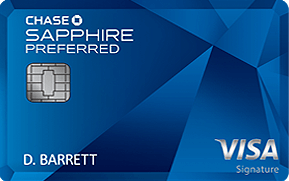
The Chase Sapphire Preferred card has a lower annual fee ($95) and a higher signup bonus (60,000 vs 50,000 points) than the Sapphire Reserve card, but still offers primary rental car coverage. It earns a lower (but still good) reward rate for travel (and restaurants), but doesn’t come with the airport lounge privileges and some other premium benefits. We recommend the Sapphire Reserve card for most people, but some people might might choose this card instead. | |
|
The CNB Crystal Infinite card is a less well-known premium card that offers primary rental car insurance. The card has a $450 fee. Through 2019, it had a range of valuable benefits that could easily offset that fee, but starting in 2020, many of those benefits are reduced or eliminated. There is still a $350 airline incidental credit that you can use twice during your initial year. In the unlikely event that you want to get the card, it can be hard to get. You'll need to apply in branch (primarily in Southern California), and they will ask for a bunch of paperwork to prove your income and assets. | |
|
The Diners Club cards are another option, but are no longer available for new sign-ups. |


The Ritz Carlton Credit Card card also offers primary rental car insurance, but it is no longer available for new signups. Up until recently, you could convert Chase Marriott credit cards to the Ritz credit card. There are rumors that this is no longer possible, but if you are interested in the card, it is worth a try.
Small business credit cards with primary car rental coverage
Primary rental car coverage is more common on small business credit cards, than on personal cards. You can usually get a small business card even if you have a very small business. However, you aren’t supposed to use them for non-business purchases. We are reluctant to recommend using one of these cards for your personal car rentals. If you get in an accident, it is very unlikely, but possible, that someone would look into whether it was an actual business-related rental, and refuse your claim if it wasn't.
|
The Chase Ink cards are among the best available small business cards. Unfortunately, they are subject to the Chase 5/24 rule. If you have a small business and aren't blocked by the Chase 5/24 rule, you probably want at least one of these cards. They all come with Primary Rental Car Insurance. | |
|
The discontinued Marriott Rewards Premier Business card is similar to the personal version, but comes with primary rental car insurance. Every year you have the card, you’ll get a free night certificate that you can use for rooms valued at up to 25,000 pooints per night. $99 annual fee. | |
|
The Southwest Business cards both come with primary rental car insurance. $99 annual fee. |