Introduction to 'Transferable' Reward Points

Jump to
Jump to:
What are “transferable credit card points”?
The three biggest credit card companies operate their own reward programs. Amex’s is called “Membership Rewards”, Chase’s is called “Ultimate Rewards”, and Citibank’s is called “ThankYou Rewards”.
The points that you earn from these programs can be transferred to the loyalty programs of a bunch of different airline and hotel partners, so that you can redeem them for free airplane tickets and hotel rooms. For example, you can transfer your Chase Ultimate Rewards points into United miles to book an award flight to Europe, into Southwest miles to pay for a quick flight to Las Vegas, or into Hyatt points to book a free hotel room in New York City. The points from these credit cards are like "miles" that you can magically use with several different frequent flyer programs.
In addition, you can use these points (like cash) to pay for most hotels, airline tickets, and other travel. For example, you can use your Ultimate Reward points at 1.5 cents each to book a night at a traditional inn in Tokyo, an inexpensive flight on Norwegian Airlines, or a flight on American Airlines where there is no "regular" award tickets available.
Transferable reward points, earned directly from the credit card companies, are more valuable than regular frequent flyer miles. For most people, they are the best way to earn rewards from their credit card spending.
The points that you earn with the Marriott hotel program can also be transferred (at favorable rates) to airlines partners. Even though they are technically hotel points, they act enough like transferable credit card points to be part of the same conversation.
In addition, Diners Club, Capital One, and HSBC operate similar, but smaller, transferable rewards programs.
Each program has a different set of partner programs, different options for redeeming your points, and a different set of available credit cards.
Transferable credit card points are better than regular frequent flyer miles
Earning points with Amex’s Membership Rewards, Chase’s Ultimate Rewards, Citibank’s ThankYou Rewards, and other transferable reward programs is almost always better than earning miles directly with a frequent flyer program.
- You can take advantage of award space on almost any airline. When you collect points with a specific frequent flyer program, you can redeem them for flights on any of its partner airlines. For example, if you are earning United miles, you can redeem them for flights on over two dozen different airlines that partner with United. However, if the award seats to your destination are with American Airlines, or one of American’s Oneworld partners, you are out of luck.
- You can take advantage of whichever award redemption requires the fewest miles. Different frequent flyer programs require different amounts of miles for the same trip, and have different rules and fees. For example, with most airline programs, a round trip to Hawaii is 45,000 points in coach, or 80,000 points in business/first. But, using Korean Airline’s frequent flyer program. you can fly there (on Delta Airlines) for only 25,000 points in coach and 45,000 points in business/first. Rather than spending 45,000 Delta points, you can spend 25,000 Korean airline points, for exactly the same flight!
- Or maybe you can get better value by using your points for a hotel room instead. It is much easier to find availability for free hotel nights than for free airplane tickets. For example, even over Christmas break, you could transfer 20,000 points to Hyatt to book the Hyatt Maui, or 12,000 points to book the Hyatt Place Waikiki Beach, and easily get more than 2 cents per point in value—but you are unlikely to be able to take advantage of frequent flyer tickets (at least at anything close to the normal mileage costs). To be fair, among the different programs, the only hotel transfer that usually makes sense is transferring Ultimate Rewards points to the Hyatt program.
- You can easily “top-off” your account balances. Over time, you are likely to build up points in several different reward programs from your paid hotel stays and flights, or perhaps from credit card signup bonuses. However, you might not have enough points to make the award redemption you want. With transferable credit card points, you can often combine the points from your credit card with the reward points that are already in your account, so that you have enough to redeem an award. Transfers can also be used to keep an airline or hotel account active, so that you don’t lose your points.
- You can get better value if you need to “cash-out” your points. If you decide you can’t find good enough redemptions, you’ll generally get more value out of cashing-out your credit card points than you could by cashing-out frequent flyer miles. For example, you’ll only get about .5 cents for your Delta miles (by buying Amazon gift cards), but you can get 1.5 cents for your Ultimate Reward points (by buying travel on the Chase website).
- The main drawback to transferable reward points is that you can’t always take advantage of “Anytime” awards on your most-frequently-used airline. When you want to fly on a specific airline with your transferable reward points, you will often have to transfer to one of their partners, because the airline you want to use isn’t a direct partner of your credit card program. You will then need to redeem a “partner award”, which only has access to regularly-priced award availability. If you were collecting points directly with the airline, you would have the additional option to use a lot of extra points to book an "anytime award", even when there isn’t any regular (“saver”) award availability. For example, you can use Ultimate Reward points to book flights on American Airlines via British Airways or Cathay Pacific’s frequent flyer program, but only if there is still availability at the regular rates. But, you can only use American Airline’s own points to book more expensive anytime awards.
But with transferable points, you can transfer your points to at least one frequent flyer program that belongs to each of the three major alliances (and some additional programs as well). You can then redeem those frequent flyer points on each of those program’s partner airlines. In the end, each type of transferable reward point can be used to book frequent flyer tickets on over 100 different airlines. For example, if you have Ultimate Reward points, you can transfer them to United to book one of United’s flights, to British Airways to book a flight on American, or to Air France to book a flight on Delta.

By collecting transferable reward points, you are much more likely to be able to book the flights that work best for your schedule, or take advantage of the only airline that has available award space to your destination.
Transferable point programs let you transfer to whichever of their frequent flyer partners requires the fewest miles, rather than being stuck with the award chart of a single program.


Transferable reward points versus fixed-value reward points
Don’t confuse transferable reward points, like Amex’s Membership Rewards, with fixed-value points that you get from credit cards like the Barclays Arrival Plus card.
The points you get from the Barclays, Bank of America, and U.S. Bank credit cards can indeed be used to book flights on any airline. But, you get a fixed amount of value, every time you use your points.
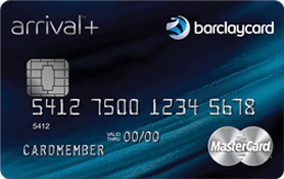
Essentially, these credit card companies are just giving you cash back, but often forcing you to use the cash to pay for travel. For example, the Arrival Plus card is going to give you 2 points per dollar, and let you use those points to purchase travel at 1 cent each, with a 5% rebate. It is the same as earning 2.05% cash back (but only when you pay for travel).
Transferable reward points can be used in the same way, but they can also be transferred into actual airline and hotel reward points, and then redeemed for frequent flyer tickets and award nights. While there isn’t always award availability (especially for airplane tickets), you can get much more value from using these points in this way.
For example, if a ticket to Hawaii costs $600, you will need 60,000 Arrival Plus points to pay for the ticket, which you could earn by spending $30,000 on the Arrival Plus card. Or you could book it with 25,000 Singapore Airline miles, by transferring in 25,000 Ultimate Reward points, which you could earn by spending less than $17,000 on the Chase Freedom Unlimited card.
If you are booking business class tickets, the disparity is even greater. A $4,000 business class ticket would require 400,000 Arrival points, or $200,000 in credit card spending. Booking it as a frequent flyer ticket might require 80,000 Ultimate Reward points or under $55,000 in spending. Or even less, if you are able to take advantage of bonus rewards on travel or restaurant spending.
When you have a good opportunity to use frequent flyer miles, your transferable reward points are much more valuable than most cash-like credit card points. When there is no award availability, or award prices are high relative to the cash price, you can use any of these types of credit card points to purchase tickets.
Only true “transferable” reward points let you get extra value from your points by finding good frequent flyer (and hotel) redemption opportunities.
Introduction to the different transferable point programs
Ultimate Rewards

We think Chase’s Ultimate Rewards is the best of the transferable credit card programs, especially for people who are just starting out. Ultimate Rewards Guide.
- The Ultimate Rewards Program has a small, but good group of airline partners. Their partners include United Airlines (for Star Alliance awards without fuel surcharges), British Airways (for low-award-cost short-distance Oneworld flights), Southwest, and JetBlue.
- But what really differentiates the Ultimate Rewards program is that you can redeem your points for good values on something other than hard-to-take-advantage-of frequent flyer tickets. With Ultimate Reward points, you can always get good value for your points (with very little effort) by booking award nights at Hyatt hotels, purchasing fixed-value award tickets with Southwest or JetBlue, or purchasing any other travel through the Chase website. In contrast, frequent flyer tickets are the only good option that are normally available with Membership Reward or ThankYou points.
- Along with Membership Rewards, Ultimate Rewards is the best program for earning points. Ultimate Rewards has the best cards for everyday spending (for most people), travel spending, and business expenses. You can also receive lucrative signup bonuses from several different cards.
- However, if you already gotten a few new credit cards in the past couple of years, you may not be able to take advantage of the program. You will be blocked from getting any of the Ultimate Rewards cards by the Chase 5/24 rule. Your only option for taking advantage of the Ultimate Rewards program would be to postpone getting any other cards, until you are back under the 5/24 limit.

The reason that we unequivocally recommend Ultimate Rewards program is that you don’t have to mess around with trying to find a good opportunity to book frequent flyer tickets, if you don’t want to. But, in contrast to earning straight cash back, you retain the upside of using your points when you can find a good frequent flyer opportunity.
Membership Rewards

Amex’s Membership Rewards is a the best program for anyone who is comfortable with using their credit card points for frequent flyer rewards. Membership Rewards Guide.
- The main drawback of the Membership Rewards program is that there are usually no decent redemption options, other than transferring to frequent flyer programs. Unless you find a good frequent flyer award ticket opportunity, you can only expect to get 1–1.25 cents in value for your points. Even though you can transfer to hotel partners, the exchange rates are good enough to make this worthwhile.
- If you do plan to redeem for flights, Membership Rewards is better than Ultimate Rewards. Membership Rewards has many more transfer partners, making it more likely you can take advantage of a “sweet spot”, where you can book an award for less than the normal number of points. Unlike Ultimate Rewards, it doesn’t partner with United, which is too bad. On the other hand, Membership Rewards partners directly with Delta. If you live in Delta territory, this is a plus, as you can use your points for non-saver-level awards.
- On the plus side, Membership Rewards frequently runs promotions where you can get a bonus when you transfer to selected airline partners. If you take advantage of these, you can get significantly more value for your points, sometimes getting as many as 1.5 miles for each membership reward point. However, unless the promotion coincides with a trip you are booking, transferring your points ahead of time, to advantage of a higher transfer rate, means you are locked in with that partner. Take Advantage of Transfer Bonuses to Get More Value from Your Reward Points.
- Membership rewards is the easiest program to build up points with signup bonuses, and they offer very good earning rates in many categories. Amex cards offer the best possible reward rates on groceries and gas. If you are willing to put up with some quirks, you can earn 1.5 points per dollar on everyday spending (just like you can with Chase). And if you are willing and able to get a business card, you can earn 2 points per dollar on everyday spending. There are also many more options for earning lucrative signup bonuses than there are with Chase, and no 5/24 rule to worry about.
So, if you don’t place a super-high value on premium-class award tickets, don’t want to get frustrated about the lack of good opportunities to get good value from your frequent flyer miles, and don’t want to deal with the extra complexities of booking award travel, Ultimate Rewards is the better program.


Membership Rewards with business cards
If you have any sort of a small business, even one that hasn’t made any money yet, you are eligible to sign up for small business credit cards. If so, the Membership Rewards program becomes considerably more valuable. Unlock Extra Reward Points with Business Credit Cards.
- You can get the Amex Blue Business Plus card to earn 2x points on all purchases. This is better than the 1.5x Ultimate Reward points that you can earn with one of the Chase Unlimited cards. Get a Great General Purpose Reward Card and Use It for All of Your Spending.
- If you get the Platinum Business card, you gain the option to "cash out" your Membership Reward points at 1.54 cents each. Whenever you purchase tickets from Amex Travel on your favorite airline, or for any business or first-class seats, you can use your points at 1 cent each, and get a 35% refund on the points you used. For example, if you want to purchase a ticket for $320, you would need to use 32,000 points. But, then you would get 11,200 of those points back. When you do the math, this works out to 1.54 cents in value per point.
- This alters the dynamics of the Membership Rewards program, and makes it more universally appealing. With this option, you can always guarantee a floor of 1.54 cents in value per point, when you want to avoid the hassles involved with trying to find a good frequent flyer redemption. You now have a reliable way to get solid value from your points, and still have the upside of getting even more value from a great award ticket opportunity. It is not quite as high as the non-frequent-flyer-ticket options from Ultimate Rewards, but it starts coming close.
- This flexibility comes with additional costs associated with the Business Platinum card. The annual fee for this card is $595. It does come with a $200 credit that can be used for incidental expenses on a single airline of your choice, and $200 a year in credits for purchases from Dell. While it can be hard to fully use these credits, they can partially offset the annual fee. The Business Platinum card also comes with many very useful perks and benefits (shared with the regular Platinum card), so it might be a card you want anyways. Which Premium Reward Card is Right for You?
ThankYou Rewards

Citibank’s ThankYou Rewards isn’t nearly as good as the Ultimate Rewards or Membership Rewards program. ThankYou points are still very valuable and worth collecting, just not as valuable as Ultimate Reward and Membership Reward points. It falters in several different ways. ThankYou Rewards Guide
- They have a smaller and less valuable set of airline partners, although they still have a least one reasonable choice in each of the major alliances.
- Like the Membership Rewards program, frequent flyer tickets are the only good option for redeeming your points. You are unlikely to be able to get good value redeeming points with their hotel partners. You can always use your points to pay for airline tickets at a rate of 1-1.25 cents each.
- You can earn great rates on airfare and restaurants with the Prestige card. It earns 5x ThankYou points per dollar! There are also good options for earning high reward rates on online shopping and (if you are willing to pay an extra $95 per year) entertainment.
- It can be hard to earn lots of points through signup bonuses. You can only earn a single significant signup bonus every two to three years (you can add in the AT&T card as well). With both Amex and Chase you can earn bonuses from a bunch of different cards. But, unlike Chase and Amex, you won't be blocked from future signup bonuses by the "5/24" or "once in a lifetime" rule. Even so, it is hard to get that excited about a program where you can only earn around 50,000 points every two years from signup bonuses.
- ThankYou points are tied to the specific credit card that earned them. If you cancel that card, you only have 30 days to use them or transfer them to a partner program. Alternatively, you can convert your card to the no-annual-fee Reward+ card, but then you will no longer be able to transfer them to airline programs.

Marriott

Marriott has the the largest number of airline partners, but it is the hardest program to earn points with.
- Marriott gives you 25,000 miles for every 60,000 points. With the other programs you almost always get 1 mile per point. Even if you can earn twice as many Marriott points on your spending, you'll be getting less miles per dollar.
- Marriott has, by far, the largest and best collection of transfer partners. You can book on the widest range of airlines, better take advantage of non-saver award availability, and always take advantage of the best available redemption rates.
- The major downside of their airline program is that it can take days, or sometimes even weeks, for points to transfer. Award availability might disappear before your points have had a chance to arrive. Even worse, you could wind up in a situation where your points are stranded in a specific airline program.
- The other main drawback of the Marriott program is that is hard to earn points (compared to the other transferable point programs). You can earn a bunch of points by signing up for various Marriott credit cards, but none of them offer competitive earning rates for your spending, and there are a set of limitations that make it hard to quickly accumulate signup bonuses.
Capital One points

In 2018, Capital One expanded its points program to allow for point transfers to over a dozen airline partners. This option isn't available for all the Capital One cards, just the two different versions of the Venture (personal) and Spark (business) cards. Capital One Miles Guide.
- Like the Ultimate Rewards program, the Capital One program doesn't effectively lock you into using your points for frequent flyer miles. You can still receive 1 cent per point, or 2 cents per dollar, when you use your points to purchase any sort of travel. Of course, like the other transferable points programs, you are likely to get higher value by converting your points to miles.
- Capital One points DON'T transfer on a 1:1 basis. You'll only receive 750 miles for every 1,000 points. But, because you earn 2 points per dollar, you are still receiving 1.5 miles per dollar, which is essentially the same as the Chase Freedom Unlimited or Amex Everyday Preferred card. With Singapore Airlines and Emirates you'll only receive 500 miles for every 1,000 points, or 1 mile per dollar.
- Capital One's program isn't as attractive as the other transferable points programs. Capital One's set of airline partners isn't as valuable and there are no good options for earning bonus category rewards (other than on prepaid hotels through Hotels.com). If you want to avoid the hassles of frequent flyer tickets, Capital One will give you more value per dollar than Membership Rewards or ThankYou Rewards, but not as much as Ultimate Rewards.
- We recommend earning points with signup offers (if you can), but we would use other cards for ongoing spending. You'll earn more valuable rewards with the Chase Unlimited combo or other everyday credit cards, and much more valuable rewards on certain categories with cards like the Sapphire Reserve or Citi Prestige. With the points transfer option, Capital One "miles" are more valuable, but unfortunately it is still hard to get approved for their cards.
Comparing the credit card reward programs
Not every transferable point program is equal.
| Chase Ultimate Rewards | Amex Membership Rewards | Citi ThankYou Rewards | Marriott | Capital One Rewards | |
|---|---|---|---|---|---|
| Acquiring Points | |||||
| Reward rates for credit card spending | Great | Great | Great | Poor | Good |
| Ease at building up points with signup bonuses | Good | Great | Okay | Poor | Okay |
| Airline Partners | |||||
| Overall Quality | Good | Good | Less Good | The Best | Less Good |
| Number of airline partners | 7 | 17 | 12 | 35 | 14 |
| Time it takes to transfer points | Instant | Instant for most | Usually 1-2 days | Usually 2-14 days | Instant or 1-2 days |
| US Partners | United
Southwest JetBlue |
Delta
Hawaiian JetBlue |
JetBlue | Alaska
American Delta Hawaiian United |
None |
| “Cash” Value per point | |||||
| Base | 1.00 | 1.00 | 1.00 | 0.33 | 1.00 |
| With the right card | 1.50 | 1.54 | 1.40 | 0.33 | 1.00 |
| Other | |||||
| Good option for hotel redemptions | Hyatt | No | No | Marriott | No |
| Cheapest card to keep points alive (and transferable) | $95 (Sapphire Preferred) |
$0 (Amex EveryDay) |
$95 (Citi Premier) |
$0 (No card needed) |
$0 (Venture One) |