The value of a credit card comes from a combination of its benefits, reward-earning rates, and signup bonus. Much of this website is dedicated to letting you know about credit cards which are valuable to get, use, and hold onto.
However, the list below only takes into consideration the value of the credit card's signup bonus. While some of these cards may have benefits that might make them interesting additions to your core credit card collection—all of them are worth getting, even if it is only to receive the signup bonus.
There are some basic guidelines for evaluating signup bonuses.
These are all the credit cards with a net signup value of around $450 or higher.
|
|
Capital One Spark (Cash or Miles, Business Card Only)
Full offer
Partial Offer
|
$2,050
$480
|
.04/$
.10/$
|
| 50,000 points after $5,000 initial spend, and 150,000 more points with a total of $50,000 of spending in the first six months. If you have a way of generating enough spend for the full bonus and can get approved, this is a very valuable offer. Points from the Cash version are worth a little less because they can't be transferred to airline partners
|
|
|
|
| Chase Ink Preferred (Business Card Only)
|
$1,225
|
.25/$
|
| 80,000 Ultimate Reward points, valued at $1360. ($5,000 initial spend). $95 annual fee. Affected by the Chase 5/24 rule.
|
|
|
|
| Amex Hilton Aspire
|
$850
|
.21/$
|
| Promotional offer of 150,000 Hilton points, valued at $680 ($4,000 initial spend). You also get a free weekend night certificate good at any Hilton hotel, which we value at $300. In addition, you get a $250 Hilton resort credit, and up to two $250 airline incidental credits, during your initial year. Because both of these credits can be hard to use, we value them at half their face value, or $375.
|
|
|
|
Chase British Airways
Full bonus
With $3,000 spend
|
$840
$470
|
.04/$
.16/$
|
| Promotional offer of 100,000 Avios. You'll earn the first 50,000 points for $3,000 initial spend, another 25,000 points if you spend a total of $10,000 in your first year, and a final 25,000 points if your first year spend hits $20,000. Points can be used for flights on Alaska Airlines, American Airlines and may other programs. And British Airways distance-based award chart often requires fewer miles than other frequent flyer programs. $95 annual fee. Affected by the Chase 5/24 rule.
|
|
|
|
| Chase Iberia
|
|
|
| Same offer as the British Airways and Aer Lingus cards. Points are interchangeable. Choose whichever card provides the most useful companion pass and airline benefits. Affected by the Chase 5/24 rule.
|
|
|
|
| Chase Aer Lingus
|
|
|
| Same offer as the British Airways and Iberia cards. Points are interchangeable. Choose whichever card provides the most useful companion pass and airline benefits. Affected by the Chase 5/24 rule.
|
|
|
|
| Chase Ink Cash (Business Card Only)
|
$830
|
.28/$
|
| Promotional offer of 50,000 Ultimate Reward points ($2,000 initial spend). No annual fee. Affected by the Chase 5/24 rule.
|
|
|
|
| Chase Ink Unlimited (Business Card Only)
|
$830
|
.28/$
|
| 50,000 Ultimate Reward points ($2,000 initial spend). No annual fee. This is probably a promotional offer, but because the card is new, we don't know for sure. Affected by the Chase 5/24 rule.
|
|
|
|
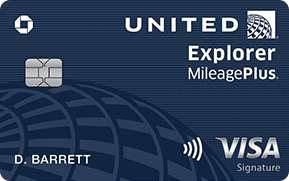
Chase United Explorer
personal
business)
|
$660
$830
|
.22/$
.17/$
|
| Promotional offers of 50,000 miles for personal card ($3,000 initial spend), and 75,000 miles for business card ($5,000 initial spend). Annual fee is waived the first year. Affected by the Chase 5/24 rule.
|
|
|
|
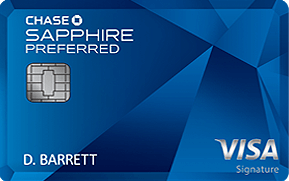
| Chase Sapphire Preferred
|
$820
|
.20/$
|
| From a strictly signup bonus perspective, the Sapphire Preferred is a better option than the Sapphire Reserve, and you can only have one of these cards at a time. But, if you are looking to hold onto one of these cards for its ongoing benefits, the Sapphire Reserve is usually the better of the two options. Annual fee is waived the first year. Affected by the Chase 5/24 rule.
|
|
|
|
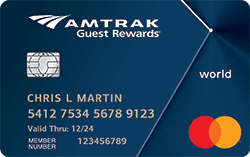
| BOA Amtrak
|
$800
|
.80/$
|
| 20,000 Amtrak points, worth 2.9 cents each towards Amtrak travel ($1,000 initial spend). You also get a companion ticket, upgrade certificate, and single-visit lounge pass, which we value at a total of $200. If you apply during "checkout", you can usually get a $100 statement credit as well. $79 annual fee.
|
|
|
|
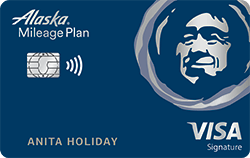
BOA Alaska Airlines (Personal and Business)
30,000 point offer
40,000 point offer
|
$780
$820
|
.78/$
.81/$
|
| 30,000 Alaska Airlines miles ($1,000 initial spend). You also receive a companion certificate when you sign up. Unlike the normal certificates you get each year, the signup certificate, doesn't require a $99 fee. As a result, we value it at $350. If you apply during checkout on the Alaska website, you can usually get an additional $100 statement credit on the personal version version of the card. You should be able to take advantage of a 40,000 point offer, without the statement credit, on the personal card. $75 annual fee.
|
|
|
|
| Chase Southwest Premier Business
|
$770
|
.26/$
|
| 60,000 Southwest Airline miles ($3,000 initial spend). Southwest operates a fixed-value rewards program, where you can get around 1.2 - 1.6 cents per point, without having to worry about award availability. $99 annual fee. Affected by the Chase 5/24 rule
|
|
|
|
| Amex Gold
|
$740
|
.37/$
|
| Promotional offer of 50,000 Membership Reward points ($2,000 initial spend) plus 20% off (capped at $100) on any US Restaurant spending in the first three months. Normal offer is 25,000 points. You also get up to two $100 airline incidental credit during your initial year, and $10/month credit at participating restaurants, bbut because these credits can be hard to use, we only value them at half their face value.
|
|
|
|
| Barclay Hawaiian Airlines (personal and business)
|
$720
|
.36/$
|
| Promotional offer of 60,000 Hawaiian miles ($2,000 initial spend). You also receive a half-priced companion ticket, that we value at $250, making this a pretty valuable signup offer, if you can use the companion certificate to fly to Hawaii. The business version of the card has the same promotional offer, but with only $1,000 initial spend, making it about $15 more valuable.
|
|
|
|
| Barclays Arrival+
|
$715
|
.14/$
|
| Promotional offer of 70,000 Arrival points, valued at $735. $5,000 initial spending requirement, and an $89 annual fee, that is waived for the first year.
|
|
|
|
| Chase Hyatt
|
$700
|
.12/$
|
| 50,000 Hyatt points ($6,000 initial spend). $95 annual fee. The signup offer of two free nights is no longer available. Affected by the Chase 5/24 rule.
|
|
|
|
Citi AAdvantage
personal
business
|
$680
$790
|
.23/$
.20/$
|
| Promotional offer of 60,000 American Airlines miles ($3,000 initial spend) for the personal card or 70,000 miles ($4,000 initial spend) for the business card. For the personal card there is an alternative offer of 40,000 points and a $200 statement credit ($2,000 initial spend), that is worth slightly less. But, you can probably call in and get the offer matched to a 60,000 point offer, making it more valuable. Annual fee is waived the first year.
|
|
|
|
Amex Platinum (Multiple Versions Available)
Promotional offers
Normal offer
|
$1,275
$675
|
.26/$
.14/$
|
| The Platinum card's normal signup bonus of 60,000 points is very generous. At 1.5 cents per point, the points are worth $900. But, you can get offers as high as 100,000 through targeted mailings, the "card match" tool, and private browsing. The card's annual fee is $550, but it comes with a $200 airline incidental credit that you can receive twice during your initial year, and a $50 Saks credit that you can receive three times during your initial year. You can also receive $200 worth of Uber credits each year. But, because these credits can be hard to use, we only value them at half their face value, or $375total.
You can earn signup bonuses from multiple different versions of the Platinum card, although only the "regular" version typically has higher-than-normal signup offers.
|
|
|
|
Amex Business Platinum
75,000 point offer
Targeted offer max
|
$675
$1,800
|
.03/$
.09/$
|
| 75,000 Membership Reward points ($20,000 spend), valued at $1130. You'll get 50,000 points if you spend $10,000, and an additional 25,000 points if you spend a total of $25,000 in the first three months. Targeted offers can be available for up to 150,000 points. $450 annual fee. But, comes with a $200 airline incidental credit that you can use twice during your first year. Our calculation values it at half of its potential $400 value.
|
|
|
|
| Chase Sapphire Reserve
|
$670
|
.17/$
|
| The signup offer for the Sapphire Preferred version is better, and you can only have one of these two cards. However, the Sapphire Reserve card is a more interesting card for the long term. $450 annual fee. The $300 travel credit is valued at full value. Affected by the Chase 5/24 rule.
|
|
|
|
CNB Crystal Infinite
With maximized credits
More typical value
|
$2,160
$660
|
.43/$
.13/$
|
| 50,000 Crystal Infinite points, valued at $625 ($5,000 initial spend). $400 annual fee. This card comes with a $250 airline incidental credit, that you can use twice during your initial year. What makes this card unique is that you can add 3 authorized cardholders for free, and each cardholder gets their own airline credit. Because the credit can be hard to use, our "normal" net value only includes half the face value, and assumes you can take advantage of the credit for a total of two people.
If you work to get full value from the credit, and maximize the number of authorized cardholders, you can earn up to $2,000 in airline credits during the first year. Combined with the points, this is one of the most valuable signup bonuses of any card. Unfortunately, this card can be difficult to get.
|
|
|
|
| Citi Premier
|
$660
|
.16/$
|
| 50,000 ThankYou points ($4,000 initial spend). Annual fee waived the first year.
|
|
|
|
BOA Virgin Atlantic
Full promotional offer
With first purchase only
|
$650
$210
|
.05/$
|
| The normal offer is 20,000 miles (upon first purchase), plus 5,000 miles for adding an authorized cardholder. But, you can get an additional 50,000 points, if you spend $12,000 during the first six months. $90 annual fee
|
|
|
|
| U.S. Bank Altitude Reserve
|
$630
|
.14/$
|
| 50,000 points, worth 1.5 cents each ($4,500 initial spend). $400 annual fee, but a $325 airfare credit brings the effective annual fee down to $75.
|
|
|
|
| Wells Fargo Visa Signature
|
$620
|
.05/$
|
| Earns 4x extra points, worth 1.5 cents each, on the first $12,500 of gas, grocery, and drugstore purchases, during the first six months you have the card. If you can maximize the bonus, probably via gift card purchases, you can earn 50,000 extra points. No annual fee.
The Wells Fargo Reward card has an identical bonus, but if you don't also have the Visa Signature, the points are only worth 1 cent each (rather than 1.5 cents).
|
|
|
|
| Amex Delta Gold (Personal)
|
$590
|
.59/$
|
| Promotional offer of 50,000 miles ($1,000 initial spend), but without the $50 travel credit. Annual fee waived for first year.
|
|
|
|
| Barclay Miles & More (Lufthansa)
|
$570
|
.11/$
|
| Promotional offer of 60,000 Miles & More points ($5,000 initial spend). $89 annual fee.
|
|
|
|
| Amex Hilton Ascend
|
$550
|
.18/$
|
| Promotional offer of 150,000 Hilton points ($3,000 initial spend). $95 annual fee.
|
|
|
|
| Hilton Card (No-annual-fee version)
|
$540
|
.54
|
| Promotional offer of 100,000 Hilton points ($1,000 initial spend), plus a $100 statement credit. You might even find a 100,000 point offer in "private" browsing mode. No annual fee.
|
|
|
|
| Capital One Venture
|
$540
|
$.18/$
|
| 50,000 points, which can now be transferred to airlines (for 37,500 miles), with $3,000 initial spend. Waived first year annual fee.
|
|
|
|
| IHG Premier
|
$530
|
.18/$
|
| Promotional offer of 100,000 IHG points ($3,000 initial spend), plus a $50 statement credit, plus 5,000 points for adding an authorized cardholder. $89 annual fee.
|
|
|
|
| Chase Southwest Airlines (Personal)
|
$520
|
.52/$
|
| 40,000 Southwest points, valued up to $600. The Plus version of the card has a $69 fee, versus the Preferred version's $99 fee, making it a slightly better option. If possible, it might be worthwhile holding off, as there are frequent promotional offers of 50,000 and 60,000 points. But, because the cards are affected by the Chase 5/24 rule, you may need to get them before it is too late.
|
|
|
|
| Amex Delta Platinum (Personal)
|
$500
|
.25/$
|
| Promotional offer for the personal card of 60,000 Delta miles ($2,000 initial spend), but without the $100 travel credit. $195 annual fee.
|
|
|
|
| Barclay Aviator Card (Personal and Business)
|
$500
|
|
| Promotional offer of 50,000 American Airlines miles (on first purchase). $95 annual fee.
|
|
|
|
| Capital One Savor Rewards
|
$480
|
.16/$
|
| $500 ($3,000 initial spend). $95 annual fee, waived the first year. You can take advantage of 4% bonus rewards on entertainment, during the first year.
|
|
|
|
| SPG Card (Personal and Business)
|
$470
|
.16/$
|
| 75,000 Marriott points ($3,000 initial spend). The $95 annual fee is waived the first year.
|
|
|
|
| Bank of America Premium Rewards
|
$460
|
.15/$
|
| 50,000 points, worth 1 cent each ($3,000 initial spend). $95 annual fee. You can receive the card's $100 airline incidental credit twice during your initial year. But, we only valued the credit at half of the potential $200 value. If you have $100,000 in combined assets with Bank of America and Merrill Lynch, you'll earn 2.625% on every purchase, so there is no opportunity cost for using the card to qualify for the bonus. $95 annual fee
|
|
|
|
| Barclay JetBlue (Personal and Business)
|
$450
|
.45/$
|
| 40,000 JetBlue points ($1,000 initial spend). The normal offer for the business card is only 30,000 points, but there is a 40,000 point promotional offer. $99 annual fee.
|
|
|
|
| Cathay Pacific (Synchrony Bank)
|
$450
|
.23/$
|
| Promotional offer of 40,000 miles ($2,000 initial spend). $95 annual fee.
|
|
|
|
| Amex Delta Gold (Business version}
|
$450
|
.45/$
|
| 30,000 miles ($1,000 initial spend), plus a $50 statement credit. Annual fee waived for the initial year.
|
|
The following offers are all worth at least $350, and don't have a high initial spending requirement. In many cases, you'll qualify for the signup bonus after making your first purchase. In other cases, you may need to spend $500-1000.
Banks occasionally offer higher-than-normal signup bonuses for their cards. Sometimes, these promotional offers are available to everyone. Sometimes, they are only available to specific people who have been targeted by the bank.
The “net sign-up value” for each of these cards is determined by calculating the value of the signup offer, and then subtracting the costs involved with earning the bonus. If you are interested, you can see our calculation details at the end of this article.