Difference between revisions of "Advanced general purpose reward cards"
(→A few less good options) |
|||
| Line 1: | Line 1: | ||
| − | {{DISPLAYTITLE:{{Title|advanced everyday}}}} | + | {{DISPLAYTITLE: {{Title|advanced everyday}} (2019) }} |
{{Page|article|Card Strategies}} | {{Page|article|Card Strategies}} | ||
| Line 9: | Line 9: | ||
Each of these other options has additional restrictions, fees, or hassles—which makes them hard to recommend to everyone. However, they might be the best option for you. | Each of these other options has additional restrictions, fees, or hassles—which makes them hard to recommend to everyone. However, they might be the best option for you. | ||
</blockquote> | </blockquote> | ||
| + | |||
| + | {{Box|Price and Return Protection}} | ||
| + | Most of these cards don't offer: | ||
| + | |||
| + | <ul class="simplelist"> | ||
| + | <li>''Price protection'': which reimburses the difference, if you find a cheaper price, in the first few months after making a purchase.</li> | ||
| + | |||
| + | <li>''Return protection'': which refunds your purchase, if a store won’t accept a return).</li> | ||
| + | |||
| + | </ul> | ||
| + | |||
| + | If you feel that these benefits are valuable, you’ll want to stick with another card (like the Chase Freedom Unlimited, PayPal Cashback or Citi Double Cash cards). | ||
| + | |||
| + | Alternatively, you can use one of these other cards for specific purchases, when you feel you are more likely to take advantage of these benefits, and use the more valuable card for your remaining spending. {{Link|purchase protections}}. | ||
| + | |||
| + | The exceptions are the Amex EveryDay Preferred which offers Return protection, but not Price protection; and the Amtrak card which offers Price protection, but not Return protection. | ||
| + | {{/Box}} | ||
{{TOC}} | {{TOC}} | ||
| − | *[[# | + | *[[#Membership Rewards options|Membership Rewards options]] |
*[[#U.S. Bank Altitude Reserve card|U.S. Bank Altitude Reserve card]] | *[[#U.S. Bank Altitude Reserve card|U.S. Bank Altitude Reserve card]] | ||
| − | |||
*[[#Good cards if you frequently travel on Amtrak|Good cards if you frequently travel on Amtrak]] | *[[#Good cards if you frequently travel on Amtrak|Good cards if you frequently travel on Amtrak]] | ||
| − | *[[# | + | *[[#Amex business card combination|Amex business card combination]] |
| + | *[[#Other cash back cards that earn higher than 2.5%|Other cash back cards that earn higher than 2.5%]] | ||
*[[#A few less good options|A few less good options]] | *[[#A few less good options|A few less good options]] | ||
{{/TOC}} | {{/TOC}} | ||
| + | {{Main|article}} | ||
| + | === Membership Rewards options === | ||
| + | |||
| + | If you expect to use your points on frequent flyer tickets, you are probably better off earning Membership Reward points, instead of the Chase Unlimited combo's Ultimate Reward points. | ||
| + | |||
| + | <ul class="bulletlist"> | ||
| + | <li>'''Membership Reward points are usually more valuable than Ultimate Reward points for frequent flyer tickets'''. Membership Rewards has around twice as many airline partners, giving you more flexibility when redeeming your points. Because they partner with Delta, you have the option of using your points to book non-saver level rewards, useful if you live in a Delta hub (but they don’t partner with United like Ultimate Rewards). Membership Rewards also frequently has transfer bonuses, which can let you get more value when you transfer your points. {{Link|Transfer Bonuses}}.</li> | ||
| + | |||
| + | In short, many people will find Membership Rewards points more valuable for booking frequent flyer tickets, but some people might find Ultimate Rewards more valuable. {{Link|Transferable Points}}.</li> | ||
| + | |||
| + | <li>'''If you expect to use your points for frequent flyer tickets, there isn't much benefit in Ultimate Reward’s additional redemption flexibility'''. The biggest reason we recommend Ultimate Reward points is because of the flexibility to choose between harder-to-redeem, but potentially more-valuable, frequent flyer tickets; or easier-to-redeem, but usually less-valuable, alternatives (like Hyatt hotels stays, Southwest Airlines tickets, and travel purchased through Chase). And unless your sure you are comfortable with frequent flyer tickets, we still think sticking with Ultimate Rewards is the best option.</li> | ||
| + | |||
| + | But, if you know you are going to be use your points for frequent flyer tickets anyway, you won’t be taking advantage of Ultimate Rewards' additional options. You might as well take advantage of whichever reward program is likely to be better match for your frequent flyer ticket needs.</li> | ||
| + | |||
| + | <li>'''This is especially true if you highly value premium-cabin award tickets'''. If you are using your points for economy-class award tickets, it is sometimes difficult to get as much value with either Membership Reward or Ultimate Rewards points as you can get with Ultimate Rewards' other redemption options. In other words, it is not just easier to redeem your points for hotel nights via Hyatt, you are likely to get more value per point for those hotel stays than you will on most economy-class frequent flyer tickets.</li> | ||
| − | + | But, if you highly value premium cabin awards and have the flexibility and patience to find award space, you'll almost certainly get better value by using your points for premium cabin tickets and are likely to prefer the Membership Reward program. | |
| − | === | + | |
| + | <li>'''Just be e prepared to reward yourself far less frequently'''. It can take a long time to earn enough points from your credit card spending to get a frequent flyer ticket. It only takes around $5,000 of credit card spending with the Chase Unlimited card to reward yourself with a free night at a less expensive Hyatt hotel or over $100 towards any travel purchase. But, it will take $100,000 of credit card spending with the Amex Blue for Business card or $130,000 of credit card spending with the Amex Everyday Preferred card to eventually earn enough points for two business class tickets to Europe. The business class tickets may represent more value for your spending, but it may take a long time to build up enough points.</li> | ||
| + | |||
| + | <li>'''With any American Express option, you'll still another card for some merchants'''. Not everyone accepts American Express.</li> | ||
| + | </ul> | ||
| + | |||
| + | ==== Amex Blue for Business Card ==== | ||
If you are eligible for a business card, comfortable to use it for your personal purchases, and willing to commit to redeem all your points for frequent flyer tickets, the Amex Blue for Business card is almost certainly the most valuable general purpose reward card. | If you are eligible for a business card, comfortable to use it for your personal purchases, and willing to commit to redeem all your points for frequent flyer tickets, the Amex Blue for Business card is almost certainly the most valuable general purpose reward card. | ||
| Line 30: | Line 68: | ||
<li>'''The Amex’s Blue Business Plus card earns 2x Membership Rewards points on every purchase'''. If you expect to use your points on frequent flyer tickets, Membership Reward points are valued at a minimum of {{Value|MR}} cents each. The resulting {{Value|MR|2}} cents per dollar (or higher) reward rate is better than you can get from ANY other card.</li> | <li>'''The Amex’s Blue Business Plus card earns 2x Membership Rewards points on every purchase'''. If you expect to use your points on frequent flyer tickets, Membership Reward points are valued at a minimum of {{Value|MR}} cents each. The resulting {{Value|MR|2}} cents per dollar (or higher) reward rate is better than you can get from ANY other card.</li> | ||
| − | + | When you are transferring to airlines, a Membership Reward point is probably even more valuable than an Ultimate Reward point. So clearly, 2 Membership Reward points is better than 1.5 Ultimate Reward points. | |
| − | + | <li>'''If you are willing to pay an extremely high annual fee for the Platinum Business card, you can also cash-out your points at over 3 cents per dollar spent'''. If you have the Business Platinum card, you receive a 35% rebate when you use your Membership Rewards points to purchase certain airline tickets. This works out to 1.54 cents per point, turning the Blue for Business card into a 3.08% cashback card, albeit with a limited set of cash-out options. But the Platinum Business card has a $595 annual fee, which can only be partially offset with airline incidental and Dell credits. This combination is discussed in more detail below.</li> | |
| − | <li>'''The Business Plus card doesn’t have an annual fee'''. But, it does have a high foreign transaction fee, so you’ll need to use another card when you are travelling overseas. | + | <li>'''The Business Plus card doesn’t have an annual fee'''. But, it does have a high foreign transaction fee, so you’ll need to use another card when you are travelling overseas. The Business Plus card doesn’t come with purchase price or return protection.</li> |
<li>'''The card is available to even the smallest business'''. It doesn't need to your full-time job and your business doesn't need to be incorporated. Some sites say you need a minimum of $1,000 in revenue, but many people believe that is "projected annual revenue" moving forwards, and not "actual annual revenue" looking backwards. Like all business cards, it is supposed to be used only for business-related purchases, but many people use it for personal expenses, with no problems. {{Link|Business cards}}.</li> | <li>'''The card is available to even the smallest business'''. It doesn't need to your full-time job and your business doesn't need to be incorporated. Some sites say you need a minimum of $1,000 in revenue, but many people believe that is "projected annual revenue" moving forwards, and not "actual annual revenue" looking backwards. Like all business cards, it is supposed to be used only for business-related purchases, but many people use it for personal expenses, with no problems. {{Link|Business cards}}.</li> | ||
| Line 40: | Line 78: | ||
</ul> | </ul> | ||
| − | === | + | ==== Amex EveryDay Preferred card ==== |
| − | If you | + | If you can’t or don’t want to get a business card, the Amex EveryDay Preferred card is the next best Membership Rewards option. It can earns 1.5x Membership Reward points per dollar. |
| − | {{Card| | + | {{Card|everydaypreferred|guide}} |
<ul class="bulletlist"> | <ul class="bulletlist"> | ||
| − | <li>''' | + | <li>'''Most people would be better off earning 1.5x Ultimate Reward points with the Chase Unlimited card, rather than 1.5x Membership Reward points with the Amex Everyday card'''. In addition, the Everyday Preferred card has a foreign transaction fee, so you’ll need to use another card when you are travelling overseas. You'll also need to use another card with the occasional business that doesn't take American Express cards.</li> |
| − | + | If you are using your points for premium cabin award tickets, 1.5 Membership Reward points is usually better than 1.5 Ultimate Reward points. But, if you are planning to use them for economy-class award tickets, most people would be better off sticking with Ultimate Reward points, and retaining the other redemption options. | |
| − | |||
| − | |||
| + | <li>'''The Everyday Preferred card's "standard" earning rate is only 1x points per dollar, but if you make at least 30 charges per month, you get a 50% bonus, increasing the reward rate to 1.5x points'''. With the bonus, the card also earns 4.5x points at supermarkets (up to $6,000 of spending per year) and 3x points at gas stations. Fortunately, there are tricks you can use to make sure you always meet the 30 purchases per month requirement. However, this is one more thing to worry about and takes a little bit of extra effort, which is one of the reasons that we usually recommend the Chase Unlimited combination instead. {{Link|30 charges}}.</li> | ||
</ul> | </ul> | ||
| − | + | The Everyday Preferred card has a $95 annual fee. It comes with return protection, but it doesn’t come with price protection coverage. | |
=== U.S. Bank Altitude Reserve card === | === U.S. Bank Altitude Reserve card === | ||
| Line 70: | Line 107: | ||
<li>'''The Altitude Reserve is a pretty good option for travel purchases as well''', earning nearly as much as the best cards in this category.</li> | <li>'''The Altitude Reserve is a pretty good option for travel purchases as well''', earning nearly as much as the best cards in this category.</li> | ||
| − | <li>'''One drawback is that the Altitude Reserve doesn’t come with | + | <li>'''One drawback is that the Altitude Reserve doesn’t come with Price or Return Protection'''.</li> |
<li>'''If you are willing to deal with the additional complexity, you could use the Altitude Reserve card in conjunction with another great general purpose reward card'''. You'd use the Altitude Reserve to earn 4.5% cash back whenever you can use your mobile wallet, and you'd use the other card (like the Chase Unlimited combo) with other merchants. | <li>'''If you are willing to deal with the additional complexity, you could use the Altitude Reserve card in conjunction with another great general purpose reward card'''. You'd use the Altitude Reserve to earn 4.5% cash back whenever you can use your mobile wallet, and you'd use the other card (like the Chase Unlimited combo) with other merchants. | ||
| Line 76: | Line 113: | ||
The Altitude Reserve has a $400 annual fee, but it comes with an automatic $325 rebate on travel purchases, which reduces your out-of-pocket expense to $75. You’ll also get other benefits such as 4 free airport lounge visits, and 12 Gogo inflight Wi-Fi passes. You need to be a customer of U.S. Bank to get the card, but cardholders of other U.S. Bank credit cards are supposed to count. | The Altitude Reserve has a $400 annual fee, but it comes with an automatic $325 rebate on travel purchases, which reduces your out-of-pocket expense to $75. You’ll also get other benefits such as 4 free airport lounge visits, and 12 Gogo inflight Wi-Fi passes. You need to be a customer of U.S. Bank to get the card, but cardholders of other U.S. Bank credit cards are supposed to count. | ||
| − | |||
| − | |||
| − | |||
| − | |||
| − | |||
| − | |||
| − | |||
| − | |||
| − | |||
| − | |||
| − | |||
| − | |||
| − | |||
| − | |||
| − | |||
| − | |||
| − | |||
| − | |||
| − | |||
| − | |||
| − | |||
| − | |||
| − | |||
| − | |||
=== Good cards if you frequently travel on Amtrak === | === Good cards if you frequently travel on Amtrak === | ||
| − | Amtrak points are actually the most valuable travel reward points. | + | Amtrak points are actually the most valuable of all travel reward points, but you'll only earn 1 per dollar. |
{{Card|Amtrak|guide}} | {{Card|Amtrak|guide}} | ||
<ul class="bulletlist"> | <ul class="bulletlist"> | ||
| − | <li>'''If you frequently travel on Amtrak, you might get the most value from a card that earns Amtrak points'''. When you redeem Amtrak points for train tickets, they are worth {{Value|Amtrak}} cents each. So 1 Amtrak point per dollar is slightly more value than you can easily get from 1.5x Ultimate Reward or Membership Reward points (although not the 2x Membership Reward points from the Amex Blue for Business Card or 3x points from the Altitude Reserve cad), and you won't have to hassle with finding good frequent flyer redemptions. On the other hand, you | + | <li>'''If you frequently travel on Amtrak, you might get the most value from a card that earns Amtrak points'''. When you redeem Amtrak points for train tickets, they are worth {{Value|Amtrak}} cents each. So 1 Amtrak point per dollar is slightly more value than you can easily get from 1.5x Ultimate Reward or Membership Reward points (although not the 2x Membership Reward points from the Amex Blue for Business Card or 3x points from the Altitude Reserve cad), and you won't have to hassle with finding good frequent flyer redemptions. On the other hand, you won't have the upside of getting even more value per point (when you use them for particularly good redemptions) or to purchase business or first class frequent flyer tickets.</li> |
| − | <li>'''For | + | <li>'''For an Amtrak card to make sense, you need to spend enough at Amtrak, to be able to redeem most of the points you earn'''. For example, if you spend $10,000 per year on the card, you’ll need to spend at least {{Value|Amtrak|10000}} per year on Amtrak tickets, to use up each year's points.</li> |
<li>'''The Amtrak World card is usually the better option of the two Amtrak cards''' It gives you a free companion certificate and upgrade certificate, when you first get the card, and on every anniversary; earns 3x points on Amtrak purchases; and gives you a 5% rebate on award redemptions. In addition, you'll earn 2x points, valued at {{Value|Amtrak|2}} cents per dollar, on any other travel purchase. Only the Sapphire Reserve's reward rate on travel is comparable. For each $5,000 you spend on the card, you'll get 1,000 tier qualifying points (up to 4,000 per year). The card comes with price protection, but not return protection. $79 annual fee.</li> | <li>'''The Amtrak World card is usually the better option of the two Amtrak cards''' It gives you a free companion certificate and upgrade certificate, when you first get the card, and on every anniversary; earns 3x points on Amtrak purchases; and gives you a 5% rebate on award redemptions. In addition, you'll earn 2x points, valued at {{Value|Amtrak|2}} cents per dollar, on any other travel purchase. Only the Sapphire Reserve's reward rate on travel is comparable. For each $5,000 you spend on the card, you'll get 1,000 tier qualifying points (up to 4,000 per year). The card comes with price protection, but not return protection. $79 annual fee.</li> | ||
| Line 117: | Line 130: | ||
</ul> | </ul> | ||
| − | === | + | === Amex business card combination === |
| − | |||
| − | |||
| − | |||
| − | |||
| − | |||
| − | |||
<ul class="bulletlist"> | <ul class="bulletlist"> | ||
<li>'''If you have both the Amex Blue for Business Card and the Amex Business Platinum Card, you can earn 3.08% cash back'''. The Business Platinum card gives you a 35% rebate when you use your points to pay for certain airplane tickets purchased through Amex Travel. You'll receive the bonus for all tickets you purchase on your preferred airline, and for business and first class tickets, regardless of airline. </li> | <li>'''If you have both the Amex Blue for Business Card and the Amex Business Platinum Card, you can earn 3.08% cash back'''. The Business Platinum card gives you a 35% rebate when you use your points to pay for certain airplane tickets purchased through Amex Travel. You'll receive the bonus for all tickets you purchase on your preferred airline, and for business and first class tickets, regardless of airline. </li> | ||
| Line 130: | Line 137: | ||
For example, if you purchase a ticket that costs $400, you'll need to use 40,000 Membership Reward points. But, you'll get 14,000 points back. Instead of getting only 1 cent per point, you get the equivalent of 1.54 cents per point. | For example, if you purchase a ticket that costs $400, you'll need to use 40,000 Membership Reward points. But, you'll get 14,000 points back. Instead of getting only 1 cent per point, you get the equivalent of 1.54 cents per point. | ||
| − | With the combination of both cards, you'll be earning 3.08 cents per dollar. Even if you never use your points for (likely more valuable) frequent flyer redemptions, and only use them to purchase airfare, this combination works like a 3%+ cashback card. In addition, you'll always have the upside of using your points for particularly attractive frequent flyer award redemptions, by transferring your points to one of Membership Reward's partner frequent flyer programs. | + | <li>'''With the combination of both cards, you'll be earning 3.08 cents per dollar'''. Even if you never use your points for (likely more valuable) frequent flyer redemptions, and only use them to purchase airfare, this combination works like a 3%+ cashback card. In addition, you'll always have the upside of using your points for particularly attractive frequent flyer award redemptions, by transferring your points to one of Membership Reward's partner frequent flyer programs.</li> |
{|style= "width: 90%; margin: auto;" | {|style= "width: 90%; margin: auto;" | ||
| Line 139: | Line 146: | ||
For this to work, you need to purchase enough in qualifying airfare per year to be able to use up all your points. You'll also need to choose a preferred airline that you travel on frequently, rather than focusing on an airline that lets you easily get the most value from the Platinum card's travel credit. | For this to work, you need to purchase enough in qualifying airfare per year to be able to use up all your points. You'll also need to choose a preferred airline that you travel on frequently, rather than focusing on an airline that lets you easily get the most value from the Platinum card's travel credit. | ||
| − | You'll need to qualify for business cards and be comfortable using them them for your personal purchases | + | You'll need to qualify for business cards and be comfortable using them them for your personal purchases, and you'll need to be willing to pay the $595 annual fee for the Business Platinum card (which does come with some nice other benefits that can partially offset that fee). You'll also need to use another card with any merchant that doesn't take American Express or to avoid the Blue for Business card's 2.7% foreign transaction fee. |
| + | === Other cash back cards that earn higher than 2.5% === | ||
| + | |||
| + | <ul class="bulletlist"> | ||
<li>'''You can earn 3% cash back with the Discover It Miles card'''. The reward rate on this card is 1.5% cashback, but you'll earn double the reward during the first year.</li> | <li>'''You can earn 3% cash back with the Discover It Miles card'''. The reward rate on this card is 1.5% cashback, but you'll earn double the reward during the first year.</li> | ||
| Line 147: | Line 157: | ||
It isn't that hard to string together multiple years of 3% rewards. You could cancel after the first year, temporarily switch to another card, and then re-apply. If you share finances with someone, you can alternate signing up for (and cancelling) the card, to continuously earn the first year promotional rate. | It isn't that hard to string together multiple years of 3% rewards. You could cancel after the first year, temporarily switch to another card, and then re-apply. If you share finances with someone, you can alternate signing up for (and cancelling) the card, to continuously earn the first year promotional rate. | ||
| − | Discover cards aren't accepted everywhere, so you'll occasionally need to use another card for your purchase. | + | Discover cards aren't accepted everywhere, so you'll occasionally need to use another card for your purchase. The Discover card doesn't offer any purchase protections. |
| − | |||
| − | |||
<li>'''If you have $100,000 in investment or retirement funds, which you would be willing to manage through Merrill Lynch, you can earn 2.625%''' with the {{Card|BOATravel|only}} or {{Card|Boapremium|only}}. That level of assets qualifies you for Bank of America "Platinum Honors" status, which gives you a 75% bonus for the rewards you earn from some Bank of America cards. The reward bonus boosts the earning rate from the Travel Rewards and Premium Rewards card from 1.5 cents per dollar to 2.625 cents per dollar. This is the highest long-term pure cashback rate available from any card. | <li>'''If you have $100,000 in investment or retirement funds, which you would be willing to manage through Merrill Lynch, you can earn 2.625%''' with the {{Card|BOATravel|only}} or {{Card|Boapremium|only}}. That level of assets qualifies you for Bank of America "Platinum Honors" status, which gives you a 75% bonus for the rewards you earn from some Bank of America cards. The reward bonus boosts the earning rate from the Travel Rewards and Premium Rewards card from 1.5 cents per dollar to 2.625 cents per dollar. This is the highest long-term pure cashback rate available from any card. | ||
| Line 156: | Line 164: | ||
If you have assets at another broker, you can usually transfer them to a Merrill Edge account, and manage them there (at little or no additional costs), to qualify for the higher reward rate.</li> | If you have assets at another broker, you can usually transfer them to a Merrill Edge account, and manage them there (at little or no additional costs), to qualify for the higher reward rate.</li> | ||
| + | |||
| + | <li>'''You can think of the Amtrak and Amex Business combination as high-value cash back cards'''. Each earns around 3%. But each is very limited in the way in which you can easily cash out.</li> | ||
</ul> | </ul> | ||
| − | When you earn Ultimate Reward or Membership Reward points, you have the upside of occasionally being able to use your points for especially valuable free tickets (or hotel nights). With a cashback card, you have the advantage of using your points without much effort. We enjoy the “game” of trying to get the most value from our points and the possibility of outsized redemptions. Plus, we love the feeling of getting “free” travel, even if deep-down we know we gave up real cash money to get those points. Other people may prefer the simplicity of a solid, sure, and steady 2.5-3% cashback. | + | When you earn Ultimate Reward or Membership Reward points, you have the upside of occasionally being able to use your points for especially valuable free tickets (or hotel nights). With a cashback card, you have the advantage of using your points without much effort. |
| + | |||
| + | We enjoy the “game” of trying to get the most value from our points and the possibility of outsized redemptions. Plus, we love the feeling of getting “free” travel, even if deep-down we know we gave up real cash money to get those points. Other people may prefer the simplicity of a solid, sure, and steady 2.5-3% cashback. | ||
=== A few less good options === | === A few less good options === | ||
Revision as of 19:58, 1 April 2019

For most people, the best option for their everyday spending is the Chase Unlimited combination. If they can’t get those cards, their next best option is usually a good cashback card, like those from Alliant, the State Department Credit Union, and PayPal. However, some people can do even better with different cards, depending on their individual circumstances.
Each of these other options has additional restrictions, fees, or hassles—which makes them hard to recommend to everyone. However, they might be the best option for you.
Most of these cards don't offer:
- Price protection: which reimburses the difference, if you find a cheaper price, in the first few months after making a purchase.
- Return protection: which refunds your purchase, if a store won’t accept a return).
If you feel that these benefits are valuable, you’ll want to stick with another card (like the Chase Freedom Unlimited, PayPal Cashback or Citi Double Cash cards).
Alternatively, you can use one of these other cards for specific purchases, when you feel you are more likely to take advantage of these benefits, and use the more valuable card for your remaining spending. Automatic Protection for the Things You Buy with Your Credit Card.
The exceptions are the Amex EveryDay Preferred which offers Return protection, but not Price protection; and the Amtrak card which offers Price protection, but not Return protection.
Jump to
Jump to:
Membership Rewards options
If you expect to use your points on frequent flyer tickets, you are probably better off earning Membership Reward points, instead of the Chase Unlimited combo's Ultimate Reward points.
- Membership Reward points are usually more valuable than Ultimate Reward points for frequent flyer tickets. Membership Rewards has around twice as many airline partners, giving you more flexibility when redeeming your points. Because they partner with Delta, you have the option of using your points to book non-saver level rewards, useful if you live in a Delta hub (but they don’t partner with United like Ultimate Rewards). Membership Rewards also frequently has transfer bonuses, which can let you get more value when you transfer your points. Take Advantage of Transfer Bonuses to Get More Value from Your Reward Points. In short, many people will find Membership Rewards points more valuable for booking frequent flyer tickets, but some people might find Ultimate Rewards more valuable. Introduction to 'Transferable' Reward Points.
- If you expect to use your points for frequent flyer tickets, there isn't much benefit in Ultimate Reward’s additional redemption flexibility. The biggest reason we recommend Ultimate Reward points is because of the flexibility to choose between harder-to-redeem, but potentially more-valuable, frequent flyer tickets; or easier-to-redeem, but usually less-valuable, alternatives (like Hyatt hotels stays, Southwest Airlines tickets, and travel purchased through Chase). And unless your sure you are comfortable with frequent flyer tickets, we still think sticking with Ultimate Rewards is the best option. But, if you know you are going to be use your points for frequent flyer tickets anyway, you won’t be taking advantage of Ultimate Rewards' additional options. You might as well take advantage of whichever reward program is likely to be better match for your frequent flyer ticket needs.
- This is especially true if you highly value premium-cabin award tickets. If you are using your points for economy-class award tickets, it is sometimes difficult to get as much value with either Membership Reward or Ultimate Rewards points as you can get with Ultimate Rewards' other redemption options. In other words, it is not just easier to redeem your points for hotel nights via Hyatt, you are likely to get more value per point for those hotel stays than you will on most economy-class frequent flyer tickets.
- Just be e prepared to reward yourself far less frequently. It can take a long time to earn enough points from your credit card spending to get a frequent flyer ticket. It only takes around $5,000 of credit card spending with the Chase Unlimited card to reward yourself with a free night at a less expensive Hyatt hotel or over $100 towards any travel purchase. But, it will take $100,000 of credit card spending with the Amex Blue for Business card or $130,000 of credit card spending with the Amex Everyday Preferred card to eventually earn enough points for two business class tickets to Europe. The business class tickets may represent more value for your spending, but it may take a long time to build up enough points.
- With any American Express option, you'll still another card for some merchants. Not everyone accepts American Express.
But, if you highly value premium cabin awards and have the flexibility and patience to find award space, you'll almost certainly get better value by using your points for premium cabin tickets and are likely to prefer the Membership Reward program.
Amex Blue for Business Card
If you are eligible for a business card, comfortable to use it for your personal purchases, and willing to commit to redeem all your points for frequent flyer tickets, the Amex Blue for Business card is almost certainly the most valuable general purpose reward card.
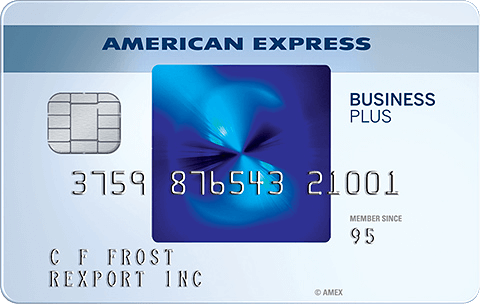
- The Amex’s Blue Business Plus card earns 2x Membership Rewards points on every purchase. If you expect to use your points on frequent flyer tickets, Membership Reward points are valued at a minimum of 1.5 cents each. The resulting 3 cents per dollar (or higher) reward rate is better than you can get from ANY other card.
- If you are willing to pay an extremely high annual fee for the Platinum Business card, you can also cash-out your points at over 3 cents per dollar spent. If you have the Business Platinum card, you receive a 35% rebate when you use your Membership Rewards points to purchase certain airline tickets. This works out to 1.54 cents per point, turning the Blue for Business card into a 3.08% cashback card, albeit with a limited set of cash-out options. But the Platinum Business card has a $595 annual fee, which can only be partially offset with airline incidental and Dell credits. This combination is discussed in more detail below.
- The Business Plus card doesn’t have an annual fee. But, it does have a high foreign transaction fee, so you’ll need to use another card when you are travelling overseas. The Business Plus card doesn’t come with purchase price or return protection.
- The card is available to even the smallest business. It doesn't need to your full-time job and your business doesn't need to be incorporated. Some sites say you need a minimum of $1,000 in revenue, but many people believe that is "projected annual revenue" moving forwards, and not "actual annual revenue" looking backwards. Like all business cards, it is supposed to be used only for business-related purchases, but many people use it for personal expenses, with no problems. Unlock Extra Reward Points with Business Credit Cards.
When you are transferring to airlines, a Membership Reward point is probably even more valuable than an Ultimate Reward point. So clearly, 2 Membership Reward points is better than 1.5 Ultimate Reward points.
Amex EveryDay Preferred card
If you can’t or don’t want to get a business card, the Amex EveryDay Preferred card is the next best Membership Rewards option. It can earns 1.5x Membership Reward points per dollar.
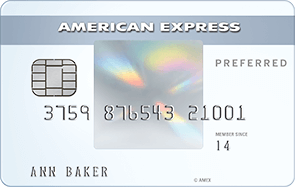
- Most people would be better off earning 1.5x Ultimate Reward points with the Chase Unlimited card, rather than 1.5x Membership Reward points with the Amex Everyday card. In addition, the Everyday Preferred card has a foreign transaction fee, so you’ll need to use another card when you are travelling overseas. You'll also need to use another card with the occasional business that doesn't take American Express cards.
- The Everyday Preferred card's "standard" earning rate is only 1x points per dollar, but if you make at least 30 charges per month, you get a 50% bonus, increasing the reward rate to 1.5x points. With the bonus, the card also earns 4.5x points at supermarkets (up to $6,000 of spending per year) and 3x points at gas stations. Fortunately, there are tricks you can use to make sure you always meet the 30 purchases per month requirement. However, this is one more thing to worry about and takes a little bit of extra effort, which is one of the reasons that we usually recommend the Chase Unlimited combination instead. Tips to Generate More than 30 Charges per Month.
If you are using your points for premium cabin award tickets, 1.5 Membership Reward points is usually better than 1.5 Ultimate Reward points. But, if you are planning to use them for economy-class award tickets, most people would be better off sticking with Ultimate Reward points, and retaining the other redemption options.
The Everyday Preferred card has a $95 annual fee. It comes with return protection, but it doesn’t come with price protection coverage.
U.S. Bank Altitude Reserve card
Unless your highly value and have the flexibility to take advantage of premium-cabin award redemptions and can generate enough points to do so, the Altitude Reserve card earns the highest possible reward rate on many (but not all) of your purchases.
- The U.S. Bank Altitude Reserve card earns 3x points on travel purchases and on any payments made with mobile wallets, like Apple Pay. Each point is worth 1.5 cents towards travel purchases, giving you a cashback rate of 4.5%. An increasing number of physical and online businesses will accept Mobile Wallet purchases, and if you have one of a number of Samsung devices, you can use your Samsung Wallet with any credit card terminal that accepts a card swipe. For purchases you make elsewhere, you’ll need to settle for just 1.5%, or use another card.
- If you are willing to prioritize using your mobile wallet whenever you can, the Altitude Reserve works like 4.5% cashback card that you can use on a significant portion of your everyday spending. Unless you highly value premium-cabin award tickets, 4.5 cents per dollar is likely better than 1.5 Ultimate Reward points, or even 2x Membership Reward Points.
- The Altitude Reserve is a pretty good option for travel purchases as well, earning nearly as much as the best cards in this category.
- One drawback is that the Altitude Reserve doesn’t come with Price or Return Protection.
- If you are willing to deal with the additional complexity, you could use the Altitude Reserve card in conjunction with another great general purpose reward card. You'd use the Altitude Reserve to earn 4.5% cash back whenever you can use your mobile wallet, and you'd use the other card (like the Chase Unlimited combo) with other merchants.
The Altitude Reserve has a $400 annual fee, but it comes with an automatic $325 rebate on travel purchases, which reduces your out-of-pocket expense to $75. You’ll also get other benefits such as 4 free airport lounge visits, and 12 Gogo inflight Wi-Fi passes. You need to be a customer of U.S. Bank to get the card, but cardholders of other U.S. Bank credit cards are supposed to count.
Good cards if you frequently travel on Amtrak
Amtrak points are actually the most valuable of all travel reward points, but you'll only earn 1 per dollar.

- If you frequently travel on Amtrak, you might get the most value from a card that earns Amtrak points. When you redeem Amtrak points for train tickets, they are worth 2.9 cents each. So 1 Amtrak point per dollar is slightly more value than you can easily get from 1.5x Ultimate Reward or Membership Reward points (although not the 2x Membership Reward points from the Amex Blue for Business Card or 3x points from the Altitude Reserve cad), and you won't have to hassle with finding good frequent flyer redemptions. On the other hand, you won't have the upside of getting even more value per point (when you use them for particularly good redemptions) or to purchase business or first class frequent flyer tickets.
- For an Amtrak card to make sense, you need to spend enough at Amtrak, to be able to redeem most of the points you earn. For example, if you spend $10,000 per year on the card, you’ll need to spend at least $290 per year on Amtrak tickets, to use up each year's points.
- The Amtrak World card is usually the better option of the two Amtrak cards It gives you a free companion certificate and upgrade certificate, when you first get the card, and on every anniversary; earns 3x points on Amtrak purchases; and gives you a 5% rebate on award redemptions. In addition, you'll earn 2x points, valued at 5.8 cents per dollar, on any other travel purchase. Only the Sapphire Reserve's reward rate on travel is comparable. For each $5,000 you spend on the card, you'll get 1,000 tier qualifying points (up to 4,000 per year). The card comes with price protection, but not return protection. $79 annual fee.
There is also a no-annual-fee version of the card, that earns lower reward rates, and doesn't provide most of the extra benefits.
Amex business card combination
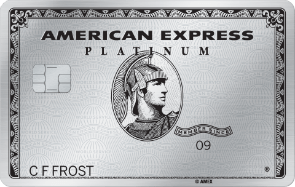
- If you have both the Amex Blue for Business Card and the Amex Business Platinum Card, you can earn 3.08% cash back. The Business Platinum card gives you a 35% rebate when you use your points to pay for certain airplane tickets purchased through Amex Travel. You'll receive the bonus for all tickets you purchase on your preferred airline, and for business and first class tickets, regardless of airline.
- With the combination of both cards, you'll be earning 3.08 cents per dollar. Even if you never use your points for (likely more valuable) frequent flyer redemptions, and only use them to purchase airfare, this combination works like a 3%+ cashback card. In addition, you'll always have the upside of using your points for particularly attractive frequent flyer award redemptions, by transferring your points to one of Membership Reward's partner frequent flyer programs.
- You can earn 3% cash back with the Discover It Miles card. The reward rate on this card is 1.5% cashback, but you'll earn double the reward during the first year.
- If you have $100,000 in investment or retirement funds, which you would be willing to manage through Merrill Lynch, you can earn 2.625% with the BOA Travel Rewards Card or BOA Premium Rewards Card. That level of assets qualifies you for Bank of America "Platinum Honors" status, which gives you a 75% bonus for the rewards you earn from some Bank of America cards. The reward bonus boosts the earning rate from the Travel Rewards and Premium Rewards card from 1.5 cents per dollar to 2.625 cents per dollar. This is the highest long-term pure cashback rate available from any card. If you have assets at another broker, you can usually transfer them to a Merrill Edge account, and manage them there (at little or no additional costs), to qualify for the higher reward rate.
- You can think of the Amtrak and Amex Business combination as high-value cash back cards. Each earns around 3%. But each is very limited in the way in which you can easily cash out.
- The United Club card earns 1.5 miles for every $1 you spend. The card has a $450 annual fee, but comes with a United Club membership, several other benefits on United Airlines, and a few other travel benefits. However, 1.5x Ultimate Rewards points is better than 1.5x United miles, because you can transfer Ultimate Rewards points to United, as well as using them with other partners.
- The Marriott Bonvoy cards (old SPG Amex card) earns 2 Marriott points for every dollar you spend, with a $95 annual fee. For every 60,000 Marriott points you transfer to airline programs, you get 25,000 miles, with the possibility of earning even more during promotions. They have a much larger group of transfer partners than the other transferable reward programs, frequently allowing you to use fewer miles for your frequent flyer redemptions.
For example, if you purchase a ticket that costs $400, you'll need to use 40,000 Membership Reward points. But, you'll get 14,000 points back. Instead of getting only 1 cent per point, you get the equivalent of 1.54 cents per point.
For this to work, you need to purchase enough in qualifying airfare per year to be able to use up all your points. You'll also need to choose a preferred airline that you travel on frequently, rather than focusing on an airline that lets you easily get the most value from the Platinum card's travel credit.
You'll need to qualify for business cards and be comfortable using them them for your personal purchases, and you'll need to be willing to pay the $595 annual fee for the Business Platinum card (which does come with some nice other benefits that can partially offset that fee). You'll also need to use another card with any merchant that doesn't take American Express or to avoid the Blue for Business card's 2.7% foreign transaction fee.
Other cash back cards that earn higher than 2.5%

It isn't that hard to string together multiple years of 3% rewards. You could cancel after the first year, temporarily switch to another card, and then re-apply. If you share finances with someone, you can alternate signing up for (and cancelling) the card, to continuously earn the first year promotional rate.
Discover cards aren't accepted everywhere, so you'll occasionally need to use another card for your purchase. The Discover card doesn't offer any purchase protections.

When you earn Ultimate Reward or Membership Reward points, you have the upside of occasionally being able to use your points for especially valuable free tickets (or hotel nights). With a cashback card, you have the advantage of using your points without much effort.
We enjoy the “game” of trying to get the most value from our points and the possibility of outsized redemptions. Plus, we love the feeling of getting “free” travel, even if deep-down we know we gave up real cash money to get those points. Other people may prefer the simplicity of a solid, sure, and steady 2.5-3% cashback.
A few less good options
For years, this was this best reward card out there, and the go-to reward card for most of us. But, now there are much better options. Even before Marriott absorbed the SPG program, this card lost its luster. Starpoints were still the most valuable reward point, but earning 1.5 Ultimate Reward points or 1.5-2x Membership Reward points per dollar was a better option, even if you didn't penalize Starwood for their longer than normal transfer times to airline programs. Now that the base earning rate is 2x Marriott points (or .833 miles per dollar), rather than equivalent of 3x Marriott points (1.25 miles per dollar), using the card is an even worse option.