Difference between revisions of "Optimize credit card rewards on your purchases"
(→What type of points to focus on?) |
(→Cash only approach) |
||
| (156 intermediate revisions by the same user not shown) | |||
| Line 1: | Line 1: | ||
| − | {{DISPLAYTITLE:{{Title|optimize rewards}} ( | + | {{DISPLAYTITLE:{{Title|optimize rewards}} (2021)}} |
| − | {{ | + | {{seo|description=Increase the rewards from your credit card spending by using cards that earn the best reward rates on bonus categories, like restaurants, travel, groceries, and gas.}} |
| − | {{Page|article|Card Strategies}} | + | {{Page|article|Earn Points|Card Strategies}} |
{{ImageX|ChooseCard.jpg|full}} | {{ImageX|ChooseCard.jpg|full}} | ||
| − | The | + | The most straightforward way to earn free travel is to get a credit card that offers a great reward rate on your purchases and use that card, rather than cash or check, whenever you can. Over the course of a year, you’ll effortlessly earn thousands of points you can use for free flights and hotel rooms. By simply choosing the right {{Link|general purpose|general purpose rewards card}}, you should be earning at least 2% in rewards. |
However, you can do even better. Many credit cards offer higher-than-normal reward rates for spending within certain categories. For example, one card may give bonus rewards for purchases from gas stations and supermarkets, while another card may give bonuses on travel and restaurants. | However, you can do even better. Many credit cards offer higher-than-normal reward rates for spending within certain categories. For example, one card may give bonus rewards for purchases from gas stations and supermarkets, while another card may give bonuses on travel and restaurants. | ||
<blockquote> | <blockquote> | ||
| − | By using different cards for different types of purchases, you can earn more reward points (or | + | By using different cards for different types of purchases, you can earn more reward points (or cashback) on your spending—with rewards rates as high as 10%! |
</blockquote> | </blockquote> | ||
| − | Unless you have problems with credit, you don’t need to worry about getting a handful of new credit cards | + | Unless you have problems with credit, you don’t need to worry about getting a handful of new credit cards. Getting a few additional cards won’t trash your credit score—it may just improve it. For more information and general tips, see our {{Link|Credit Cards 101}} article. |
{{TOC}} | {{TOC}} | ||
| − | *[[#Using different cards | + | *[[#Using different cards for different purchases isn't for everyone|Using different cards for different purchases isn't for everyone]] |
*[[#Tips for getting reward cards for different spending categories|Tips]] | *[[#Tips for getting reward cards for different spending categories|Tips]] | ||
| − | + | *[[#The best cards for increasing your rewards|The best cards for increasing your rewards]] | |
| − | *[[#The best cards for | + | *[[#Best options for each category|Best options for each category]] |
| − | *[[# | ||
| − | |||
{{/TOC}} | {{/TOC}} | ||
{{Main|article}} | {{Main|article}} | ||
| − | === Using different cards | + | === Using different cards for different purchases isn't for everyone === |
<ul class="bulletlist"> | <ul class="bulletlist"> | ||
| − | <li>''' | + | <li>'''Optimizing your rewards, by using different credit cards for different purchases, makes life more complicated'''. It is simpler to just carry around a single card and use it for all your purchases, rather than getting, carrying, and choosing from a collection of different credit cards.</li> |
| − | <li>''' | + | <li>'''You can earn a lot more points by collecting signup bonuses, rather than optimizing your ongoing reward rates'''. Unless you have some means of spending a lot of money, the amount of extra reward points you can earn by using an optimized set of cards (over the course of a year) is often smaller than the signup bonus for just one or two cards. For example, if would be able to spend $20,000 per year in bonus categories, and you earned an average of an extra 3% using bonus category rewards, you would earn an extra $600 per year—about the same as one good signup bonus.</li> |
| − | + | Furthermore, if you choose to focus on signup bonuses, most of your spending will be focused on meeting initial spending requirements and you'll have less opportunity to take advantage of optimized reward rates. {{Link|signup intro}}. | |
| − | <li>'''Within the “points hobby”, this is a famous source of tension between spouses'''—one spouse gets frustrated | + | Even more importantly, there is a limit to how many credit cards you can collect during any span of time. You’ll get more value by using those slots to get good signup bonuses (and ongoing travel benefits) rather than getting cards simply for their high reward rates. Ideally, concentrate on signup bonuses first and worry about optimizing your reward rates later. |
| + | |||
| + | <li>'''Not everyone wants to bother using a bunch of different cards for different purchases, and we don’t blame them'''.</li> | ||
| + | |||
| + | <li>'''However, many other people (and some of us) get immense satisfaction about earning the highest possible rewards from their spending''' and wouldn’t dream of “only” earning 2 - 2.5% on a purchase, when they could be earning 3 - 5% or even more. It is not just the extra points—it is the extra sense of satisfaction from taking your game to the next level. If you are hardcore, you can often find ways to generate additional spending, so that you can meet the initial spending requirements for as many cards as you can, while still collecting bonus rewards with your best cards.</li> | ||
| + | |||
| + | <li>'''Within the “points hobby”, this is a famous source of tension between spouses'''—one spouse gets frustrated when the other spouse doesn’t wind up using the “right” credit card for different purchases. Don’t let it bother you. If you or your spouse is not interested in having one more thing to worry about, stick to a great general purpose rewards card (or maybe a two-card strategy like the Chase Unlimited combo).</li> | ||
</ul> | </ul> | ||
| − | |||
| − | |||
=== Tips for getting reward cards for different spending categories === | === Tips for getting reward cards for different spending categories === | ||
| Line 44: | Line 46: | ||
<ul class="bulletlist"> | <ul class="bulletlist"> | ||
| − | <li>'''There is no single card that earns great bonus rewards in every category'''. To optimize your rewards, you’ll need to get a set of cards | + | <li>'''There is no single card that earns great bonus rewards in every category'''. To optimize your rewards, you’ll need to get a set of cards and use a different card for each category. However, you can typically get one card that is good for both travel and restaurants and another card that is good for both groceries and gas.</li> |
| − | <li>'''Focus on the cards that earn bonus rewards for the categories where you spend the most money'''. If you mostly go out to eat, a card that earns bonus rewards on restaurants is going to be more valuable than one that earns bonus rewards on groceries, and | + | <li>'''Focus on the cards that earn bonus rewards for the categories where you spend the most money'''. If you mostly go out to eat, a card that earns bonus rewards on restaurants is going to be more valuable than one that earns bonus rewards on groceries, and vice versa.</li> |
{{ImageX|Restaurant1.jpg}} | {{ImageX|Restaurant1.jpg}} | ||
| − | <li>'''Don’t focus on the NUMBER of points earned, focus on the VALUE of the points'''. The value of different types of points and miles varies widely. On one end of the scale, credit card reward points (like Ultimate Rewards) are usually worth | + | <li>'''Don’t focus on the NUMBER of points earned, focus on the VALUE of the points'''. The value of different types of points and miles varies widely. On one end of the scale, credit card reward points (like Ultimate Rewards) are usually worth at least 1.5 cents each. On the other end of the scale, some hotel points, like Hilton's, are only worth .4-.5 cents each.</li> |
| − | |||
| − | |||
| − | <li>'''To determine whether a card is worthwhile, you need to | + | <li>'''To determine whether a card is worthwhile, you need to determine whether the extra points you'll earn justifies the card’s annual fee'''. To figure out the value you expect to get from a card, you need to take the amount you expect to spend and multiply it by the extra points that you will earn, above-and-beyond the points you would have earned by just using your general purpose reward card. Then you need to subtract the card's annual fee.</li> |
{{Card|BlueCash}} | {{Card|BlueCash}} | ||
| − | An example may make this clearer. The Amex Blue Preferred | + | An example may make this clearer. The Amex Blue Preferred Card offers an amazing 6% cash back on your first $6,000 worth of supermarket spending. If you spend $5,000 on groceries each year, you’ll earn $300 cash back. But the real added value of the card is lower. If you already have the Chase Unlimited combo, you could have used your Unlimited Card to earn 7,500 Ultimate Rewards points on the same $5,000 of groceries. If you value the Ultimate Rewards points at {{Value|UR}} cents each, that works out to {{Value|UR|7500}}. The Blue Preferred Card only earns $170 in extra rewards. And, to earn those extra rewards, you’ll need to pay the Blue Preferred Card's $95 annual fee. |
| − | The final net benefit works out to $75 per year, not the $300 | + | The final net benefit works out to $75 per year, not the $300 of expected rewards. If you spend less on groceries, you'll earn less. If you spend the full $6,000, you can earn slightly more. |
| − | When you are determining whether it makes sense to get a card for ongoing use, we recommend ignoring any waiver of the first-year’s annual fee . You are focusing on whether these cards make sense for the long run. The waived annual fee | + | When you are determining whether it makes sense to get a card for ongoing use, we recommend ignoring any waiver of the first-year’s annual fee. You are usually focusing on whether these cards make sense for the long run. The waived annual fee is essentially just part of the signup bonus for the card and doesn't affect the long-term value proposition. |
| − | <li>''' | + | <li>'''You only need to pay attention to bonus rewards that are better than 2% back'''. Because you should be earning 2% or more with your general purpose card, earning 2% on a bonus category is not valuable. Only pay attention to cards that have category bonuses worth 3% or more. Just remember that depending on the type of points, a card that only earns 2x points may be earning more than 3% in value.</li> |
| − | + | {{Card|DoubleCash}} | |
| + | </ul> | ||
| − | + | === The best cards for increasing your rewards === | |
| − | + | Before you can determine which cards to get for different spending categories, you need to make some decisions about 1) which types of points to earn, 2) whether you are willing and able to use business cards, and 3) how much extra work you're willing to do. | |
| − | <li>''' | + | <ul class="bulletlist"> |
| − | + | <li>'''The type of reward points you should earn depends on how you plan to use your points'''. We assign a "value" for each type of point based on a range of typical travelers. Depending on your plans and situation, these points can be much more valuable or much less valuable than our base values. {{Link|point values}}.</li> | |
| − | {{ | ||
| − | </ | ||
| − | + | For example, if you don't have a lot of flexibility, it might be very hard to get good value by using Membership Rewards points to book frequent flyer tickets and they may only be worth 1 cent each. At the opposite extreme, if you have more flexibility and you highly value premium-cabin award redemptions, Membership Rewards points may be worth 3-4 cents each (or even more). </li> | |
| − | + | Different people will want to follow different approaches towards earning rewards: | |
| − | + | <ul class="checklist"> | |
| + | <li>'''Standard approach'''. It is hard to go wrong with our normal points optimization approach, which primarily focuses on earning Chase Ultimate Rewards points, but also takes advantage of cards that earn cash-like points when good Ultimate Rewards options are not available. </li> | ||
| − | + | It aims to earn the highest possible reward rates, assuming that you plan to use the points on EASY redemptions (for a variety of travel purchases). It provides the upside of using your Ultimate Rewards points for frequent flyer tickets and serves as a good gateway to advanced travel reward strategies, but still provides excellent value even if you never find good frequent flyer award opportunities. | |
| − | |||
| − | + | <li>'''Optimized for frequent flyer tickets'''. If you have the skills and flexibility to get good value from your points by using them for frequent flyer tickets, you can earn higher rewards by including cards which earn Amex's Membership Rewards points and Citibank's ThankYou points. {{Link|Transferable Points}}.</li> | |
| − | + | This is true, even if you are just using them for coach tickets. But if you highly value business and first-class award tickets and have the patience to build up large quantities of points, you should always try to earn as many "transferable" points as you can. You don't want to mess around with cards that earn cash-like points when you could be earning extremely valuable transferable reward points instead. | |
{{Image|TransferPrograms.png|420}} | {{Image|TransferPrograms.png|420}} | ||
| − | + | For most people, the more of these points, the better. But everything else being equal, Membership Rewards points are somewhat better than Ultimate Rewards and ThankYou points. Membership Rewards' larger number of airline partners, occasional transfer bonuses, and easier points accumulation, usually makes it the best choice if you are going to use your points for frequent flyer tickets. | |
| − | + | Of course, depending on the airlines you are likely to fly, you might wind up with slightly different preferences. Most importantly, if you want to frequently use your points for domestic Delta flights, you'll want to prioritize Membership Rewards points, and if you want to frequently use your points for domestic United flights, you'll want to prioritize Ultimate Rewards points. | |
| + | |||
| + | <li>'''Cash Only'''. Some people might prefer focusing strictly on cashback cards or cards that earn cash-like points (which can be used for a very wide variety of travel purchases). For these people, each type of transferable reward point is only worth its cash-out value.</li> | ||
| + | </ul> | ||
| − | <li>'''If | + | <li>'''Small business credit cards expand your options for earning bonus rewards'''. If you have any type of small business (even if you also have a full-time job and you haven’t made any money yet), you are eligible for small-business credit cards. Many of these cards offer bonus rewards on spending categories that aren’t often available from personal cards—such as purchases from office supply stores or telecom providers. Technically, you aren’t supposed to use these cards for personal expenses, but many people do, with no problems. If you are eligible for these cards, and willing to use them for your spending, you’ll be able to boost your rewards. {{Link|Business Cards}}.</li> |
| − | + | {{Card|InkPreferred}} | |
| − | <li>''' | + | <li>'''Some cards are primarily attractive for people who are willing to make an extra effort to optimize their reward rate'''. For example, the Amex Gold Card has a high annual fee, but a great reward rate (4x Membership Rewards points) on groceries. For most people, their natural grocery store purchases aren't likely to be high enough to justify the annual fee. But if you are willing to purchase gift cards from the grocery store and then use those gift cards at other merchants (or otherwise "liquidate" them), you can earn enough extra points to make this card very worthwhile.</li> |
| − | {{ | + | {{Image|GiftCardRack2.jpg|360}} |
| + | Similarly, you can earn fantastic reward rates from rotating category cards, such as the Chase Freedom Card. But you'll need to register for a changing set of reward categories each calendar quarter. And for many quarters, you are likely to have to shift purchases around or take advantage of gift cards to maximize the earning potential of the card. | ||
</ul> | </ul> | ||
| − | === The best | + | {{Box}} |
| + | '''If you've decided to make the Amex BUSINESS Platinum Card part of your core credit card collection, Membership Rewards points can be cashed-out at higher values'''. You can use your points at 1.54 cents each to buy airfare on your favorite airline or for any business or first-class ticket. This makes cards that earn Membership Rewards more valuable for people who are normally interested in our standard or cash-only approaches to earning points. {{Link|Membership Rewards}}.{{/Box}} | ||
| + | |||
| + | ==== Standard approach ==== | ||
| + | |||
| + | Our standard approach to optimizing rewards focuses on earning Ultimate Rewards points (when possible) and earning cash-like points when there are no good Ultimate Rewards options. | ||
| + | |||
| + | {{List|Card}} | ||
| + | {{CardItem|UnlimitedCombo}} | ||
| + | Start with the {{Card|FreedomUnlimited|only}} and {{Card|SapphireReserve|only}} or {{Card|SapphirePreferred|only}} combination to earn 3x Ultimate Rewards points ({{Value|UR|3}}%) on '''restaurants''' and '''drugstores''', 5x Ultimate Rewards points ({{Value|UR|5}}%) on '''travel bought through the Chase website''', 2 or 3x Ultimate Rewards points ({{Value|UR|2}}-{{Value|UR|3}}%) on '''other travel''', and 1.5x Ultimate Rewards points ({{Value|UR|1.5}}%) on your '''everyday purchases'''. The Sapphire Preferred throws in 3x Ultimate Reward points ({{Value|UR|3}}%) on '''Streaming and Online Grocery Services''' and the Sapphire Reserve offers 10x points on hotels and car rentals purchased through Chase. The Freedom Unlimited has no annual fee. The annual fee on the Sapphire Preferred is $95 and it comes with a $50 hotel credit as long as you pay (likely slightly overpriced rates) through Chase. The annual fee on Sapphire Reserve is $550, but an automatic $300 travel credit and a $60 per year DoorDash credit, drops the effective annual fee to $130-250. | ||
| + | |||
| + | {{CardItem|Bluecash}} | ||
| + | Add the {{Card|Bluecash|only}} for 6% on your first $6,000 of '''grocery''' store spending, 6% on '''streaming services''' and 3% on '''gas'''. It is almost always your best option for groceries, even with its $95 annual fee. | ||
| − | ''' | + | {{CardItem|Bilt}} |
| + | If you pay '''rent''' and your landlord doesn't take credit cards or charges a credit card fee, you can earn up to 50,000 points per year using the {{Card|Bilt|only}}. Even better, these points can be transferred to Hyatt and a number of great airline partners. If you wind up getting this card and you like the airline partners better than the ones in the Ultimate Rewards program, you may also want to use it to earn 3x Bilt points ({{Value|UR|3}}%) on your dining purchases. No annual fee. | ||
| − | If you want to | + | {{CardItem|Altitude}} |
| + | Most people can substantially boost their rewards by using the {{Card|Altitude|only}} to earn 4.5% on all purchases they make with Apple Pay, Google Pay or other '''mobile wallets'''. Once this card is added to your wallet, use it as often as you can, except when you can earn even more from one of your other cards. If you have one of many Samsung phones from the past few years, you can use the Altitude Reserve through your Samsung wallet at any credit card swipe machine. If you have a non-Samsung Android phone, consider getting a Samsung Gear 3 watch to do the same thing. Unfortunately, if you want this card, you need to have an existing relationship with U.S. Bank and not many other recently acquired credit cards. $400 annual fee, but an automatic $325 travel and restaurant credit drops the effective annual fee to $75. | ||
| − | + | {{CardItem|AmazonStore}} | |
| + | If you are one of the many people who spends a significant amount at Amazon, you should probably get one of the cards that offers 5% on '''Amazon purchases''' with no annual fee. Your best option is probably the {{Card|affinitycu|only}}, if you can get approved for it. It provides a rotating set of 5% categories on top of its 5% reward rate on Bookstores, including Amazon. Otherwise, we recommend the {{Card|AmazonStore|only}} because it doesn't take up a Chase or Amex Slot, is eligible for most of Amazon's cardholder promotions, and like the Chase and Amex cards, also earns 5% at Whole Foods (if you buy most of your groceries at Whole Foods, you may not need to bother with the Amex Blue Preferred). | ||
| − | {{ | + | Depending on your shopping habits, you might consider the {{Card|Walmart|only}} for 5% back on '''Walmart.com''' purchases and the [//www.target.com/redcard/about Target Debit Card] for 5% back on '''Target''' purchases. |
| − | |||
| − | ''' | ||
| − | |||
| − | |||
| − | {{CardItem| | + | {{CardItem|BOACash}} |
| − | + | If you can move enough money to Bank of America and/or Merrill Lynch to qualify for Platinum Honors status, you should get the {{Card|BOACash|only}} to boost your rewards on '''online shopping'''. It earns up to 5.25% on up to $2,500 of purchases each quarter. Ideally, you would sign up for a different Bank of America card, collect a more valuable signup offer, wait a year, and then convert it to the Cash Rewards card. | |
| − | |||
| − | + | {{CardItem|SamsClub}} | |
| + | If you spend a lot on gas, you might consider getting a card just for '''gas''' purchases—you can boost your rewards to 4 or 5%. There are {{Link|Gas spending|several options}} that have no annual fee. | ||
| − | {{CardItem| | + | {{CardItem|CitiCash}} |
| − | + | If you are willing to do some extra work, you can use a Citi Custom Cash Card for up to your first $500 of grocery or dining spend each month (or travel, drugstore, fitness, or home improvement in months you spend a lot on those categories) and earn 5x ThankYou points, rather than your normal category bonus. | |
| − | + | {{/List|Card}} | |
| − | {{ | + | {{Box|Use your travel credits}} |
| − | + | '''If you aren't expecting to travel, you can use some card's travel credits to offset other types of purchases'''. The Sapphire Reserve's travel credit will automatically offset grocery and gas spending, the Citi Prestige Card's will automatically offset restaurant and grocery spending during all of 2021, and the Altitude Reserve Card's will now automatically offset restaurant spending. Make sure to use these cards enough to take advantage of the entire credit amount. | |
| + | {{/Box}} | ||
| − | + | If you are willing and able to get business cards, you can further increase your reward earning potential. | |
| − | |||
| + | {{List|Card}} | ||
{{CardItem|InkPreferred}} | {{CardItem|InkPreferred}} | ||
| − | + | If you are not willing to pay for the enhanced benefits of the Sapphire Reserve card, such as airport lounge access and the ability to "cash out" your points at 1.5 cents each (rather than 1.25 cents), the Ink Preferred card can be a better rewards option than the Sapphire Preferred. It has the same annual fee, but comes with a much higher signup bonus, 3x Ultimate Rewards points on all non-Chase '''travel''' purchases (rather than 2x), plus bonus rewards on '''shipping''', '''telecommunication services''', and '''online advertising'''. It also doesn't take up one of your Chase 5/24 slots, but can't be freely converted to a Sapphire Reserve if you change your mind. | |
| + | |||
| + | {{CardItem|InkCash}} | ||
| + | You can earn 5x Ultimate Rewards points ({{Value|UR|5}}%) at '''office supply stores''' and on '''telecommunications services''' with the {{Card|InkCash|only}}, with no annual fee (and a generous signup bonus). You also get 2x Ultimate Rewards ({{Value|UR|2}}%) on gas, which is better than the Amex Blue Preferred, but not as good as the best of the specialized gas cards. | ||
| + | {{/List|Card}} | ||
| − | + | ==== Optimized for frequent flyer tickets ==== | |
| − | |||
| − | |||
| − | + | If you are willing and able to get good value from using your reward points for frequent flyer tickets, you can increase the value of your rewards by including cards that earn Membership Rewards and/or ThankYou points. | |
| − | |||
| − | |||
| − | {{CardItem| | + | {{List|Card}} |
| − | ''' | + | {{CardItem|DoubleCash}} |
| + | Start with the {{Card|DoubleCash|only}}. When combined with a Citi Premier (or Prestige) Card, it earns 2x ThankYou points on '''everyday purchases'''. | ||
| − | + | Alternatively, if you can take good advantage of Capital One's 1:1 airline partners, get the {{Card|Venture|only}}. Like the Double Cash card, it earns 2x points on all spending. Capital One has a better selection of airline partners, but you only get 1:1 transfers with some of them. | |
| − | |||
| − | {{ | + | {{CardItem|CitiPremier}} |
| + | If you want to keep things simple, get the {{Card|CitiPremier|only}}. For just a $95 annual fee, you'll earn 3x ThankYou points on '''airfare''', '''hotels''', '''restaurants''', '''groceries''', and '''gas''', and be able to transfer all your points to frequent flyer programs. If you aren't collecting signup bonuses, it has the added benefit of focusing your reward earning in a single program. However, if you are collecting signup bonuses, you'll wind up with points in all the major programs anyway. | ||
| − | {{ | + | If you prefer to focus on Capital One points, you could get the {{Card|SavorOne|only}} instead and earn 3x Capital One points on '''restaurants''', '''groceries''', and '''entertainment'''. You would then want to look at an additional option for travel and gas. |
| − | + | ||
| − | + | {{CardItem|CitiRewards}} | |
| + | The {{Card|CitiRewards|only}} gives you a '''10% rebate''' on the first 100,000 ThankYou points you redeem each year, boosting the value from the Double Cash, Premier Card, and discontinued Prestige Card. | ||
| − | + | {{CardItem|Bilt}} | |
| + | If you pay '''rent''' and your landlord doesn't take credit cards or charges a credit card fee, you can earn up to 50,000 points per year using the {{Card|Bilt|only}}. Even better, these points can be transferred to Hyatt and a number of great airline partners. If you wind up getting this card and you like the airline partners better than the ones in the Ultimate Rewards program, you may also want to use it to earn 3x Bilt points ({{Value|UR|3}}%) on your dining purchases. No annual fee. | ||
| − | + | {{CardItem|Altitude}} | |
| + | Some people may want to earn 4.5% by using the {{Card|Altitude|only}} for '''mobile wallet purchases'''. If you value Membership Rewards or ThankYou points at less than 2.25 cents each, earning 4.5% in cash-like points is better than earning 2x points with the Double Cash Card (or Blue Business Plus Card). | ||
| − | + | {{CardItem|AmazonStore}} | |
| − | + | You may prefer 5% on Amazon from one of the cards that offers 5% on '''Amazon purchases''' over 2x points from your everyday card. Your best option is probably the {{Card|affinitycu|only}}, if you can get approved for it. It provides a rotating set of 5% categories on top of its 5% reward rate on Bookstores, including Amazon. Otherwise, we recommend the {{Card|AmazonStore|only}} because it doesn't take up a Chase or Amex Slot, is eligible for most of Amazon's cardholder promotions, and like the Chase and Amex cards, also earns 5% at Whole Foods (if you buy most of your groceries at Whole Foods, you may not need to bother with the Amex Blue Preferred). | |
| − | |||
| − | + | Depending on your shopping habits, you might also consider the {{Card|Walmart|only}} for 5% back on '''Walmart.com''' purchases and the [//www.target.com/redcard/about Target Debit Card] for 5% back on '''Target''' purchases. | |
| − | If you | + | {{CardItem|BOACash}} |
| + | If you can move enough money to Bank of America and/or Merrill Lynch to qualify for Platinum Honors status, you might prefer the 5.25% from {{Card|BOACash|only}} (on up to $2,500) of '''online purchases''' to 2x transferable points. | ||
| − | {{ | + | {{CardItem|CitiCash}} |
| + | If you are willing to do some extra work, you can use a Citi Custom Cash Card for up to your first $500 of grocery or dining spend each month (or travel, drugstore, fitness, or home improvement in months you spend a lot on those categories) and earn 5x ThankYou points, rather than your normal category bonus. | ||
| − | {{ | + | {{CardItem|Rakuten}} |
| − | + | If you can't maximize your rewards on the BOA Cash card (or you are hitting the quartly caps), you can earn 3x Membership Rewards points on at least '''some of your online purchases''' with the {{Card|Rakuten|only}}. It only works for online purchases made through the Rakuten (eBates) shopping portal. | |
| − | + | {{CardItem|Freedom}} | |
| − | + | Adding the {{Card|Freedom|only}} will let you earn 3x Ultimate Rewards points on '''drugstores''', 5x Ultimate Rewards points on your first $1,500 of spending in a '''rotating set of categories''' each quarter, and 5x Ultimate Rewards points on '''travel bought through Chase'''. It also gives you the option if earning 3x Ultimate Rewards points (rather than 3x ThankYou points) on '''restaurants'''. But to transfer the points to frequent flyer or hotel programs, you'll need to pay the annual fee for a Sapphire Preferred or Sapphire Reserve card each year. | |
| − | + | {{/List|Card}} | |
| − | |||
| − | |||
| − | + | If you can add business cards into the mix, many people will want to switch over to primarily Membership Rewards points. | |
| − | + | {{List|Card}} | |
| − | + | {{CardItem|BlueBiz}} | |
| − | + | Most people would prefer to earn 2x Membership Rewards points with the {{Card|BlueBiz|only}} over 2x ThankYou points with the Double Cash Card. However, note that the 2x rate is capped at $50,000 per copy of the card per year and that Amex cards aren't accepted at all merchants. | |
| − | |||
| − | |||
| − | |||
| − | + | {{CardItem|GreenCard}} | |
| + | If you don't want to split your points between two different programs and you don't want the Citi Presige Card for its other benefits, you can augment the Blue for Business Card with the {{Card|GreenCard|only}} and the {{Card|EverydayPreferred|only}} to earn 3x points on '''travel''' and '''restaurants''' and up to 4.5x points on '''groceries''' and '''gas'''. The annual fees for both cards total about $250. | ||
| − | {{ | + | {{CardItem|InkCash}} |
| − | + | For '''office supply stores''', '''telecommunication services''', and other '''business-oriented categories''', you would follow the same recommendations as our standard strategy. Remember that if you get the Ink Cash Card, you will need the Ink Preferred, Sapphire Reserve, or Sapphire Preferred Card to take full advantage of any points you'd earn. | |
| + | {{/List|Card}} | ||
| + | {{Box|Earning More Value from Many Chase and Citibank Cards}} | ||
<ul class="bulletlist"> | <ul class="bulletlist"> | ||
| − | + | <li>Some Chase and Citibank cards earn less-flexible versions of their reward points, which can only be redeemed for 1 cent each on things like gift cards.</li> | |
| − | |||
| − | |||
| − | </ | ||
| − | + | <li>However, if you combine these cards with one of Chase’s or Citibank’s premium cards, you can redeem these points for full value—transferring them to airline or hotel programs or getting a higher-than-normal value when you use them to purchase travel through the credit card company’s travel portal.</li> | |
| − | + | <li>Most often, the credit card company will advertise these cards as x% cash-back cards, but the real earning rate can be significantly higher.</li> | |
| − | For | + | <li>For example, the points you earn from the Chase Freedom Card are usually worth 1 cent each, but if you have a Sapphire or Ink Reserve Card, you can convert them to 1 frequent flyer mile instead. Or the points you earn from purchases with the Citibank Double Cash Card are normally worth 2 cents per dollar, but if you have the Citi Premier (or Prestige) Card, you can get use your points to get 2 airline miles instead.</li> |
| + | </ul> | ||
| + | {{/Box}} | ||
| − | + | ==== Cash only approach ==== | |
| − | |||
| − | |||
| − | |||
| − | |||
| − | |||
| − | + | If you want to stick with cashback (and other cash-like points), you might want to make a few adjustments to the standard approach described above. If you are still interested in the extra benefits of the Sapphire Reserve Card, you could stick with the '''Chase Unlimited combo'''. Even if you are simply cashing out your points through "pay yourself back" or via paying for travel on the Chase website, you'll earn 4.5% on all your travel, dining, and drugstore purchases, 7.5% on travel purchased through Chase, and 2.25% on everything else. | |
| − | + | If the Sapphire Reserve isn't worth its annual fee... | |
| − | |||
| − | |||
| − | |||
| − | {{ | + | {{List|Card}} |
| − | + | {{CardItem|Alliant}} | |
| + | Get the best '''{{Link|general purpose|general purpose card}}''' you can. That could be the {{Card|Alliant|only}}, one of the no-annual-fee 2% cards, or the {{Card|BOAUnlimited|only}} or {{Card|BOAPremium|only}} (if you qualify for Bank of America's Platinum Honors status). | ||
| − | + | {{CardItem|Altitude}} | |
| + | Use the {{Card|Altitude|only}} for your '''travel''' purchases, as well as for '''mobile wallet''' purchases. | ||
| − | + | {{CardItem|AltitudeGo}} | |
| + | If you find that you can't use your Altitude Reserve Card at many of the restaurants you visit, consider getting the {{Card|AltitudeGo|only}} to earn 4% back on those '''restaurants'''. | ||
| + | {{/List|Card}} | ||
| − | + | Alternatively... | |
| − | + | {{List|Card}} | |
| − | + | {{CardItem|Fairwinds}} | |
| − | + | If you spend enough to justify the $249 annual fee, get the little-known {{Card|Fairwinds|only}}. It earns 5x points on '''travel''', 3x points on '''restaurants''', and 2x points '''everywhere else'''. But points are worth 1.5 cents each when used to buy travel through the CURewards website, giving you a reward rate of 7.5% on travel, 4.5% on restaurants, and 3% everywhere else. | |
| − | + | {{/List|Card}} | |
| − | |||
| − | |||
| − | |||
| − | + | Regardless of which of these three approaches you take for your everyday, travel and restaurant purchases, you'd follow the other recommendations of the standard approach, getting the {{Card|BlueCash|only}} for '''groceries''', '''streaming services''', and maybe gas; the {{Card|Bilt|only}} for '''rent''' you can't pay with other cards, the {{Card|Altitude|only}} for '''mobile wallet payments''', one of the Amazon cards for '''Amazon''', the {{Card|BOACash|only}} for '''online shopping''', potentially the {{Card|Freedom|only}} for '''drugstores''', '''travel purchased through Chase''', and a '''set of rotating categories''' and/or the {{Card|CitiCash|only}} for a boost on one category of your choice per month, and possibly a card for '''gas''', '''Walmart.com''', and '''Target'''. | |
| − | + | Then if you are willing and able to get business cards, you might add on: | |
| − | + | {{List|Card}} | |
| + | {{CardItem|InkCash}} | ||
| + | The {{Card|InkCash|only}} earns 5x Ultimate Rewards back on '''office supplies''' and '''wireless telephone services'''. | ||
| + | {{/List|Card}} | ||
| − | + | === Best options for each category === | |
| − | + | If you want to see some other options for each category, make sure to view our “Best Options” guides. | |
| − | {{ | + | <center> |
| + | {{Tile|general purpose|General Purpose}} | ||
| + | {{Tile|travel spending|Travel}} | ||
| + | {{Tile|restaurant spending|Restaurants}} | ||
| + | {{Tile|grocery spending|Groceries}} | ||
| + | {{Tile|gas spending|Gas}} | ||
| + | {{Tile|store spending|Retail Shopping}} | ||
| + | {{Tile|uncommon categories|Other...}} | ||
| + | </center> | ||
| − | + | Also, Doctor of Credit has good set of [//www.doctorofcredit.com/credit-card-reference-pages/#Category_Spending_Bonuses reference pages] that provides relatively up-to-date information on the options for different bonus categories. | |
{{/Main|article}} | {{/Main|article}} | ||
Latest revision as of 18:11, 21 September 2021
Easily Earn Points for Free Travel, Credit Card Reference

The most straightforward way to earn free travel is to get a credit card that offers a great reward rate on your purchases and use that card, rather than cash or check, whenever you can. Over the course of a year, you’ll effortlessly earn thousands of points you can use for free flights and hotel rooms. By simply choosing the right general purpose rewards card, you should be earning at least 2% in rewards.
However, you can do even better. Many credit cards offer higher-than-normal reward rates for spending within certain categories. For example, one card may give bonus rewards for purchases from gas stations and supermarkets, while another card may give bonuses on travel and restaurants.
By using different cards for different types of purchases, you can earn more reward points (or cashback) on your spending—with rewards rates as high as 10%!
Unless you have problems with credit, you don’t need to worry about getting a handful of new credit cards. Getting a few additional cards won’t trash your credit score—it may just improve it. For more information and general tips, see our Credit Cards 101 article.
Jump to
Jump to:
Using different cards for different purchases isn't for everyone
- Optimizing your rewards, by using different credit cards for different purchases, makes life more complicated. It is simpler to just carry around a single card and use it for all your purchases, rather than getting, carrying, and choosing from a collection of different credit cards.
- You can earn a lot more points by collecting signup bonuses, rather than optimizing your ongoing reward rates. Unless you have some means of spending a lot of money, the amount of extra reward points you can earn by using an optimized set of cards (over the course of a year) is often smaller than the signup bonus for just one or two cards. For example, if would be able to spend $20,000 per year in bonus categories, and you earned an average of an extra 3% using bonus category rewards, you would earn an extra $600 per year—about the same as one good signup bonus.
- Not everyone wants to bother using a bunch of different cards for different purchases, and we don’t blame them.
- However, many other people (and some of us) get immense satisfaction about earning the highest possible rewards from their spending and wouldn’t dream of “only” earning 2 - 2.5% on a purchase, when they could be earning 3 - 5% or even more. It is not just the extra points—it is the extra sense of satisfaction from taking your game to the next level. If you are hardcore, you can often find ways to generate additional spending, so that you can meet the initial spending requirements for as many cards as you can, while still collecting bonus rewards with your best cards.
- Within the “points hobby”, this is a famous source of tension between spouses—one spouse gets frustrated when the other spouse doesn’t wind up using the “right” credit card for different purchases. Don’t let it bother you. If you or your spouse is not interested in having one more thing to worry about, stick to a great general purpose rewards card (or maybe a two-card strategy like the Chase Unlimited combo).
Furthermore, if you choose to focus on signup bonuses, most of your spending will be focused on meeting initial spending requirements and you'll have less opportunity to take advantage of optimized reward rates. Credit Card Signup Bonuses: The Easiest Path to Free Airplane Tickets and Hotel Nights.
Even more importantly, there is a limit to how many credit cards you can collect during any span of time. You’ll get more value by using those slots to get good signup bonuses (and ongoing travel benefits) rather than getting cards simply for their high reward rates. Ideally, concentrate on signup bonuses first and worry about optimizing your reward rates later.
Tips for getting reward cards for different spending categories
The right set of cards to get, and the order to get them, depends on your individual circumstances.
- There is no single card that earns great bonus rewards in every category. To optimize your rewards, you’ll need to get a set of cards and use a different card for each category. However, you can typically get one card that is good for both travel and restaurants and another card that is good for both groceries and gas.
- Focus on the cards that earn bonus rewards for the categories where you spend the most money. If you mostly go out to eat, a card that earns bonus rewards on restaurants is going to be more valuable than one that earns bonus rewards on groceries, and vice versa.
- Don’t focus on the NUMBER of points earned, focus on the VALUE of the points. The value of different types of points and miles varies widely. On one end of the scale, credit card reward points (like Ultimate Rewards) are usually worth at least 1.5 cents each. On the other end of the scale, some hotel points, like Hilton's, are only worth .4-.5 cents each.
- To determine whether a card is worthwhile, you need to determine whether the extra points you'll earn justifies the card’s annual fee. To figure out the value you expect to get from a card, you need to take the amount you expect to spend and multiply it by the extra points that you will earn, above-and-beyond the points you would have earned by just using your general purpose reward card. Then you need to subtract the card's annual fee.
- You only need to pay attention to bonus rewards that are better than 2% back. Because you should be earning 2% or more with your general purpose card, earning 2% on a bonus category is not valuable. Only pay attention to cards that have category bonuses worth 3% or more. Just remember that depending on the type of points, a card that only earns 2x points may be earning more than 3% in value.

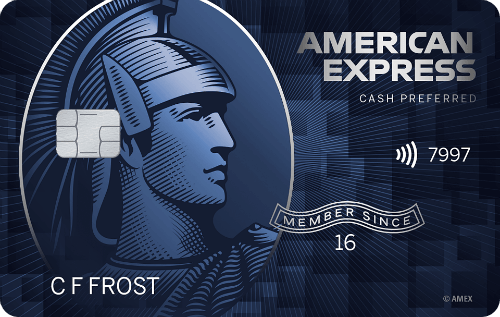
An example may make this clearer. The Amex Blue Preferred Card offers an amazing 6% cash back on your first $6,000 worth of supermarket spending. If you spend $5,000 on groceries each year, you’ll earn $300 cash back. But the real added value of the card is lower. If you already have the Chase Unlimited combo, you could have used your Unlimited Card to earn 7,500 Ultimate Rewards points on the same $5,000 of groceries. If you value the Ultimate Rewards points at 1.7 cents each, that works out to $130. The Blue Preferred Card only earns $170 in extra rewards. And, to earn those extra rewards, you’ll need to pay the Blue Preferred Card's $95 annual fee.
The final net benefit works out to $75 per year, not the $300 of expected rewards. If you spend less on groceries, you'll earn less. If you spend the full $6,000, you can earn slightly more.
When you are determining whether it makes sense to get a card for ongoing use, we recommend ignoring any waiver of the first-year’s annual fee. You are usually focusing on whether these cards make sense for the long run. The waived annual fee is essentially just part of the signup bonus for the card and doesn't affect the long-term value proposition.
The best cards for increasing your rewards
Before you can determine which cards to get for different spending categories, you need to make some decisions about 1) which types of points to earn, 2) whether you are willing and able to use business cards, and 3) how much extra work you're willing to do.
- The type of reward points you should earn depends on how you plan to use your points. We assign a "value" for each type of point based on a range of typical travelers. Depending on your plans and situation, these points can be much more valuable or much less valuable than our base values. How Much are Points Worth?. For example, if you don't have a lot of flexibility, it might be very hard to get good value by using Membership Rewards points to book frequent flyer tickets and they may only be worth 1 cent each. At the opposite extreme, if you have more flexibility and you highly value premium-cabin award redemptions, Membership Rewards points may be worth 3-4 cents each (or even more).
- Standard approach. It is hard to go wrong with our normal points optimization approach, which primarily focuses on earning Chase Ultimate Rewards points, but also takes advantage of cards that earn cash-like points when good Ultimate Rewards options are not available.
- Optimized for frequent flyer tickets. If you have the skills and flexibility to get good value from your points by using them for frequent flyer tickets, you can earn higher rewards by including cards which earn Amex's Membership Rewards points and Citibank's ThankYou points. Introduction to 'Transferable' Reward Points.
- Cash Only. Some people might prefer focusing strictly on cashback cards or cards that earn cash-like points (which can be used for a very wide variety of travel purchases). For these people, each type of transferable reward point is only worth its cash-out value.
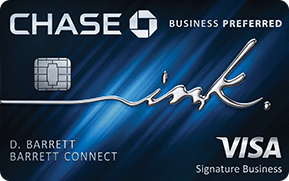
- Small business credit cards expand your options for earning bonus rewards. If you have any type of small business (even if you also have a full-time job and you haven’t made any money yet), you are eligible for small-business credit cards. Many of these cards offer bonus rewards on spending categories that aren’t often available from personal cards—such as purchases from office supply stores or telecom providers. Technically, you aren’t supposed to use these cards for personal expenses, but many people do, with no problems. If you are eligible for these cards, and willing to use them for your spending, you’ll be able to boost your rewards. Unlock Extra Reward Points with Business Credit Cards.
- Some cards are primarily attractive for people who are willing to make an extra effort to optimize their reward rate. For example, the Amex Gold Card has a high annual fee, but a great reward rate (4x Membership Rewards points) on groceries. For most people, their natural grocery store purchases aren't likely to be high enough to justify the annual fee. But if you are willing to purchase gift cards from the grocery store and then use those gift cards at other merchants (or otherwise "liquidate" them), you can earn enough extra points to make this card very worthwhile.
Different people will want to follow different approaches towards earning rewards:
It aims to earn the highest possible reward rates, assuming that you plan to use the points on EASY redemptions (for a variety of travel purchases). It provides the upside of using your Ultimate Rewards points for frequent flyer tickets and serves as a good gateway to advanced travel reward strategies, but still provides excellent value even if you never find good frequent flyer award opportunities.
This is true, even if you are just using them for coach tickets. But if you highly value business and first-class award tickets and have the patience to build up large quantities of points, you should always try to earn as many "transferable" points as you can. You don't want to mess around with cards that earn cash-like points when you could be earning extremely valuable transferable reward points instead.

For most people, the more of these points, the better. But everything else being equal, Membership Rewards points are somewhat better than Ultimate Rewards and ThankYou points. Membership Rewards' larger number of airline partners, occasional transfer bonuses, and easier points accumulation, usually makes it the best choice if you are going to use your points for frequent flyer tickets.
Of course, depending on the airlines you are likely to fly, you might wind up with slightly different preferences. Most importantly, if you want to frequently use your points for domestic Delta flights, you'll want to prioritize Membership Rewards points, and if you want to frequently use your points for domestic United flights, you'll want to prioritize Ultimate Rewards points.

Similarly, you can earn fantastic reward rates from rotating category cards, such as the Chase Freedom Card. But you'll need to register for a changing set of reward categories each calendar quarter. And for many quarters, you are likely to have to shift purchases around or take advantage of gift cards to maximize the earning potential of the card.
Standard approach
Our standard approach to optimizing rewards focuses on earning Ultimate Rewards points (when possible) and earning cash-like points when there are no good Ultimate Rewards options.
|
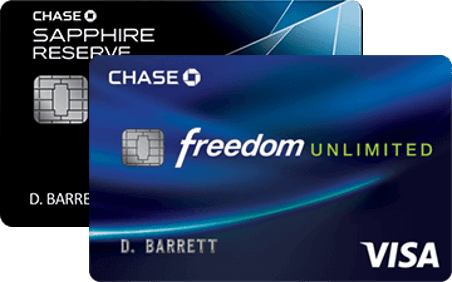
Start with the Freedom Unlimited Card and Sapphire Reserve Card or Sapphire Preferred Card combination to earn 3x Ultimate Rewards points (5.1%) on restaurants and drugstores, 5x Ultimate Rewards points (8.5%) on travel bought through the Chase website, 2 or 3x Ultimate Rewards points (3.4-5.1%) on other travel, and 1.5x Ultimate Rewards points (2.55%) on your everyday purchases. The Sapphire Preferred throws in 3x Ultimate Reward points (5.1%) on Streaming and Online Grocery Services and the Sapphire Reserve offers 10x points on hotels and car rentals purchased through Chase. The Freedom Unlimited has no annual fee. The annual fee on the Sapphire Preferred is $95 and it comes with a $50 hotel credit as long as you pay (likely slightly overpriced rates) through Chase. The annual fee on Sapphire Reserve is $550, but an automatic $300 travel credit and a $60 per year DoorDash credit, drops the effective annual fee to $130-250. | |
|
Add the Blue Cash Preferred Card for 6% on your first $6,000 of grocery store spending, 6% on streaming services and 3% on gas. It is almost always your best option for groceries, even with its $95 annual fee. | |
|
If you pay rent and your landlord doesn't take credit cards or charges a credit card fee, you can earn up to 50,000 points per year using the Bilt Mastercard. Even better, these points can be transferred to Hyatt and a number of great airline partners. If you wind up getting this card and you like the airline partners better than the ones in the Ultimate Rewards program, you may also want to use it to earn 3x Bilt points (5.1%) on your dining purchases. No annual fee. | |
|
Most people can substantially boost their rewards by using the Altitude Reserve Card to earn 4.5% on all purchases they make with Apple Pay, Google Pay or other mobile wallets. Once this card is added to your wallet, use it as often as you can, except when you can earn even more from one of your other cards. If you have one of many Samsung phones from the past few years, you can use the Altitude Reserve through your Samsung wallet at any credit card swipe machine. If you have a non-Samsung Android phone, consider getting a Samsung Gear 3 watch to do the same thing. Unfortunately, if you want this card, you need to have an existing relationship with U.S. Bank and not many other recently acquired credit cards. $400 annual fee, but an automatic $325 travel and restaurant credit drops the effective annual fee to $75. | |
|
If you are one of the many people who spends a significant amount at Amazon, you should probably get one of the cards that offers 5% on Amazon purchases with no annual fee. Your best option is probably the Affinity Cash Rewards Card, if you can get approved for it. It provides a rotating set of 5% categories on top of its 5% reward rate on Bookstores, including Amazon. Otherwise, we recommend the Amazon Prime Store Card because it doesn't take up a Chase or Amex Slot, is eligible for most of Amazon's cardholder promotions, and like the Chase and Amex cards, also earns 5% at Whole Foods (if you buy most of your groceries at Whole Foods, you may not need to bother with the Amex Blue Preferred). Depending on your shopping habits, you might consider the Capital One Walmart Card for 5% back on Walmart.com purchases and the Target Debit Card for 5% back on Target purchases. | |
|
If you can move enough money to Bank of America and/or Merrill Lynch to qualify for Platinum Honors status, you should get the BOA Cash Rewards Card to boost your rewards on online shopping. It earns up to 5.25% on up to $2,500 of purchases each quarter. Ideally, you would sign up for a different Bank of America card, collect a more valuable signup offer, wait a year, and then convert it to the Cash Rewards card. | |
|
If you spend a lot on gas, you might consider getting a card just for gas purchases—you can boost your rewards to 4 or 5%. There are several options that have no annual fee. | |
|
If you are willing to do some extra work, you can use a Citi Custom Cash Card for up to your first $500 of grocery or dining spend each month (or travel, drugstore, fitness, or home improvement in months you spend a lot on those categories) and earn 5x ThankYou points, rather than your normal category bonus. |




If you aren't expecting to travel, you can use some card's travel credits to offset other types of purchases. The Sapphire Reserve's travel credit will automatically offset grocery and gas spending, the Citi Prestige Card's will automatically offset restaurant and grocery spending during all of 2021, and the Altitude Reserve Card's will now automatically offset restaurant spending. Make sure to use these cards enough to take advantage of the entire credit amount.
If you are willing and able to get business cards, you can further increase your reward earning potential.
|
If you are not willing to pay for the enhanced benefits of the Sapphire Reserve card, such as airport lounge access and the ability to "cash out" your points at 1.5 cents each (rather than 1.25 cents), the Ink Preferred card can be a better rewards option than the Sapphire Preferred. It has the same annual fee, but comes with a much higher signup bonus, 3x Ultimate Rewards points on all non-Chase travel purchases (rather than 2x), plus bonus rewards on shipping, telecommunication services, and online advertising. It also doesn't take up one of your Chase 5/24 slots, but can't be freely converted to a Sapphire Reserve if you change your mind. | |
|
You can earn 5x Ultimate Rewards points (8.5%) at office supply stores and on telecommunications services with the Ink Cash Card, with no annual fee (and a generous signup bonus). You also get 2x Ultimate Rewards (3.4%) on gas, which is better than the Amex Blue Preferred, but not as good as the best of the specialized gas cards. |
Optimized for frequent flyer tickets
If you are willing and able to get good value from using your reward points for frequent flyer tickets, you can increase the value of your rewards by including cards that earn Membership Rewards and/or ThankYou points.
|
Start with the Citi Double Cash Card. When combined with a Citi Premier (or Prestige) Card, it earns 2x ThankYou points on everyday purchases. Alternatively, if you can take good advantage of Capital One's 1:1 airline partners, get the Capital One Venture Card. Like the Double Cash card, it earns 2x points on all spending. Capital One has a better selection of airline partners, but you only get 1:1 transfers with some of them. | |
|
If you want to keep things simple, get the Citi Premier Card. For just a $95 annual fee, you'll earn 3x ThankYou points on airfare, hotels, restaurants, groceries, and gas, and be able to transfer all your points to frequent flyer programs. If you aren't collecting signup bonuses, it has the added benefit of focusing your reward earning in a single program. However, if you are collecting signup bonuses, you'll wind up with points in all the major programs anyway. If you prefer to focus on Capital One points, you could get the Capital One SavorOne Card instead and earn 3x Capital One points on restaurants, groceries, and entertainment. You would then want to look at an additional option for travel and gas. | |
|
The Citi Rewards+ Card gives you a 10% rebate on the first 100,000 ThankYou points you redeem each year, boosting the value from the Double Cash, Premier Card, and discontinued Prestige Card. | |
|
If you pay rent and your landlord doesn't take credit cards or charges a credit card fee, you can earn up to 50,000 points per year using the Bilt Mastercard. Even better, these points can be transferred to Hyatt and a number of great airline partners. If you wind up getting this card and you like the airline partners better than the ones in the Ultimate Rewards program, you may also want to use it to earn 3x Bilt points (5.1%) on your dining purchases. No annual fee. | |
|
Some people may want to earn 4.5% by using the Altitude Reserve Card for mobile wallet purchases. If you value Membership Rewards or ThankYou points at less than 2.25 cents each, earning 4.5% in cash-like points is better than earning 2x points with the Double Cash Card (or Blue Business Plus Card). | |
|
You may prefer 5% on Amazon from one of the cards that offers 5% on Amazon purchases over 2x points from your everyday card. Your best option is probably the Affinity Cash Rewards Card, if you can get approved for it. It provides a rotating set of 5% categories on top of its 5% reward rate on Bookstores, including Amazon. Otherwise, we recommend the Amazon Prime Store Card because it doesn't take up a Chase or Amex Slot, is eligible for most of Amazon's cardholder promotions, and like the Chase and Amex cards, also earns 5% at Whole Foods (if you buy most of your groceries at Whole Foods, you may not need to bother with the Amex Blue Preferred). Depending on your shopping habits, you might also consider the Capital One Walmart Card for 5% back on Walmart.com purchases and the Target Debit Card for 5% back on Target purchases. | |
|
If you can move enough money to Bank of America and/or Merrill Lynch to qualify for Platinum Honors status, you might prefer the 5.25% from BOA Cash Rewards Card (on up to $2,500) of online purchases to 2x transferable points. | |
|
If you are willing to do some extra work, you can use a Citi Custom Cash Card for up to your first $500 of grocery or dining spend each month (or travel, drugstore, fitness, or home improvement in months you spend a lot on those categories) and earn 5x ThankYou points, rather than your normal category bonus. | |
|
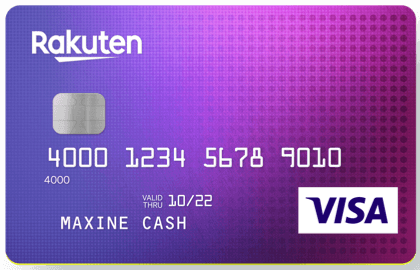
If you can't maximize your rewards on the BOA Cash card (or you are hitting the quartly caps), you can earn 3x Membership Rewards points on at least some of your online purchases with the Rakuten Cash Back Card. It only works for online purchases made through the Rakuten (eBates) shopping portal. | |
|
Adding the Freedom Flex Card will let you earn 3x Ultimate Rewards points on drugstores, 5x Ultimate Rewards points on your first $1,500 of spending in a rotating set of categories each quarter, and 5x Ultimate Rewards points on travel bought through Chase. It also gives you the option if earning 3x Ultimate Rewards points (rather than 3x ThankYou points) on restaurants. But to transfer the points to frequent flyer or hotel programs, you'll need to pay the annual fee for a Sapphire Preferred or Sapphire Reserve card each year. |


If you can add business cards into the mix, many people will want to switch over to primarily Membership Rewards points.
|
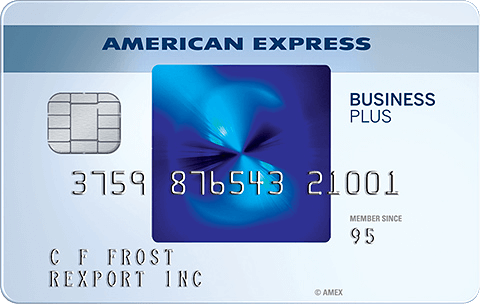
Most people would prefer to earn 2x Membership Rewards points with the Blue Business Plus Card over 2x ThankYou points with the Double Cash Card. However, note that the 2x rate is capped at $50,000 per copy of the card per year and that Amex cards aren't accepted at all merchants. | |
|
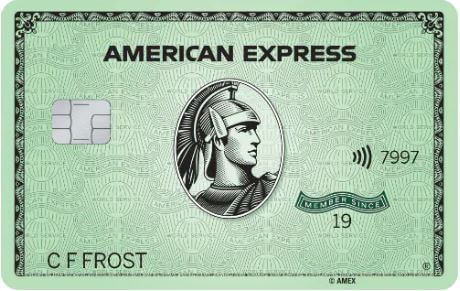
If you don't want to split your points between two different programs and you don't want the Citi Presige Card for its other benefits, you can augment the Blue for Business Card with the Amex Green Card and the Everyday Preferred Card to earn 3x points on travel and restaurants and up to 4.5x points on groceries and gas. The annual fees for both cards total about $250. | |
|
For office supply stores, telecommunication services, and other business-oriented categories, you would follow the same recommendations as our standard strategy. Remember that if you get the Ink Cash Card, you will need the Ink Preferred, Sapphire Reserve, or Sapphire Preferred Card to take full advantage of any points you'd earn. |
- Some Chase and Citibank cards earn less-flexible versions of their reward points, which can only be redeemed for 1 cent each on things like gift cards.
- However, if you combine these cards with one of Chase’s or Citibank’s premium cards, you can redeem these points for full value—transferring them to airline or hotel programs or getting a higher-than-normal value when you use them to purchase travel through the credit card company’s travel portal.
- Most often, the credit card company will advertise these cards as x% cash-back cards, but the real earning rate can be significantly higher.
- For example, the points you earn from the Chase Freedom Card are usually worth 1 cent each, but if you have a Sapphire or Ink Reserve Card, you can convert them to 1 frequent flyer mile instead. Or the points you earn from purchases with the Citibank Double Cash Card are normally worth 2 cents per dollar, but if you have the Citi Premier (or Prestige) Card, you can get use your points to get 2 airline miles instead.
Cash only approach
If you want to stick with cashback (and other cash-like points), you might want to make a few adjustments to the standard approach described above. If you are still interested in the extra benefits of the Sapphire Reserve Card, you could stick with the Chase Unlimited combo. Even if you are simply cashing out your points through "pay yourself back" or via paying for travel on the Chase website, you'll earn 4.5% on all your travel, dining, and drugstore purchases, 7.5% on travel purchased through Chase, and 2.25% on everything else.
If the Sapphire Reserve isn't worth its annual fee...
|
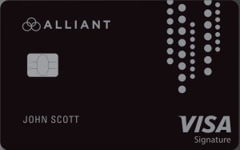
Get the best general purpose card you can. That could be the Alliant Cashback Card, one of the no-annual-fee 2% cards, or the BOA Unlimited Cash Rewards Card or BOA Premium Rewards Card (if you qualify for Bank of America's Platinum Honors status). | |
|
Use the Altitude Reserve Card for your travel purchases, as well as for mobile wallet purchases. | |
|
If you find that you can't use your Altitude Reserve Card at many of the restaurants you visit, consider getting the Altitude Go Card to earn 4% back on those restaurants. |

Alternatively...
|
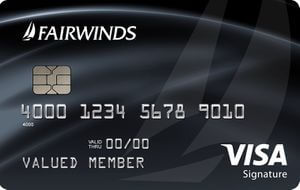
If you spend enough to justify the $249 annual fee, get the little-known Fairwinds Visa Signature Card. It earns 5x points on travel, 3x points on restaurants, and 2x points everywhere else. But points are worth 1.5 cents each when used to buy travel through the CURewards website, giving you a reward rate of 7.5% on travel, 4.5% on restaurants, and 3% everywhere else. |
Regardless of which of these three approaches you take for your everyday, travel and restaurant purchases, you'd follow the other recommendations of the standard approach, getting the Blue Cash Preferred Card for groceries, streaming services, and maybe gas; the Bilt Mastercard for rent you can't pay with other cards, the Altitude Reserve Card for mobile wallet payments, one of the Amazon cards for Amazon, the BOA Cash Rewards Card for online shopping, potentially the Freedom Flex Card for drugstores, travel purchased through Chase, and a set of rotating categories and/or the Citi Custom Cash Card for a boost on one category of your choice per month, and possibly a card for gas, Walmart.com, and Target.
Then if you are willing and able to get business cards, you might add on:
|
The Ink Cash Card earns 5x Ultimate Rewards back on office supplies and wireless telephone services. |
Best options for each category
If you want to see some other options for each category, make sure to view our “Best Options” guides.







Also, Doctor of Credit has good set of reference pages that provides relatively up-to-date information on the options for different bonus categories.