Difference between revisions of "Premium reward cards"
(→Holding onto a premium card for travel and restaurant spending) |
|||
| Line 39: | Line 39: | ||
<li>'''In some cases, you can take advantage of the travel credit twice in your initial year'''. For example, the Amex Platinum, Citi Prestige, and Hilton Aspire cards allow you to earn travel credits each “calendar” year. That means you can use the credit twice during your initial signup year. For example, if you sign up for the card in August, you can use the full credit between August and December, and then again between January and August.</li> | <li>'''In some cases, you can take advantage of the travel credit twice in your initial year'''. For example, the Amex Platinum, Citi Prestige, and Hilton Aspire cards allow you to earn travel credits each “calendar” year. That means you can use the credit twice during your initial signup year. For example, if you sign up for the card in August, you can use the full credit between August and December, and then again between January and August.</li> | ||
| − | For some premium cards, you can get back more in credits, than you need to pay in annual fees—and that doesn’t even include the value of the signup points or ongoing benefits | + | For some premium cards, you can get back more in credits, than you need to pay in annual fees—and that doesn’t even include the value of the signup points or ongoing benefits. |
<li>'''You can earn the signup bonus from multiple different versions of the Amex Platinum card'''. Amex has partnered with a number of other companies, such as Charles Schwab, to offer slightly different versions of their Platinum cards. While you can only earn each Amex signup bonus once per lifetime, you are entitled to earn the bonus from each different version of the Platinum card.</li> | <li>'''You can earn the signup bonus from multiple different versions of the Amex Platinum card'''. Amex has partnered with a number of other companies, such as Charles Schwab, to offer slightly different versions of their Platinum cards. While you can only earn each Amex signup bonus once per lifetime, you are entitled to earn the bonus from each different version of the Platinum card.</li> | ||
| Line 66: | Line 66: | ||
|'''{{Card|CitiPrestige|short}}''' ||50,000||$700 | |'''{{Card|CitiPrestige|short}}''' ||50,000||$700 | ||
|$250 travel credit x 2 | |$250 travel credit x 2 | ||
| − | |||
| − | |||
| − | |||
|- | |- | ||
|'''{{Card|HiltonAspire|short}}''' ||150,000||$500-1,500 | |'''{{Card|HiltonAspire|short}}''' ||150,000||$500-1,500 | ||
| Line 119: | Line 116: | ||
|'''{{Card|CitiPrestige|short}}''' ||2, or entire family|| | |'''{{Card|CitiPrestige|short}}''' ||2, or entire family|| | ||
|- | |- | ||
| − | |'''{{Card|CrystalInfinite|short}}''' || | + | |'''{{Card|CrystalInfinite|short}}''' ||Cardholder only|| |
|- | |- | ||
|'''{{Card|HiltonAspire|short}}''' ||2||No access to restaurants and other alternative spaces that are part of the Priority Pass program. | |'''{{Card|HiltonAspire|short}}''' ||2||No access to restaurants and other alternative spaces that are part of the Priority Pass program. | ||
| Line 281: | Line 278: | ||
Marriott Platinum status is the status level that comes with free breakfast and lounge access (at most hotels), as well as free room upgrades to the best available room (including regular suites) at check-in. The Luxury card allows you to receive Platinum Status by spending $75,000 with the card in a year. Assuming you have a way to generate this amount of spending, doing this could conceivably be worthwhile, as this is a compelling status level and can last for up to two years. You'll need to stay frequently enough to get enough benefit, but not so frequently that you would naturally earn this level of status. | Marriott Platinum status is the status level that comes with free breakfast and lounge access (at most hotels), as well as free room upgrades to the best available room (including regular suites) at check-in. The Luxury card allows you to receive Platinum Status by spending $75,000 with the card in a year. Assuming you have a way to generate this amount of spending, doing this could conceivably be worthwhile, as this is a compelling status level and can last for up to two years. You'll need to stay frequently enough to get enough benefit, but not so frequently that you would naturally earn this level of status. | ||
| − | |||
| − | |||
| − | |||
| − | |||
| − | |||
| − | |||
| − | |||
| − | |||
| − | |||
| − | |||
| − | |||
| − | |||
| − | |||
| − | |||
| − | |||
| − | |||
==== UBS Infinite Card Guide ==== | ==== UBS Infinite Card Guide ==== | ||
Revision as of 13:49, 2 November 2019

“Premium” reward cards have high annual fees. But, they come with annual credits, high bonus reward rates, lucrative signup bonuses, and valuable benefits (such as free airport lounge access), which can make these fees worthwhile.
The most famous premium cards are the Amex Platinum card and the Chase Sapphire Reserve, but there are also several lesser-known premium cards available from other credit card companies.
The ongoing benefits of premium credit cards can be very valuable. Depending on your travel patterns, you may want to add one or more of these cards to your "permanent" credit card collection.
Even if you don't, you probably want to eventually apply for each of these cards, if only to collect their extremely lucrative signup bonuses. By spreading your applications over time, you’ll not only earn hundreds of thousands of points, you'll be able to freely access airport lounges for years to come.
Jump to
Jump to:
- 1 Our recommendation: Sign up for all the premium cards (over time)
- 2 Obtaining continuous airport lounge access
- 3 Keeping one or more cards for the long term
- 4 Holding onto a premium card for travel and restaurant spending
- 5 Other benefits available from most premium cards
- 6 Side-by-side comparison
Our recommendation: Sign up for all the premium cards (over time)
If you are comfortable getting credit cards just for their signup bonuses, the answer to "Which premium card you should get?" is easy—you should sign up for "all of them". Credit Card Signup Bonuses: The Easiest Path to Free Airplane Tickets and Hotel Nights
When you factor in their signup bonuses and annual credits, every premium credit card is well worth getting, at least for the initial year.
- Most premium cards have generous signup offers. For example, a typical bonus for the Amex Platinum cards ranges from 60,000 to 100,000 Membership Rewards points, valued at $900 to $1500. If you highly value (and are patient enough to redeem) premium cabin frequent flyer tickets, these points are even more valuable.
- Each of these cards have travel credits which can offset their expensive annual fees. For example, the Sapphire Reserve comes with an automatic $300 travel credit, that can partially offset the annual fee. While you need to pay out $450 in fees, you’ll receive back $300 in free travel (on top of the signup bonus), dropping your effective out-of-pocket expense to a more reasonable $150.
- In some cases, you can take advantage of the travel credit twice in your initial year. For example, the Amex Platinum, Citi Prestige, and Hilton Aspire cards allow you to earn travel credits each “calendar” year. That means you can use the credit twice during your initial signup year. For example, if you sign up for the card in August, you can use the full credit between August and December, and then again between January and August.
- You can earn the signup bonus from multiple different versions of the Amex Platinum card. Amex has partnered with a number of other companies, such as Charles Schwab, to offer slightly different versions of their Platinum cards. While you can only earn each Amex signup bonus once per lifetime, you are entitled to earn the bonus from each different version of the Platinum card.
For some premium cards, you can get back more in credits, than you need to pay in annual fees—and that doesn’t even include the value of the signup points or ongoing benefits.
(Range of signup values based on credit used)
| Card | Signup Points | Net Signup Value | Credit |
|---|---|---|---|
| Amex Platinum Card (multiple versions) | 50-100,000 | $300-1,600 | $200 airline incidental (one airline) x2, $200 Uber, $100 Saks |
| Amex Platinum Business Card | 75-125,000 | $500-1,600 | $200 airline incidental credit x2 |
| Chase Sapphire Reserve | 50,000 | $700 | $300 travel credit |
| Citi Prestige | 50,000 | $700 | $250 travel credit x 2 |
| Hilton Aspire | 150,000 | $500-1,500 | $250 airline incidental credit (one airline) x2, $250 Hilton resort credit, free night certificate |
| Marriott Brilliant | 100,000 | $450 | $300 Marriott credit |
| US Bank Altitude Reserve | 50,000 | $600 | $325 travel credit |
- If you plan to apply for all the premium cards (over time), you’ll get a “free” year to decide whether the ongoing benefits are worthwhile. You don't need to evaluate these cards ahead of time. You can try out each card for a year, subsidized by the signup bonus. If it delivers enough value, you can hold onto it. If it doesn't, don't.
Obtaining continuous airport lounge access
One of the main attractions of premium cards is the airport lounge membership. Every premium card provides free access to airport lounges, for you and some number of additional traveling companies. With most of the cards, you'll get a Priority Pass membership that provides access to over 1,000 lounges and restaurants at airport all over the world. They aren’t the fanciest lounges around, and there may not be one in the terminal you are using for your flight, but you should still have plenty of opportunities to take advantage of this benefit on your travels. Get Free Airport Lounge Access from a Credit Card.

Most people are going to always want at least one card that provides this benefit.
- If want to hold onto one of these cards (for other reasons), you’re all set. For example, if you are planning on holding onto the Sapphire Reserve card to use in conjunction with the Freedom Unlimited as your general purpose reward card, or the Citi Prestige card for its 4th night free benefit, you'll already have airport access lounge access from those cards. Many premium cards can be worth holding onto for their unique benefits and/or valuable bonus reward rates, giving you ongoing airport lounge access as a side benefit.
- You still may want to spread out your Amex Platinum applications for access to additional lounges. The Amex Platinum card provides access to additional lounges, beyond the Priority Pass program, most notably the Amex Centurion lounges. If this is important to you, you should spread out your Platinum card applications.
- Unless you have a membership from a non-Amex card, you won't get access to Priority Pass restaurants. Many of these restaurants are among the best options within the entire program, providing $28 per person of free food and drink that is frequently better than what you could find in a typical Priority Pass lounge. So, it is a good idea to spread out your non-Amex cards as well (if you aren't keeping any long term).
- Each person will usually need their own card, if they want to access lounges while travelling separately. While each card lets the cardholder bring in at least one guest, this doesn’t let another member of your family access a lounge without you. To do this, they will need their own card, or you will need to add them as an authorized user (which usually requires an extra fee).
There are currently four different versions of the Platinum card that don’t have daunting access restrictions: the regular, Schwab, Morgan Stanley and small-business versions. By signing up for a different one each year, you’ll have ongoing access to the additional Amex lounges (and the other benefits), while you are offsetting each year's annual fee with each card’s signup bonus. Hopefully, other versions will become available sometime over the next four years, and you can extend this strategy even further.
Even if you want to permanently hold onto an Amex Platinum card, you are better off signing up for a different version each year, and saving your favorite version until last.
| Card | Guests | Notes |
|---|---|---|
| Amex Platinum Card (multiple versions) | 2 | Access to range of additional lounges, but no access to restaurants and other alternative spaces that are part of the Priority Pass program. |
| Amex Platinum Business Card | 2 | Same as above |
| Chase Sapphire Reserve | 2 | |
| Citi Prestige | 2, or entire family | |
| CNB Crystal Infinite | Cardholder only | |
| Hilton Aspire | 2 | No access to restaurants and other alternative spaces that are part of the Priority Pass program. |
| Marriott Brilliant | 2 | |
| US Bank Altitude Reserve | 1 | Limited to only four visits per year |
| UBS Infinite | Unlimited |
- Even if you don't want to hold onto any of these cards, you can obtain free lounge access for years to come. By simply spreading out your applications over time, you can make sure you are always within the first year of having a card that provides a lounge access membership. The signup bonuses and travel credits will more than pay the cost of the card for that year.
- As a result, we don't count lounge access as being a valuable benefit when deciding whether to hold onto a premium card. While lounge access is valuable, you should always have it available from another card, and therefore it isn't a reason to decide to keep any single premium card. You'll need to justify the card based on its unique benefits.
Keeping one or more cards for the long term
Some premium cards have unique benefits which are potentially very valuable. Depending on your travel patterns, it may be worthwhile to make the card part of your core credit collection, keeping it beyond the initial year.
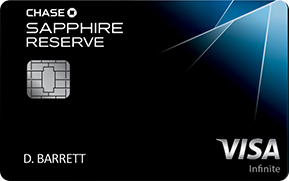
The Sapphire Reserve Card
If you follow our general recommendation, and decide to use the Chase Unlimited combo for your everyday spending, you'll want to hold onto the Chase Sapphire Reserve card.
In order to get full value from your Ultimate Rewards points, you need to have the Sapphire Reserve, Sapphire Preferred, or Ink Preferred card. If you wind up taking advantage of the Sapphire Reserve, you also get to take advantage of it's other benefits, such as the best reward rate on travel purchases (other than airfare), airport lounge access, and primary rental car insurance. The Sapphire Reserve has a $450 annual fee, but an automatic $300 travel credit makes the effective annual fee only $150. Get a Great General Purpose Reward Card and Use It for All of Your Spending.
Citi Prestige Card
If you find yourself getting value from the unique 4th night free benefit, you may want to hold onto the Citi Prestige card. You may also want to keep the card for its 5x ThankYou point reward rate on dining, online travel agencies, and airfare.
A unique feature of the Prestige card is its 4th night free benefit. When you book your hotel room via Citibank, they will reimburse the cost of one night on almost any hotel reservation of four or more nights, up to two times per year.

For example, if you pay $1,200 for a four night stay at a fancy beach resort or ski resort, Citibank will give you $300 back. Later in the year, if you pay $900 for a four night stay at a another hotel, Citibank will give you another $225 back. Depending on your travel patterns, you can save hundreds of dollars per year.
The drawback is that you need to book through the Citibank website. Since you may wind up paying a higher rate for the reservation, won't get hotel program benefits, and still need to pay the taxes, the value you actually receive will be often be less than the standard room rate. Get Your 4th Night Free with the Citi Prestige Card.
The Citi Prestige card also has the highest possible reward rate on restaurants and purchases from online travel agents, and a very lucrative reward rate on airfare.

The annual fee is 495 per year, but it comes with an automatic $250 travel credit, making the effective annual fee $245. If you are a Citigold customer, you'll get a $145 annual fee refund, dropping the effective annual fee is $100.
Amex Platinum Card
The value of holding onto the Amex Platinum card depends on how much you can take advantage of its various benefits and travel credits. It can be very attractive to some people, and less attractive to others. Because it is available in many different flavors, it is possible to get a different version each year, rather than holding onto the card.
Unfortunately, it isn't straightforward to determine whether the unique benefits of the Amex Platinum card are worth paying its $550 annual fee (beyond the initial year). It has several different benefits, rather than a main signature feature. Furthermore, some people will struggle to take full advantage of its different credits, while other people will be able to use them to almost completely offset the annual fee.
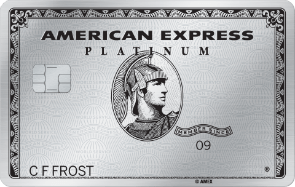
Regardless of the exact value you place on the card, you have the option of getting a new version each year. That way, you are always receiving a fresh signup bonus (and a double-dose of the airline incidental credit). It may be quite a few years before you have to make the final decision about whether to hold onto the Amex Platinum beyond its initial year.
- The Amex Platinum card gets you into more Airport Lounges than the other cards. Like the other cards, it comes with a Priority Pass membership, but the Amex Platinum also provides access to Amex’s new Centurion lounges, to Delta lounges (when flying Delta), and to a small set of additional lounges. This is a big advantage if you live in a Delta hub or a city with a Centurion lounge. Get Free Airport Lounge Access from a Credit Card.
- The Platinum card gives you automatic Gold status at Hilton (and Marriott / Starwood hotels). At Hilton that’s good enough for free breakfast. While you can also easily get Hilton Gold status from one of the Hilton credit cards, they each come with their own annual fees. Get Free Breakfast or Club Floor Access with the Right Credit Card.
- Along with the revamped Citi Prestige card, the Platinum card earns the highest reward rate on airfare. You’ll earn a whopping 5x Membership Rewards points on your airfare purchases. For every $1,000 that you spend, you’ll earn approximately $40 in extra rewards by using the Platinum card, instead of using a card like the Sapphire Reserve. Starting in 2020, the Platinum card will start offering some of the same free travel insurance benefits that are currently available from the Sapphire Reserve card. The Platinum card's 5x reward rate on hotels may sound good at first, but isn’t worth much, because of the drawbacks associated with needing to purchase pre-paid rates on a 3rd party booking site.)
- Amex's “Fine Hotels & Resorts” is a valuable program, but you can get similar benefits elsewhere. If you stay in luxury hotels, you can get great benefits with the Platinum card’s highly-touted Fine Hotel and Resorts program. But to be fair, many of the hotels in the program participate in similar programs run by the other credit card programs or luxury travel agents. On the other hand, Amex’s Fine Hotel & Resorts more frequently provides 3rd and 4th night free offers. While the potential upside can be high, you might not get any real value from this in any given year, especially if you don’t often pay for the most expensive hotels and resorts. Take Advantage of Luxury Hotel Programs for Valuable Extra Perks.
On the other hand, the Priority Pass membership that comes with this card (and with any other Amex card) does not provide free access to participating restaurants and alternative spaces. It only provides access to traditional airport lounges.
In addition, unlike some of the other cards, you are limited to 2 free guests when you visit Priority Pass lounges (and when you are visiting one of their own Centurion lounges); and only the cardholders receive free access to Delta lounges. So, if you frequently travel with a family, and don’t pay the $175 additional fee to add authorized cardholders, the Platinum card’s lounge benefit can be less valuable than the lounge benefit from some of the other cards.


The annual fee for most versions of the Platinum card is $550. Like the other high-end cards, it comes with some credits that can offset that fee, but unlike the Citi Prestige, Altitude Reserve, and Sapphire Reserve cards, it isn’t easy to get full value from these credits.
- You get $200 worth of Uber credits each year, but not everyone uses Uber every month. The card gives you a $15 credit per month, and an extra $20 in December. The credits only apply to rides within the US, or food delivered via Uber Eats, and you'll have to activate the credit each time you want to use it. If you frequently use Uber, this credit will wind up coming right off your bill, and the effective annual cost of the card drops by up to $200. However, if you only use Uber infrequently, you’ll only get a partial benefit.
- You get $50 of Saks credit every six months, but not everyone shops at Saks. The card comes with a $50 credit for purchases between January and June, and another $50 credit for purchases between July and September. You'll need to spend at least $50 in a single transaction to qualify for the credit. Once you've activated this feature, it works automatically when you use your card at Saks or on Saks online.
- You get a $200 "airline incidental" credit, but it hard to take full advantage of it. The travel credit on the Amex card is MUCH less useful than the travel credit you get from from the Sapphire Reserve, Citi Prestige, and Altitude Reserve cards.
It only covers incidental expenses like baggage fees and onboard food, not airfare, or even seat upgrades. And it only pays for fees on a single airline that you choose at the beginning of the year. Odds are you already have ways to avoid these fees on airlines you fly frequently (such as the airline credit card's free baggage benefit). But, if you choose a less frequently flown airline, you might not be able to naturally take full advantage of the credit.
However, if you are willing to work harder and bend the rules, there are some “tricks” that allows you to receive the "full amount" of incidental airline credit. Small denomination gift card purchases no longer work, but there are a few things that still might. Get Full Value from Your Airline Incidental Credits.
Depending on how fully you can use the Uber, Saks, and Airline Incidental credits, the effective annual fee of the Platinum card ranges from $50 to $550. If you don’t frequently use Uber, and don’t want to play games with the airline incidental credit, you might bear nearly the full brunt of the $550 annual fee. On the other hand, if you can take full advantage of the credits, you aren't paying much for the Platinum card's other benefits.
Amex Platinum Business Card
If you decide you want to hold onto an Amex Platinum card, you should consider the business version instead.
The business card costs $50 more, provides all the valuable unique benefits of the personal card, except for the Uber and Saks credit. And it gets a few interesting extra benefits, that are not available from the personal card:
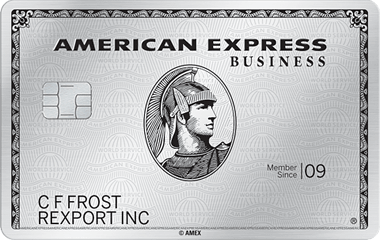
- You can redeem your Membership Rewards points, to pay for certain airplane tickets, at a value of 1.54 cents each. While you should be able to get more value than this, by transferring your Membership points to airline partners to redeem for frequent flyer tickets, having the Business Platinum card gives you the option to get solid value from your points, with hardly any effort. It makes the Membership Rewards program much more attractive for people who don’t want to mess around with frequent flyer tickets.
- You'll receive a $100 credit towards purchases from Dell every six months. You can use this a total of three times during your initial year. Because Dell sells a wide variety of products from many companies, has a price matching guarantee, and often has good promotional benefits, it is not that hard to find good ways to use this credit, which don't involve buying Dell's own products.
- You'll get a Platinum Global Membership with WeWork. Details are not available yet, so it is hard to value this benefit.
- You’ll also get 10 Gogo Inflight Internet passes per year and a few other minor benefits, that you don’t get with the Personal card.
This only works for tickets from a single airline of your choice (plus business and first class tickets on any airline). Choosing the airline you frequently fly may limit your ability to take full advantage of the airline incidental credit.
The annual fee is $595, which is $50 more than the fee for the personal card. In addition, you don’t get the $200 Uber and the $100 Saks credit. If you would get full value from these credits, the business card will wind up being about a wash. If you get little value from them, the business card will wind up being a better deal.
You need to have some sort of business to be entitled to get this card. It can be a part-time gig, and you don’t need a special Tax ID number. Amex requires that the business revenue is at least $1,000 per year, but many people believe that is a projection of revenue over the following year, and not a summary of revenue over the previous year. Unlock Extra Reward Points with Business Credit Cards.
There is one other consideration. With the business version, it costs $300 to add an authorized user. With the personal version, you can add up to 3 authorized users for $175 total. If you need to add someone else on the card (so that they get airport lounge access when they are traveling alone), the pendulum can swing back to the personal card.
Altitude Reserve
Anyone who can make $5,000 or more of mobile wallet purchases each year, should hold onto the U.S. Bank Altitude Reserve card for its 4.5% reward rate on these purchases. Plus you'll get 12 Gogo Inflight Internet passes per year.
The signature feature of the Altitude Reserve card is a 4.5% reward rate whenever you use a mobile wallet, like Apple Pay or Google Pay, to make a payment. This is much higher reward rate than you would get from any other card. For each $1,000 you spend with your mobile wallet (at brick and mortar stores, in apps, or online), you’ll earn somewhere between $15-25 in extra rewards. If you have a Samsung phone or smart watch, you can use your mobile wallet at any location that has a credit card swipe machine. Maximizing the Altitude Reserve Card's Mobile Wallet Rewards.
Depending on your overall rewards strategy, you might also take advantage of the card's 4.5% reward rate on travel purchases.

The Altitude Reserve costs $400 per year, but comes with an automatic $325 travel credit, making the effective annual fee $75. This makes it the least expensive of the premium cards. But, U.S. Bank will usually deny your application if you've gotten too many recent cards. So, if you want this card, you'll need to get it early.
Keep in mind that this card only has limited airport lounge access—you only get 4 visits per year (and 4 total guest visits). Since you are likely to want at least one of the other cards that offers full access, this isn’t a big deal. But, if this is going to be your only premium card, you’ll need to live with more limited lounge access.
The Hilton Aspire Card
If you can take full advantage of its various "credits", you'll definitely want to hold onto the Hilton Aspire card.
The Hilton card provides an annual $250 airline incidental credit, an annual $250 Hilton Resort, and an annual free weekend night certificate (good at almost any of Hilton's most expensive hotels). If you use fully use the two credits, you'll already receive $500 back, which is more than the $450 annual fee. And you can get hundreds of dollars of additional value from the free night certificate. In addition, you'll get automatic Hilton Diamond status, good for free breakfast and lounge access (and a better chance of an upgraded room, particularly overseas). In this case, holding onto the card is an easy decision.
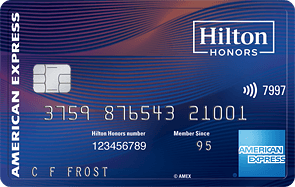
The problem is that you may struggle to take full advantage of the annual credits. The $250 airline incidental credit follows the same rules as the credit from the Amex Platinum card—it only covers "incidental expenses" (not ticket purchases) from a single airline of your choice. Unless you make the effort to use gift card "tricks", it is very hard to naturally take advantage of this credit. The $250 Hilton resort credit covers room rates, but it only works at "resort" hotels. If you don't have an opportunity to visit a Hilton resort in any given year, it doesn't provide any value. If you don't wind up getting value from these credits, the free night certificate and Diamond status may not be worth the annual fee. For example, if you get $50 in value from the Airline incidental credit, and you only stay in a Hilton Resort every other year, the effective annual fee is $275. That may be worthwhile for the free night and Diamond status or it may not.
The Marriott Bonvoy Brilliant Card
Holding onto the Bonvoy Brilliant card (old SPG Luxury card) allows you to get a valuable hotel certificate each year for the equivalent of $150. For some people it also provides the only possible path towards very valuable high-level Marriott status.
The card's $300 hotel credit can be used to offset actual room charges, and not just incidental expenses. Given the number of hotels in the combined program, many people will naturally spend more than $300 at Marriott / Starwood hotels over the course of the year and get full value from this credit (unlike the Hilton Aspire card's credit that must be used at a limited number of Resort hotels). This lowers the card's out-of-pocket cost to $150.
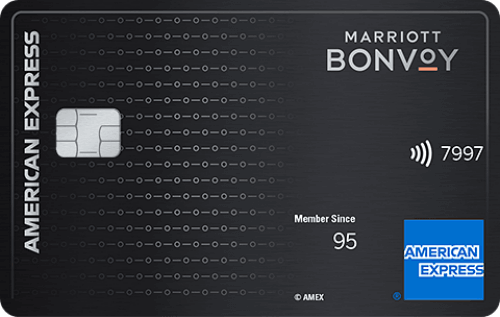
$150 is a worthwhile price to pay for a free night certificate every year, especially since, unlike the certificates from the "regular" Marriott cards, it is capped at 50,000 points (rather than 35,000). 50,000 points are valued at $350, and can be used for free nights at many nice hotels, even in expensive locations. Of course, the certificate is less valuable than the points, because it has less flexibility and expires after one year. The card also get Marriott Gold status, which comes with some minor benefits.
Marriott Platinum status is the status level that comes with free breakfast and lounge access (at most hotels), as well as free room upgrades to the best available room (including regular suites) at check-in. The Luxury card allows you to receive Platinum Status by spending $75,000 with the card in a year. Assuming you have a way to generate this amount of spending, doing this could conceivably be worthwhile, as this is a compelling status level and can last for up to two years. You'll need to stay frequently enough to get enough benefit, but not so frequently that you would naturally earn this level of status.
UBS Infinite Card Guide
The UBS Infinite Card is a less desirable option for taking advantage of the Visa Infinite $100 airfare credit.
It has a $495 annual fee and a $250 airline incidentals credit that is good on only a single airline. In addition, there is no online access to manage your card or your points, unless you have a separate cash management account with UBS (and no online applications either).
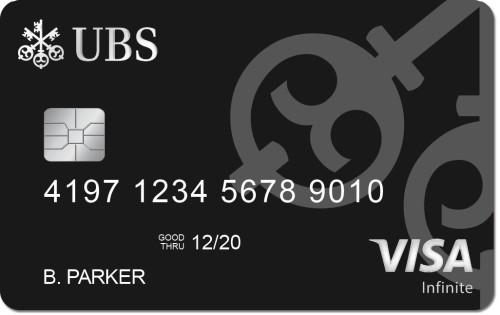
On the plus side, it does come with up to 24! free authorized users, primary rental car insurance, 12 Gogo inflight wi-fi passes, and airport lounge access. And it is easier for many people to get the Crystal Infinite.
Holding onto a premium card for travel and restaurant spending

The best reward rates for travel and restaurant spending are generally available from premium credit cards. The extra rewards that you can earn from one or more of these cards may be enough to tip the balance towards holding onto the card for the long term.
- Start with a baseline of 4% for restaurants and 3% for travel. This is the reward rate you can get from the Uber Credit Card, without needing to pay an annual fee.
- Increase your baselines based on any cards that you have already decided should be part of your credit card collection. For example, if are planning on holding onto the Altitude Reserve (for its mobile wallet reward rate), increase your travel baseline to the Altitude Reserve's 4.5%. Or if you are planning on holding onto the Amex Platinum card, increase your airfare baseline to 5x Membership Rewards points.
- Once you've calculated the reward rates that you'll already be earning on airfare, other travel, and restaurants, you can re-examine whether you want to get any of the other premium cards. If they offer an even higher reward rate, you need to estimate the extra rewards you would earn. To do this, you'll need to estimate the amount of money you'll be spending in that category per year. For example, if you expect to spend $3,000 per year on non-airfare travel purchases, and you can get an extra 2% in value from the Sapphire Reserve card, holding onto that card is worth an extra $60 per year.
- While you are focusing on collecting signup bonuses, earning higher reward rates is usually not very valuable. Much of your spending will be towards meeting the minimum spending requirement of new cards. Also, because you will have a wide variety of cards for a year at a time, there is a good chance you'll temporarily have other cards that offer higher-than-normal reward rates on the travel and restaurant categories.
- If you don't want to mess around with frequent flyer tickets, stick to cards that earn Ultimate Rewards points or cash-like points. If you aren't committed to using your points for frequent flyer tickets, earning 5x ThankYou points on dining is not as good as earning 3x Ultimate Rewards points.
- On the other hand, if you highly value premium-cabin award redemptions, try to earn as many Membership Reward, Ultimate Reward, or ThankYou points as possible. They will always be worth more than cash-like points. And more points is almost always better, regardless of which type of these points you usually prefer.
If you have (or are planning to get) the Amex Gold card for supermarket spending, increase the baseline for restaurant spending to 4x Membership Rewards points.
|
The Citi Prestige card can boost the rewards you earn for restaurants and purchases from online travel agents, where it offers the highest reward rate of any card—5x ThankYou points, valued at 7.5 cents per dollar. Membership Rewards have more frequent flyer partners, but ThankYou points can be slightly easier to cash out. For airfare, the Amex Platinum card is better (if you have it). You may also want to use the Sapphire Reserve, for its better travel insurance benefits, even though it only earns 3x points. If you don't want to earn ThankYou points, you are usually better off sticking with the Sapphire Reserve for the travel and restaurant categories, or simply going with other cards that earn less, but let you avoid paying an extra annual fee. | |
|
The Sapphire Reserve card earns 3x Ultimate Rewards on restaurant and travel. You can earn more valuable rewards for most of these purchases from other cards, but only by adding in a bunch of additional annual fees. Plus, the Sapphire Reserve earns bonus rewards on a wide variety of travel purchases and has great travel insurance, rather than just earning rewards on airfare and, in the case of the Prestige, online travel purchases. Furthermore, if you are going to use your points for Hyatt hotels, the Sapphire Reserve still probably provides the best reward rate on restaurant purchases (3x Ultimate Rewards points). It isn't much better than earning 5x Thank You points or 4-4.5% cash back, but it is somewhat better. | |
|
The Platinum Cards's 5x reward rate on Airfare is the most rewarding option for airfare, and will soon come with at least some added travel protections. But, for many trips, you may want to accept a lower reward rate for the Sapphire Reserve's or Altitude Reserve's better free travel insurance. |
Other benefits available from most premium cards
While each premium card has valuable unique benefits, they also share some general features, other than lounge access.
- Global Entry rebate. Each high-end card (and some lower-end cards) also pays up to $100 for Global Entry / TSA PreCheck application fees. Since, you only need to pay these fees once every five years, each card’s credit can only be used once every four to five years. If you need to pay fees for family members, you may need to take advantage of the TSA fee credit from multiple cards. The Hilton Aspire cards is the only premium card that doesn't offer a TSA credit.
- Some sort of elite car rental status. Most of the high-end reward cards entitle you to elite status with at least one car rental company. While this is nice to have, it isn’t much of a reason to go out and get these cards. Elite car rental status usually just amounts to a one-car class upgrade, and some extra bonus points from the rental company’s reward program.

Side-by-side comparison
| Chase Sapphire Reserve | Amex Platinum Card | Revamped Citi Prestige card | U.S. Bank Altitude Reserve | Hilton Aspire | ||
|---|---|---|---|---|---|---|
| Points Earning | ||||||
| Type of points | Ultimate Rewards | Membership Rewards | ThankYou | Altitude | Hilton | |
| Bonus Categories | 3x Travel
3x Restaurants |
5x Airfare, prepaid hotels through Amex travel | 5x Restaurants
5x Airfare 5x Online Travel Agency 3x Hotel and Cruises |
3x Travel
3x Mobile Wallet |
7x Flights and rental cars with Amex travel
7x Restaurants 14x Hilton | |
| Lounge Access | ||||||
| Locations | Priority Pass | Priority Pass
Centurion Delta |
Priority Pass | Priority Pass (4 times only) | Priority Pass | |
| Guests | 2 | 2 (none at Delta) | Family or 2 | 1 per visit | 2 | |
| Restaurant Access | Yes | No | Yes | Yes | No | |
| Other Benefits | ||||||
| Primary Rental Car Insurance | Yes | Yes | ||||
| Includes Travel Insurance | Yes | In 2020 | Yes | |||
| Global Entry Fee Credit | Yes | Yes | Yes | Yes | ||
| Hotel Elite Status | Hilton Gold
Marriott Gold SPG Gold |
Hilton Diamond | ||||
| Gogo inflight Internet passes per year | 10 (business version only) | 12 | ||||
| $100 off domestic coach airfare for 2 or more people | ||||||
| 4th night free at any hotel | Yes | |||||
| Other notable benefits | Fine Hotel Resorts
Amex Offers Discount Airfare Program |
Annual free night certificate | ||||
| Credits | ||||||
| Travel Credit Applies | $300, any travel | $200, airline incidentals w/1 airline | $250, any travel | $325, any travel | $250, airline incidentals w/1 airline | |
| Per Year | Cardholder year | Calendar year | Calendar year | Cardholder year | Calendar Year | |
| Other credits | $15/month ($35 in December) for Uber rides or Uber eats. 2x $50 credits at Saks. | $250 resort credit (cardholder year) | ||||
| Applies | Automatically | Automatically | Automatically | Automatically | Automatically | |
| Signup Bonus | ||||||
| Bonus | 50,000 points | 40-100,000 points | 40-50,000 points | 50,000 points | 100,000 points | |
| Spending Requirement | $4000 | $5000 | $4000 | $4500 | $4000 | |
| Annual Fee | ||||||
| Base Fee | $450 | $550 | $495, $350 for Citigold | $400 | $450 | |
| Authorized card Holder | $75 | $175 for up to 3 | $50 | $75 | $0 | |