Difference between revisions of "Best general purpose reward card"
(→The best general purpose reward card (for most people)) |
(→The best general purpose reward card (for most people)) |
||
| Line 70: | Line 70: | ||
<li>'''But unlike the cash-like points you can earn from some other credit cards, you still retain the upside of getting much more value from your reward points'''. When you find an opportunity to use your Ultimate Reward points for frequent flyer tickets or to make a particularly valuable hotel redemption, they can be worth 2-5 cents per point (3-7.5% per dollar) or even more.</li> | <li>'''But unlike the cash-like points you can earn from some other credit cards, you still retain the upside of getting much more value from your reward points'''. When you find an opportunity to use your Ultimate Reward points for frequent flyer tickets or to make a particularly valuable hotel redemption, they can be worth 2-5 cents per point (3-7.5% per dollar) or even more.</li> | ||
| − | <li>'''Accumulating Ultimate Reward points lets you try out the world of high-value hotel and frequent flyer redemptions, while still giving you valuable ways to simply "cash-out" your points''' (if you decide it is too difficult to use them effectively for frequent flyer tickets).</li> | + | <li>'''Accumulating Ultimate Reward points lets you try out the world of high-value hotel and frequent flyer redemptions, while still giving you valuable ways to simply "cash-out" your points''' (if you decide it is too difficult to use them effectively for frequent flyer tickets). In the worst case, spending with the combo will earn 2.25% back in travel purchases through Chase—which is slightly lower than you might be able to get from the best cashback options. But, we think it is worth the slightly lower "floor" to gain the ability to get much more value through frequent flyer tickets or Hyatt hotel stays. </li> |
</ul> | </ul> | ||
Revision as of 12:16, 6 May 2019

If you are following our advice, you will eventually get a handful of credit cards for their travel benefits—such as one or more premium travel-oriented credit cards, an airline credit card for the airline you fly the most, and perhaps a couple of hotel credit cards.
You COULD use any of these credit cards to earn rewards on your purchases. But, they probably don't offer the best possible reward rate for most of your spending. Since your goal is to earn as many points as you can, it is worthwhile to sign up for an additional credit card—one that is specifically chosen to earn the best possible reward rate on your everyday purchases.
GET the cards that make sense for their travel benefits; but USE the card that earns the best rewards for your spending. And use it, instead of cash or checks, whenever you can.
You'll slowly and surely earn enough points for free airplane tickets and hotel rooms. If you make the effort to use your card to pay for as many of your expenses as you can, you'll increase the amount of free travel that you earn every year.
Jump to
Jump to:
(Almost) never use cash—earn rewards instead
Your goal is to collect as many miles or points (or as much cash back) as you can. That means that you should use your reward credit cards whenever possible, rather than paying with cash, a debit card, or a check. Start putting everything on your cards, and your rewards will build up quickly.

- Every time you use cash, a check, or your bank card (when you could have used your credit card), you are missing out on reward points. Each individual transaction may not seem like much, but it adds up over time.
- Using a credit card (instead of cash) has some other benefits as well. You’ll have better records of your spending, build up your credit history, and make fewer trips to the ATM (paying less in ATM fees). In addition, your credit card will often give you some protection if something you buy breaks, is stolen, or even drops in price. Automatic Protection for the Things You Buy with Your Credit Card.
- While we strongly recommend using your credit card for as much of your spending as possible, you don’t have to take it to an extreme. If you are making a small purchase and paying cash will speed up the process for everyone, don’t worry about a few cents worth of points. If you are under the store’s minimum for taking credit cards, don’t make a fuss, just pay with cash. And you usually don’t want to use your credit card with any business that will add an extra "convenience" fee.
- Many of the bills that you pay each month can be paid with a credit card, rather than with a check or automatic bank withdrawal. For example, pretty much every wireless and cable company accepts credit card payments, as do many utilities, insurance companies, and gyms. Go back over a few months of bank statements, and see who you are paying on a regular basis. Then check which of these companies you can switch over to a credit card (without any extra fees).
The best general purpose reward card (for most people)
Which general purpose reward card is best? For most people, the answer is clear...
You should get BOTH the Chase Sapphire Reserve card and the Freedom Unlimited card. The two cards work together to give you fantastic reward rates on your purchases.
The Freedom Unlimited card earns 1.5x Ultimate Rewards points on every purchase, which normally are only worth 1 cent each towards travel purchases or gift cards.
However, if you also have the Chase Sapphire card, you can use these points to purchase travel at 1.5 cents each (through the Chase website, powered by Expedia). This gives you a "cash" rewards rate of 2.25 cents per dollar, higher than most cashback cards.
But it gets better. Ultimate Reward points can be converted into a number of different types of airline miles and hotel points, which can then be redeemed for frequent flyer tickets or free hotel nights. For example, you can convert your Ultimate Reward points to Hyatt points to book an award night or to United miles to book a frequent flyer ticket.
At a "base value" of 1.7 cents per point, you'll be earning 2.55 cents per dollar, and you can earn even more with particularly good hotel and frequent flyer ticket redemptions.
| + |
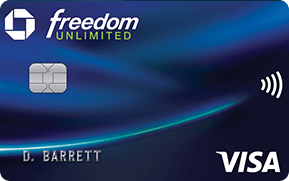
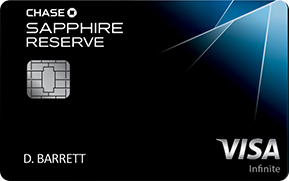
- For most people, earning Chase Ultimate Reward points is a better option than earning other types of credit card rewards. Not all points are equal—some points are worth more than others. For most people, Ultimate Rewards is the best credit card rewards program. Introduction to 'Transferable' Reward Points.
- Unlike Amex's Membership Reward points and Citibank's ThankYou points, you can get good value from your Ultimate Reward points without having to deal with the hassles of frequent flyer miles. Truth be told, it is getting increasingly harder to find frequent flyer award space and receive good value from your miles. Fortunately, Chase points can be used in much easier ways. When you use your Ultimate Reward points for hotel stays through Hyatt, you can usually get more than 1.7 cents per point in value, and sometimes more than 2-3 cents per point. You can always use them (at a fixed value of 1.5 cents each) to make any travel purchase through the Chase website. And you can get around the same 1.5 cents per point when you use them to purchase Southwest Airlines or JetBlue tickets, without needing to worry about award availability.
- But unlike the cash-like points you can earn from some other credit cards, you still retain the upside of getting much more value from your reward points. When you find an opportunity to use your Ultimate Reward points for frequent flyer tickets or to make a particularly valuable hotel redemption, they can be worth 2-5 cents per point (3-7.5% per dollar) or even more.
- Accumulating Ultimate Reward points lets you try out the world of high-value hotel and frequent flyer redemptions, while still giving you valuable ways to simply "cash-out" your points (if you decide it is too difficult to use them effectively for frequent flyer tickets). In the worst case, spending with the combo will earn 2.25% back in travel purchases through Chase—which is slightly lower than you might be able to get from the best cashback options. But, we think it is worth the slightly lower "floor" to gain the ability to get much more value through frequent flyer tickets or Hyatt hotel stays.
- The Freedom Unlimited card earns 1.5x Ultimate Reward points per dollar (valued at 2.55 cents per dollar) on every purchase—for most people, this is the highest possible reward rate for your everyday spending.
- In addition, the Sapphire Reserve card earns 3x Ultimate Rewards points (valued at 5.1 cents per dollar) on travel and restaurant spending. Chances are that you spend a significant amount of money on travel and restaurants. When you use the Sapphire Reserve card, you'll be earning great reward rates on these categories. Over time, you might choose to get additional cards (and pay additional annual fees) to get a higher reward rate on dining and airfare purchases. But, these are no other options that are better for non-airfare travel, and there are only better options for airfare and dining if you are ready to be committed to using your points for frequent flyer tickets.
- You’ll start out with 50,000 points (valued at $850) from the Sapphire Reserve card, plus a $150 signup bonus from the Freedom Unlimited card. 50,000 points is two domestic tickets on United Airlines or 5 nights in a nice Hyatt hotel.
- You'll get some other attractive benefits with the Sapphire Reserve card. These include airport lounge access, primary rental car insurance, and top-of-the-line travel and shopping protections.
The Freedom Unlimited card has no annual fee. However, the Sapphire Reserve’s annual fee is a whopping $450, and you need to have it in order to get good value from the points you earn with the Freedom Unlimited card.
This isn’t as bad as it first appears. The Sapphire Reserve provides an automatic $300 travel credit. That means that the first $300 you spend on travel each year is automatically taken off your credit card bill. So, the total out-of-pocket cost is $150 per year. For most of our readers, airport lounge access, high reward rates,and primary rental car insurance make this money well spent.
As part of a discussion of the best general purpose reward cards, it helps to understand how “bonus categories” work.
- Many credit cards offer higher-than-normal rewards on spending within certain categories. For example, one card may give bonus rewards for purchases from gas stations and supermarkets, while another card may give bonuses on travel and restaurants.
- Chances are, that as part of building out your core credit card collection, you will naturally wind up with a card that earns bonus reward rates on travel, restaurants, and some other purchases. Eventually, you may even choose to expand your credit card collection to specifically include cards just to take advantage of their bonus rewards. Optimize Rewards by Using Different Cards for Different Purchases.
- Regardless of what you do in terms of bonus categories, you always want to get one general purpose card that earns a good reward rate, whenever you use it, and not just on specific categories. This will be your “fall back” card for any purchase where you don’t have a card that earns bonus points, or when you just want to keep things simple and put all your charges on a single card. It is sometimes called your card for “everyday spending”. But, we refer to it as your “general purpose” reward card.
Who should get a different card?
While the Freedom Unlimited / Sapphire Reserve combination is the right solution for most people, it isn't for everyone.
- The Chase 5/24 rule might block you from getting the Freedom Unlimited and Sapphire Reserve cards. Chase limits access to the Sapphire Reserve and Freedom Unlimited cards to people who have signed up for fewer than five new credit cards in the past two years. This is called the “Chase 5/24” rule, and they count every new credit card you’ve gotten, regardless of whether it came from Chase or from another bank, and even if you are just an authorized card holder.
- You might get even more value from one of the advanced credit card options. There are some other cards that can earn even more valuable rewards than the Freedom Unlimited / Sapphire Reserve combination. But, each has restrictions, caveats, or complexities that make them hard to broadly recommend. Depending on your circumstances, one of these advanced options (see below) might be for you.
- You may not spend enough money to justify the Sapphire Reserve's annual fee. If you expect to spend less than about $15,000 per year on your general purpose reward card (and on travel and restaurant charges), the extra reward points you earn from the Freedom Unlimited / Sapphire Reserve combination may be worth less than the $150 effective annual fee.
- You may prefer to earn points that can be used for an even wider variety of travel purchases. You can use your Ultimate Reward points to pay for hotels, airfare, and other travel expenses through the Chase website (as well as for frequent flyer tickets and award nights). But, you can't use them to purchase hotels on other websites (where you might find lower rates), on AirBnBs, or on admissions and activities. If you earn cash-like points, you can use your points for any of things (or often anything else).
- You might want to use a general purpose card that includes price and return protection. Some credit cards provide "price protection", which will refund the difference, if something you bought drops in price during the first few months; and "return protection", which will let you return an item to the credit card company for a refund, if a store won't accept a return. The Chase Unlimited card does not provide either of these benefits. If price and/or return protection are important to you, you'll want to use another card, either for all of your non-bonus-category purchases, or for purchases where you are more likely to take advantage of these benefits. Automatic Protection for the Things You Buy with Your Credit Card.
If you’ve signed up for more than three credit cards in the last two years, you won’t be able to sign up for both these cards, regardless of your income and credit score. You can either hold off getting any new credit cards until you are under the limit, or you can choose an alternative general purpose reward credit card.
If you don't get much value from the airport lounge benefit and don't expect to use your points for premium-cabin frequent flyer tickets, you are probably better off with a cashback card instead. Keep in mind, that even if you are interested in free airport lounge access, you can receive that benefit for years to come, by spreading out your premium credit card applications (and collecting the signup bonuses) over time.
For most people, earning Ultimate Rewards points is the better option. You can easily use up all your points on worthwhile redemptions, and will generally get more value than you would earn from a cashback card. But, if you don't expect to easily use up all your Ultimate Reward points on worthwhile purchases, because you don't expect to spend enough on airfares and hotels, or because you are earning tons of points in other ways, you may want to just earn cash from your purchases.
For most people, the next best alternative is a great cashback card
There are several credit cards which give you 2% back on every purchase, and you may be able to get a card that earns even more. Other than the Chase Freedom Unlimited combo, there is no other "simple" solution that routinely provides more value than 2% cash back.
For most people, the next best option (after the Chase Unlimited combination) is a great cashback card.
Every other alternative to a good cashback card involves extra time, effort, and/or fees, special relationships with banks; or only works for people who highly-value premium-cabin award redemptions and can earn enough points to make those a reality. These other cards can make sense for many people, but we can’t recommend them to most people who want to keep things simple and flexible.

- If you are going to spend MORE than $20,000 per year on your general purpose reward card, you should try to get the Alliant Cashback Visa card. It earns 2.5% cash back with a $99 annual fee, and earns 3% cash back during the first year you have the card. Getting this card isn’t completely straightforward. If you aren’t already an Alliant credit union member, you need to make a $10 donation to Foster Care for Success to join. And if you’ve opened too many credit cards (which hopefully isn’t a problem YET), they may deny your application.
- If you are going to spend LESS than $20,000 on your general purpose reward card, you should probably get the State Department Premium CashBack+ card. You'll get 2% cashback, with no annual fee and no foreign transaction fees. If you are only spending this much, it isn’t worth paying $59 per year to earn the extra .5% in rewards from the Alliant card. Plus, the CashBack+ card also comes with a $200 signup offer ($3,000 initial spending requirement), free cell phone insurance, and the possibility of getting "true" chip-and-pin functionality for use in Europe. Cell phone coverage is for up to 3 lines, for up to 2 claims per year, with a $250 maximum claim and a $50 deductible.
- A similar option is the PayPal Cashback card. It also gives you 2% cashback, with no annual fee and no foreign transaction fees, and it doesn't require you to jump through a few hoops to get the card. But, you won't get the $200 signup offer or the cell phone insurance. On the other hand, the PayPal cards comes with price and return protection, which isn't available on the Alliant or State Depatment cards. Just make sure you’re the type of person who will make the extra effort to take advantage of these protection benefits, before you give up higher upfront rewards. Automatic Protection for the Things You Buy with Your Credit Card.
- Be careful when you predict how much money you will spend per year. If you take our advice and start collecting credit card signup bonuses, much of your credit card spending will be focused on meeting the initial spending requirements on your new cards. If you acquire cards that earn bonus rewards on other categories, there will be fewer purchases left over, where you use your general purpose card. You might find yourself spending less than you expected, and be better off with a no-annual-fee card.
- If you highly value international business and first-class tickets, a card that earns "transferable points" is always better. No cashback or fixed-value card can provide as much value as you can get from redeeming your points for business and first-class frequent flyer tickets. You may not always be able to find award space, and it will require a lot of points for each ticket, but you’ll eventually be able to redeem your points for massive values per point. Introduction to 'Transferable' Reward Points.
- While these are the best combinations of cashback rate and annual fees for most people, you may be able to do even better with one of our advanced options.

To get the card, you'll need to join the State Department Federal Credit Union. If you are not a State Department employee, according to this article at Doctor of Credit, you can join by first joining the the American Consumer Council (at no fee).
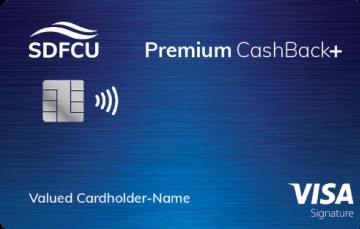
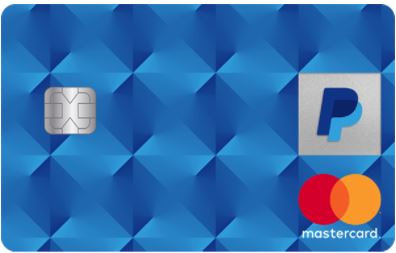
The other good no-annual-fee options are the Citi Double Cash Card and the Fidelity Rewards Credit Card. The reason that we recommend the State Department and PayPal cards is that they don't have a foreign transaction fee, and both the Double Cash and Fidelity cards do. Some people might prefer the Double Cash card, because it comes with slightly better extended warranty and price protection benefits, and they don't expect to use the card very often for overseas purchases. The Fidelity card only has a 1% foreign transaction fee (versus the Double Cash's 3% fee), but it comes with weaker purchase protections.
If you can't get the Freedom Unlimited combo, get one of the advanced options that earns Membership Reward points.
Advanced options
For most people, the best options are to earn 1.5x Ultimate Reward points with the Chase Unlimited combo, 2.5% cashback with the Alliant Card, or 2% cashback with one of the no-annual-fee options.
However, some people can earn even more valuable rewards with other general-purpose cards. Click to view our guide:

- If you are eligible for a business card, comfortable to use it for your personal purchases, and willing to redeem all your points for frequent flyer tickets, the most valuable general purpose reward card is almost certainly the Amex Blue for Business Card. If you are committed to using your points for frequent flyer tickets, earning 2x Membership Reward points is better than earning 1.5x Ultimate Reward points. Just remember, that with Membership Reward points, you don't typically have good options for other types of redemptions.
- If you are eligible for a business card, comfortable to use it for your personal purchases, and want to avoid being locked into frequent flyer redemptions, you can get the Ink Unlimited card, instead of the Freedom Unlimited card. Both cards earn the same 1.5x Ultimate Reward points on every purchase, but the Ink Unlimited card has a better signup bonus and some extra benefits.
- If you highly value premium-cabin award tickets, can earn enough points to redeem for them, and have the patience to find award space, you are always better off earning transferable points, rather than cash back. If you can't get the Sapphire Reserve / Unlimited combo, or use the Blue for Business Card, you should probably use the Amex EveryDay Preferred card.
- If you have $100,000 in investment or retirement assets that you would be willing to manage through Merrill Lynch, you can earn 2.625% cash back with the Bank of America Travel and Premium credit cards. That level of assets qualifies you for Bank of America "Platinum Honors" status, which gives you a 75% bonus for the rewards you earn from some Bank of America cards. The reward bonus boosts the earning rate from the Travel Rewards and Premium Rewards card from 1.5 cents per dollar to 2.625 cents per dollar (which is the highest long-term cash back rate available from any card). If you have assets at another broker, you can usually transfer them to a Merrill Edge account and manage them there (at little or no additional cost), to qualify for the higher reward rate.
- If you are willing to sign up for a new account each year, you can get a continuous 3% cash back with the Discover Miles card. It earns 1.5% cash back, but gives you double the points at the end of your first year. The catch is that you'll have to get a new card ever year (and use up an credit card application slot) to maintain access to this effective 3% rate.
In order to earn enough points to make this card worthwhile, you'll need to make sure to use it for more than 30 purchases every month. If that doesn't seem likely, we've got some tricks that can help. Tips to Generate More than 30 Charges per Month.