Difference between revisions of "Advanced credit card sign-up bonus strategies"
(→Strategy 1: Shift as much of your spending to new credit cards as you can) |
(→Strategy 2: Earning the same bonus multiple times) |
||
| Line 82: | Line 82: | ||
<blockquote> | <blockquote> | ||
| − | Rather than gradually moving on to less and less valuable signup bonuses, you can go back | + | Rather than gradually moving on to less and less valuable signup bonuses, you can go back and earn some of the best signup bonuses a second or third time. |
</blockquote> | </blockquote> | ||
| − | The rules for | + | The rules for re-qualifying for a signup bonus depend on the credit card company: |
{{List|logo}} | {{List|logo}} | ||
{{LogoLabel|Chase}} | {{LogoLabel|Chase}} | ||
| − | '''You can receive the signup bonus for a Chase card | + | '''You can receive the signup bonus for a Chase card once every two years'''. For example, you won't be approved for the Hyatt credit card, if you had previously signed up in the past two years. All the Sapphire cards are considered part of the same family, as are all the different personal versions of the Southwest Airlines card, and the older and newer version of the Marriott cards. You can only have one card from each of these families at a time and you can only earn the signup bonus for one card every two years (four years for the Sapphire). |
| − | + | However, in practice, reapplying for the signup bonus every two years doesn't work that well with Chase. While it's technically possible, if you're collecting signup bonuses, two years from now you are likely to be blocked by the Chase 5/24 rule. {{Link|Chase 5/24}}. | |
{{LogoLabel|Amex}} | {{LogoLabel|Amex}} | ||
| − | '''You usually can’t receive the signup bonus for any American Express card that you’ve had before'''—even if you never actually received the bonus in the past. You can't even earn the signup bonus for a business card you | + | '''You usually can’t receive the signup bonus for any American Express card that you’ve had before'''—even if you never actually received the bonus in the past. You can't even earn the signup bonus for a business card, if you previously had it for a different business. However, the once-per-lifetime rule only applies if it is the exact same card. For example, each different co-branded version of the Amex Platinum card counts as a different card for the purposes of getting a signup bonus. Because you can only get each signup bonus once, try to wait until you get a better-than-normal signup offer (if you can). |
| − | Targeted offers | + | Targeted offers sometimes become available, which don't include the “once per lifetime” limitation. If you are targeted, you can reapply and earn the signup bonus for a card you've had before. You can even have multiple copies of the same card at the same time. |
{{LogoLabel|Citi}} | {{LogoLabel|Citi}} | ||
| − | '''You can only receive a signup bonus for a new Citibank card, if you haven’t received or cancelled a card | + | '''You can only receive a signup bonus for a new Citibank card, if you haven’t received or cancelled a card that earns the same type of points, in the past two years'''. For example, if you cancel a Citibank American Airline card, you can’t receive the signup bonus for any other Citibank American Airlines card for another two years. Same with Thank You points, etc. |
| − | As with Amex, there are targeted offers that don't include the fine print that limits your ability to collect the signup bonus | + | As with Amex, there are targeted offers that don't include the fine print that limits your ability to collect the signup bonus. These allow you to receive another bonus, even if 24 months haven't elapsed. Printed American Airlines mailers (that come in the postal mail) almost always bypass the normal 24 month restriction. |
| − | There are two options for maximizing the number of Citibank signup bonuses you can earn. The first option is to cancel the card after 4-6 months. This resets the 24 month clock, allowing you collect a bonus every 2.5 years (or so). The other option, is to hold onto the card until just after your two year anniversary. You are then free to earn a signup bonus on another card in the same family | + | There are two options for maximizing the number of Citibank signup bonuses you can earn. The first option is to cancel the card after 4-6 months. This resets the 24 month clock, allowing you collect a bonus every 2.5 years (or so). The other option, is to hold onto the card until just after your two year anniversary. You are then free to earn a signup bonus on another card in the same family or even on another copy of the same card (Citibank lets you have multiple copies of the same card). After you are approved, you can cancel your older card. If you do this right after your anniversary, you can avoid paying the third year's annual fee. This lets you collect a signup bonus every 2 years, instead of every 2.5-3 years, but requires you to pay each card's second year annual fee (although you do retain the value of any ongoing benefits). |
{{LogoLabel|BOA}} | {{LogoLabel|BOA}} | ||
| − | '''Different restrictions apply to different Bank of America cards'''. You aren't eligible to get the Premium Rewards or (personal) Alaska Airlines cards if you've had the card in the last 24 months. These cards are restricted in a way that is similar to | + | '''Different restrictions apply to different Bank of America cards'''. You aren't eligible to get the Premium Rewards or (personal) Alaska Airlines cards if you've had the card in the last 24 months. These cards are restricted in a way that is similar to Citibank—your 2 year clock starts when you cancel the card. You aren't eligible to get the Travel Rewards or Cash Rewards card if you still have the card, unless you've had it for at least 24 months. For these cards, the clock starts as soon as you apply and you are eventually allowed to have multiple copies of the same card. Alternatively, you can cancel and then reapply to earn an additional bonus. For all the other cards, there are no specific restrictions and you are free to have multiple copies simultaneously. |
| − | However, all BOA cards are also subject to an additional limitation to the total number of (personal) credit cards you can get. You are limited to only four new Bank of America cards every two years, three new cards every year | + | However, all BOA cards are also subject to an additional limitation to the total number of (personal) credit cards you can get. You are limited to only four new (personal) Bank of America cards every two years, of which you can get a maximum of three new cards every year and a maximum of two cards every two months. |
{{LogoLabel|Discover}} | {{LogoLabel|Discover}} | ||
| − | '''There are no limitations on the number of times you can receive a signup bonus for a Discover card'''. It is even possible to have more than one of the same Discover card. However, you can only ever have two cards, and you can only get one new one per year. | + | '''There are no limitations on the number of times you can receive a signup bonus for a Discover card'''. It is even possible to have more than one of the same Discover card at the same time. However, you can only ever have two cards simultaneously, and you can only get one new one per year. |
{{LogoLabel|Barclay}} | {{LogoLabel|Barclay}} | ||
| Line 117: | Line 117: | ||
{{LogoLabel|us bank}} | {{LogoLabel|us bank}} | ||
| − | '''There are no limitation on the number of times you can receive a signup bonus for a U.S. Bank card'''. However, if you've been actively opening credit card accounts, it can be difficult to get approved for | + | '''There are no limitation on the number of times you can receive a signup bonus for a U.S. Bank card'''. However, if you've been actively opening credit card accounts, it can be difficult to get approved for new cards. It helps, if you are one of their banking customers. |
{{/List|logo}} | {{/List|logo}} | ||
Revision as of 14:58, 29 March 2019

The fastest way to earn large quantities of reward points is to take advantage of credit card signup offers. We strongly recommend everyone collect signup bonuses—it is the easiest way to earn free airplane tickets and hotel rooms.
Our basic approach to collecting signup bonuses is simple. Sign up for one credit card at a time. Use your new card for all your spending, until you've met the initial spending requirement. Then move onto another card. Start with the Chase 5/24 cards, move onto the cards you want for your core credit card collection, and continue with the remaining cards that have the best signup bonuses.
Our basic strategy lets almost everyone earn massive quantities of reward points, with very little time and effort. However, if you want to dive in deeper, you can use more advanced techniques to maximize the points you earn from signup bonuses.
Jump to
- Strategy 0: Take advantage of business cards (if you can)
- Strategy 1: Increasing your credit card spending to qualify for more bonuses
- Strategy 2: Earning the same bonus multiple times
- Strategy 3: Increasing your sign-up volume
- Strategy 4: Timing your sign-ups for higher bonus offers
- Strategy 5: Managing your credit report, to make it more likely you’ll be approved
- Strategy 6: Getting targeted offers
- Strategy 7: Earning extra points with referral bonuses
- Strategy 8: Taking advantage of bonus categories during the initial spending period
- Strategy 9: Earning bonuses with multiple businesses
- Other optimizations
Jump to:
- 1 Strategy 0: Take advantage of business cards (if you can)
- 2 Strategy 1: Shift as much of your spending to new credit cards as you can
- 3 Strategy 2: Earning the same bonus multiple times
- 4 Strategy 3: Increasing your sign-up volume
- 5 Strategy 4: Timing your sign-ups for higher bonus offers
- 6 Strategy 5: Managing your credit report, to make it more likely you’ll be approved
- 7 Strategy 6: Getting targeted offers
- 8 Strategy 7: Earning extra points with referral bonuses
- 9 Strategy 8: Taking advantage of bonus categories during the initial spending period
- 10 Strategy 9: Earning bonuses with multiple businesses
- 11 Other optimizations
Strategy 0: Take advantage of business cards (if you can)
If you have a small business, the world of available credit cards includes a lot more options. Alongside the many different “personal” travel and reward cards are dozens of additional credit cards targeted at small businesses. Often, essentially the same credit card is available in both a personal and a business version, allowing you to double-up on signup bonuses (or valuable free night or airline certificates). In addition, there are some unique and valuable credit cards that only available in small business versions. Unlock Extra Reward Points with Business Credit Cards.

- Business cards are available even to the smallest businesses. You don’t have to incorporated, it doesn't have to be your full-time job, and you don’t even need to be making any money yet. If you sell stuff on eBay, do a little bit of consulting, or do anything on the side to make money (or that might eventually make some money), you have a business, and are qualified for small business cards.
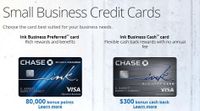
- Taking advantage of business cards greatly expands the set of signup bonuses you can target. In many cases, it lets you easily double-up on an offer. For example, instead of only earning 40-50,000 miles by signing up for the personal version of the United Airlines card, you can earn 80-100,000 miles by signing up for both the personal and business versions. In other cases, a small-business-only card offers a particularly attractive signup bonus. For example, the highest of all of the Ultimate Reward signup bonuses is the 80,000 points from the Ink Preferred business card.
- Business cards let you bypass some of the limitations on signing up for multiple cards. For example, business cards (from almost every bank) aren't counted towards the maximum of 5 cards you can receive before triggering the Chase 5/24 rule, and Bank of America's business cards aren't limited by its 2/3/4 rules. More details on these various rules are described below.
Strategy 1: Shift as much of your spending to new credit cards as you can
The amount of money that most people naturally spend on their credit cards controls the number of signup bonuses they can earn each year.
If you can increase your credit card usage, without affecting the amount of your income that you are actually spending, you can qualify for more frequent signup bonuses.
- Use your credit cards whenever possible. Many companies, such as utilities, cell phone providers, and insurance companies, accept credit cards. Use your card, instead of paying with a check or an automatic bank payment. Take the time to go through your bank account and figure out everyone you are paying on a regular basis and whether they will accept a credit card payment. You can usually uncover thousands of dollars of payments you can shift to your credit cards.
- Use a 3rd party billing service to pay people and businesses that don’t usually accept credit cards. Some businesses just won’t accept credit cards. Fortunately, several 3rd party billing services allow you to use your credit card to pay almost anyone. For example, you can pay your rent or mortgage, pay off your loans, or pay a housekeeper or gardening service. Taken to its limit, you can shift almost all your annual spending to your credit cards.
- Pay your taxes with your credit card. A few special services specialize in allowing you to pay your taxes with a credit card. Current rates are a little cheaper than the general-purpose bill paying services. If you want to get more aggressive, you can reduce your withholding rate, so that your employer withholds less taxes from your paycheck, requiring you to pay more money directly to the IRS. However, to avoid penalties, this may require you to shift to quarterly estimated payments.
- Don’t use your existing credit cards, unless you absolutely need to. Every dollar you spend on an existing credit card is a dollar less that you can spend qualifying for a signup bonuses. Sometimes, you need to use a card to get an important credit card benefit (like the 4th night free benefit of the Citi Prestige card) or free bags on United. However, don’t put any charges on a card just to earn bonus points. The amount of extra reward points you will be leaving on the table is dwarfed by the value of additional signup bonuses.
- Be proactive about signing up for new cards. Make sure to sign up often enough that you always have a new card to use, as soon as you finish meeting the initial spending requirement on your previous card(s). You don’t want any gaps, where you aren’t working towards qualifying for a new signup bonus.
- Consider taking advantage of “manufactured spending”. This term refers to techniques that generate additional credit card charges, without really buying anything. For example, you might use your credit card to purchase a Visa gift card, use the Visa gift card to purchase a money order, deposit the money order in a bank account, and use the bank account to pay off your credit card bill. While these approaches aren’t for everyone, they can let you generate far more money in credit card charges than you can generate from your actual spending. Earn More Credit Card Points with Manufactured Spending.
Also, use your card, instead of cash, whenever you can. You should find yourself hardly ever taking money out of the ATM.

Using these bill payment services comes at a cost. Typical service fees are around 2.5%—necessary for the service to offset the credit card fees that they need to pay to process your payments. However, if you are using this spending to qualify for additional signup offers, paying these fees is worthwhile. For example, it would cost $75 to use a bill paying service to qualify for a typical $3,000 initial spending requirement. The resulting signup bonus is likely to be much more valuable. For example, our best signup offer list includes dozens of cards with signup bonuses worth around $500 or more. Pay Any Bill with a Credit Card (To Increase Your Credit Card Spending).

On the other hand, if the amount of spending you can generate each year is larger than the amount you need to qualify for signup bonuses, and you aren't going to have trouble meeting the initial spending requirements before the deadline, the truly optimal strategy is to take advantage of good bonus category rewards when you can, and directing your everyday spending to your new cards—even if this requires you to pay some convenience fees (see Strategy 8 below).
Paying extra fees to earn extra signup bonuses is worthwhile,,but only if you really wind up qualifying for more signup bonuses than you would otherwise. If you are not making a sustained effort to earn as many signup bonuses as possible, try to avoid paying fees to generate additional credit card spending. You are better off spreading your applications out and avoiding paying extra fees. In other words, don't pay convenience fees to go through a spurt of signups, and then waste your natural spending on your existing cards later in the year.
Strategy 2: Earning the same bonus multiple times
The signup bonuses available from different credit cards vary widely in value.
Rather than gradually moving on to less and less valuable signup bonuses, you can go back and earn some of the best signup bonuses a second or third time.
The rules for re-qualifying for a signup bonus depend on the credit card company:
 |
You can receive the signup bonus for a Chase card once every two years. For example, you won't be approved for the Hyatt credit card, if you had previously signed up in the past two years. All the Sapphire cards are considered part of the same family, as are all the different personal versions of the Southwest Airlines card, and the older and newer version of the Marriott cards. You can only have one card from each of these families at a time and you can only earn the signup bonus for one card every two years (four years for the Sapphire). However, in practice, reapplying for the signup bonus every two years doesn't work that well with Chase. While it's technically possible, if you're collecting signup bonuses, two years from now you are likely to be blocked by the Chase 5/24 rule. Dealing with the Chase 5/24 Rule. |
 |
You usually can’t receive the signup bonus for any American Express card that you’ve had before—even if you never actually received the bonus in the past. You can't even earn the signup bonus for a business card, if you previously had it for a different business. However, the once-per-lifetime rule only applies if it is the exact same card. For example, each different co-branded version of the Amex Platinum card counts as a different card for the purposes of getting a signup bonus. Because you can only get each signup bonus once, try to wait until you get a better-than-normal signup offer (if you can). Targeted offers sometimes become available, which don't include the “once per lifetime” limitation. If you are targeted, you can reapply and earn the signup bonus for a card you've had before. You can even have multiple copies of the same card at the same time. |
 |
You can only receive a signup bonus for a new Citibank card, if you haven’t received or cancelled a card that earns the same type of points, in the past two years. For example, if you cancel a Citibank American Airline card, you can’t receive the signup bonus for any other Citibank American Airlines card for another two years. Same with Thank You points, etc. As with Amex, there are targeted offers that don't include the fine print that limits your ability to collect the signup bonus. These allow you to receive another bonus, even if 24 months haven't elapsed. Printed American Airlines mailers (that come in the postal mail) almost always bypass the normal 24 month restriction. There are two options for maximizing the number of Citibank signup bonuses you can earn. The first option is to cancel the card after 4-6 months. This resets the 24 month clock, allowing you collect a bonus every 2.5 years (or so). The other option, is to hold onto the card until just after your two year anniversary. You are then free to earn a signup bonus on another card in the same family or even on another copy of the same card (Citibank lets you have multiple copies of the same card). After you are approved, you can cancel your older card. If you do this right after your anniversary, you can avoid paying the third year's annual fee. This lets you collect a signup bonus every 2 years, instead of every 2.5-3 years, but requires you to pay each card's second year annual fee (although you do retain the value of any ongoing benefits). |
 |
Different restrictions apply to different Bank of America cards. You aren't eligible to get the Premium Rewards or (personal) Alaska Airlines cards if you've had the card in the last 24 months. These cards are restricted in a way that is similar to Citibank—your 2 year clock starts when you cancel the card. You aren't eligible to get the Travel Rewards or Cash Rewards card if you still have the card, unless you've had it for at least 24 months. For these cards, the clock starts as soon as you apply and you are eventually allowed to have multiple copies of the same card. Alternatively, you can cancel and then reapply to earn an additional bonus. For all the other cards, there are no specific restrictions and you are free to have multiple copies simultaneously. However, all BOA cards are also subject to an additional limitation to the total number of (personal) credit cards you can get. You are limited to only four new (personal) Bank of America cards every two years, of which you can get a maximum of three new cards every year and a maximum of two cards every two months. |
 |
There are no limitations on the number of times you can receive a signup bonus for a Discover card. It is even possible to have more than one of the same Discover card at the same time. However, you can only ever have two cards simultaneously, and you can only get one new one per year. |
 |
There are no limitations on the number of times you can receive a signup bonus for a Barclay card. However, you'll need to wait 24 months after closing an account to qualify for it again, and you can't reapply for a card that you've had in the last six months. With Barclays, it helps to be using your existing cards, when you apply for a new card. |
 |
There are no limitation on the number of times you can receive a signup bonus for a U.S. Bank card. However, if you've been actively opening credit card accounts, it can be difficult to get approved for new cards. It helps, if you are one of their banking customers. |
Strategy 3: Increasing your sign-up volume
Sticking to one new card at a time keeps things simpler. But, it can be more efficient to sign up for your credit cards in batches.
- Just be sure that you have the capacity for qualifying for the signup bonuses of the entire batch. If you get multiple cards at a time, it is easy to overextend your ability to meet the initial spending requirements for all the cads. Hopefully, by the time you are increasing the volume of your sign ups, you have a better feel for what you can handle.
- Credit card companies limit how quickly you can sign up for their credit cards. You will need to spread out your applications, with any given bank, over time. Depending on your volume, that means you need to be spreading your applications across different banks, rather than just working your way down a list of the most valuable bonuses.
- If you apply for multiple cards on the same day (when possible), your credit inquires will usually be combined. As discussed in the credit report section bekiw, this makes it more likely that you’ll get approved for additional cards, especially in the short term. The best strategy is to apply for multiple cards with one bank, wait a couple of days to give the inquires a chance to combine, and then more onto the next bank.
- When you apply for multiple cards during a short period of time, you often won’t be automatically-approved for any cards beyond the first (with any given bank). That doesn’t mean that you’ll be rejected. But, it might mean that you need to talk to someone, and have a story about why you need multiple new cards. If you want to reduce the need to have these calls, you should pace out your applications.
- Take advantage of options from smaller banks. Because of the limitations on the number of cards that you can get from Amex, Chase, Citibank, and Bank of America, you can maximize the signup bonuses you collect, by taking advantage of the other credit card companies. Their signup bonuses may not be quite as attractive, but they may be easier to get.
- Most of the smaller banks are "inquiry sensitive", so you should target the best ones early. Once you've started signing up for a lot of cards, you will build up a bunch of credit inquiries ("hard pulls") on your credit report. Most of the smaller credit card companies (except Bank of America), will be concerned that you are becoming a credit risk, and reject your applications. You may want to prioritize the best options from these banks, or you will need to wait until you've slowed down, and the number of inquires (over the last six months) has dropped.
|
Amex has a mix of “credit cards” and “charge cards”, and the rules for each are different. Their charge cards are the Platinum, Premier Rewards Gold, Gold, and Green cards. Their other cards are credit cards. You can only get one personal and one business credit card every five days, and two cards every ninety days. These limits don’t apply to charge cards. You can only have a maximum of four to five credit cards at any one time. There is no cap on the number of charge cards you can have, but you can only have one of each type of card. |
|
You can only get two credit cards every month. And, you can’t get many of their cards, if you’ve gotten 5 new credit cards in the last 24 months (from all banks combined). |
|
You can only get one credit card every eight days, two credit cards every sixty-five days, and one business card every ninety-five days. |
|
You can only get two personal cards every two months, three cards every twelve months, and four cards every twenty-four months. This is sometimes called the Bank of America “2/3/4” rule, and severely limits the number of personal Bank of America cards you can get. Bank of America may even shut down accounts to keep you to maximum of four total cards. However, these rules don't apply to their small business cards. |
|
You can only get one card every six months. |
|
You can only have a maximum of two Discover cards, and you need to wait a year before applying for your second account. |
 |
You can only receive one new card every six months, and have a total of two accounts. |
 |
You can only receive one Wells Fargo signup bonus every 15 months. |
If you apply for a bunch of cards from different banks on the same day, you won’t get the benefit of any combined inquiries. Not long ago, doing this was the conventional wisdom, because it would often take some time for recent inquiries to show up on your reports. However, those days are gone. Most inquiries will be immediately visible to other banks.
Strategy 4: Timing your sign-ups for higher bonus offers
Sometimes, instead of immediately signing up for a card, it can make sense for you to wait until a better signup offer becomes available.
- The first question is whether the card is likely to have a higher promotional offer later. Looking at the card’s offer history on the US Credit Card Guide can help you get an idea of what to expect. We provide a link to the offer history graph from every one of our credit card guides.
- The other question is how much of a rush you are in, to get the card. Waiting for a better offer means delaying the benefits, higher earning-rate, or signup bonus, you are interested in. If you need the points or benefits for an upcoming trip, or want to get a jump on higher earning rates, you don’t want to wait around too long to get started with the card. On the other hand, if you are just working your way through the most attractive signup bonuses, you can often skip the card, and come back to it later.
Some cards will show a pattern of having “spikes”, where they periodically offer a higher-than-normal bonus.

Other cards may show no history of promotional offers. Finally, a card may have had a higher signup offer in the past, but moved on to a lower level, for the foreseeable future.
Strategy 5: Managing your credit report, to make it more likely you’ll be approved
To collect signup bonuses with finesse, you can control some aspects of the interplay between your credit card applications and your credit report.
- To increase your odds of getting approved, you can pay off your existing credit cards before the end of the statement period. When your billing cycle ends, the credit card company will report your balance to the credit bureaus. Even if you are going to pay the card, in full, before the due date, your credit report will still show the balance you owe for that month. However, if you pay off your bill, just before the end of the billing period, they will report a zero balance. Your credit utilization will look very low, and your credit score will be higher; making it more likely you’ll get approved for a new card. If this seems like a bunch of extra effort, it is; and we don’t usually bother. But if you are on the line of getting approved,it is a strategy you can take advantage of.
- If you don't have a home or auto loan, consider signing up for a line of credit. One of the factors for your credit rating considers the different types of credit you have. If you don't have an "installment" loan, your credit rating will suffer. Simply making payments for a low value line-of-credit will boost your credit score.
- Most credit card companies are “inquiry sensitive”. All other things being equal, if you have a bunch of recent sign-up attempts, you are more likely to be denied. The bank is not reacting to the small drop in your credit score, that results from the recent credit inquiries; they are reacting to the fact that you have recently expanded (or tried to expand) the total amount of your credit, A bunch of recent inquiries is viewed as a warning sign that you are about to get into credit trouble.
- You can reduce the number of credit inquiries, by applying for more than one card, from the same credit card company, on the same day. Most of the time, the different credit card applications will be combined into a single inquiry. Either the bank will choose to only make a single inquiry itself, or the credit bureau will treat the different inquires as “duplicates”, and combine them for you. While both credit card accounts will eventually show up on all your credit reports, fewer credit inquiries will show up.
- You can sometimes avoid “wasting” a credit inquiry, if you already have an existing credit card from the same credit card company. Normally, there is a cost associated with getting rejected for a credit card application. Even though you don’t get the card, you still wind up with an additional credit inquiry on your credit report. However, if you already have one of their credit cards, some banks will usually use their existing information to evaluate your application. Most of the time, if you wind up getting denied, they never wind up making a new inquiry. This reduces the risk of trying to apply for a new card. Remember that you need to be an existing customer for this to work. If you don’t have a card, they will always wind up doing a hard pull. This works pretty reliably with American Express, and some of the time with Barclays and Bank of America.
- You should spread your applications around. When you apply for a credit card, the credit inquiry will usually only be reported to a single credit bureau. Then, when you are approved for the card, the new account will be reported to all the credit bureaus. The credit inquiry itself, will not show up on the other reports.
- As an extreme move, you can “freeze” one of your credit bureau accounts, to try to force a bank to use a different credit bureau. If a bank can’t access your report from their first choice, they may contact a different credit bureau instead. By freezing the agency you don’t want them to use, you can have the inquiry land on a different report. You’ll need to do some of your own web research, if you want to take advantage of this strategy.
Anything that you can do to reduce the number of “hard” credit inquiries is helpful. In addition, if you are going to apply for several cards around the same time, make sure to apply for higher priority cards first.

It can take a couple of days before credit inquiries are combined by the credit bureau. Therefore, the benefit of the combined inquiry doesn’t kick-in right away. If you want your next applications to see only the single combined inquiry, you’ll need to wait a few days before applying for additional cards.
Citibank, Discover, and Capital One won’t allow multiple applications on the same day, so this trick doesn’t apply. The other major credit card companies should combine inquiries. However, business and personal cards are usually handled separately. Doctor of Credit provides some more details about what works, or you need to check the information on FlyerTalk. As with most of this stuff, there is no guarantee of what will happen, on a case-by-case basis.
By spreading out your inquires across banks, you can lower the number of inquiries with any one bureau, and increase your chances of approval. Unfortunately, banks use different credit bureaus, for different products and different regions, and change this often, so you’ll need to go online, and do some additional research, if you want to have more control over the process. We don't usually bother, and just follow the rule-of-thumb of trying to use multiple credit card companies.
It is also possible that you have a problem with your credit report, that only shows up at one credit bureau. If so, you could limit your credit card applications to those that are likely to use a different bureau’s credit report.
Finally, if you are highly motivated to reduce the number of credit inquiries on your account, consider how many different credit bureaus a bank normally accesses, when evaluating your application. Some credit card companies grab your information from only a single bureau, others will grab your information from two different bureaus. Capital One is infamous for making an inquiry at all three of the credit bureaus. The smaller the number, the smaller the “cost” for applying for the card.
Strategy 6: Getting targeted offers
Some banks, particularly American Express, use “targeted” signup offers, that are personalized for each customer. The best offers aren’t publicly available to everyone. You’ll need to receive the better offer directly from the credit card company.
- Register for loyalty program first. If you are interested in a card that is associated with an airline or hotel reward program, such as the Alaska Airlines card, register for the reward program first. Members of the reward program will often get a better deal on the card that the one that is available to the public.
- CardMatch.com. CardMatch is the most popular tool for checking for targeted offers across multiple credit card companies. You simply enter a little bit of personal information, and they will show you a bunch of offers that you qualify for. Most of the time, these offers are the same as the public offer that is available for each card. However, they sometimes provide better non-public offers. For example, some people have gotten offers for up to 100,000 Membership Rewards points for various American Express cards. Using the tool will have no impact on your credit score.
- Check for pre-qualified offers with the credit card company. Most of the credit card companies have a way for you to check for “pre-qualified” offers. Like CardMatch, they generally just return the standard signup offer, but they will occasionally provide better signup offers; and checking won’t affect your credit score. More of the credit card company's signup offers will show up on their own site, than on CardMatch.
- The “Reservation Trick”. Frequently the best airline and hotel credit card signup bonuses are offered to customers, who are in the middle of making a reservation for a particularly airline or hotel. To check, you can take advantage of the ‘reservation trick”. Go to the airline or hotel that is associated with the card you want to get, and start making a reservation. You aren’t planning to complete the reservation, so any reservation will do.
- Call in and ask. If you are willing to put in a little extra time, call into a customer service representative, and ask to see if there is a better offer available. This sometimes works.
- You might get a better signup offer at one of the bank's brick & mortar locations, especially if you already have an account with the bank. Before applying online, it can be worth swinging by your local branch, and seeing what is available.

After you enter your information, and get your list of credit card offers, make sure to click on the "CardMatch Special Offers" link on the left hand side of the screen. The best offers will not necessarily show up as part of the initially displayed results.
As you go through the checkout process, an offer is likely to pop-up, to get the associated credit card. Sometimes, the offer will feature a better than normal signup bonus. Just make sure to stop before you get to the final reservation step, so you don’t wind up making a reservation you don’t really want.
Strategy 7: Earning extra points with referral bonuses
You can often earn a “referral bonus”, by getting someone to sign up for a credit card. This is especially useful for couples. If you are both interested in signing up for the same card, one person can apply first. Then, they can refer the other person for the card. Along with the normal signup bonus, you’ll receive some extra points or cash.

To activate a referral bonus, you need to go online and generate a unique application link. The person you refer, then needs to use that link, rather than simply applying directly for the card. When they get accepted, you’ll receive the extra bonus.
- Be careful, the signup bonus from using a referral may not be the best one available. In some cases, there is a another signup bonus, that is better than the one that is associated with the referral. Always check to see what the best regular offer is, before clicking on the referral link to apply.
- Referral offers aren’t always available, for any given card. However, with some credit card companies, there is an easy way to check.
- American Express. When you login from this page, you can see all your currently available referral offers. You'll need to click the arrows to navigate between each offer.
- Chase. Can take a week to send an email to the person you referred. If you start down the path to sharing on Twitter, you can generate a link, which you can share immediately, and in any way you want. Referrals can also be generated for most cards through the Chase Mobile app.
- Citibank. Has recently been more forthcoming with referral bonuses on a limited set of cards, which may include useful options like Double Cash, ThankYou Premier, and American Airlines Platinum Select. You'll see offers when you log in to your account.
- U.S. Bank. You’ll need to visit a specific webpage for each card. Best to do a web search with the card name and the word “referral”.
- Discover. You both get an extra $50.
- Barclays. If you are targeted to make referrals, you’ll need to do it through your online account.
- Bank of America, Wells Fargo, and Capital One don’t currently offer referral bonuses.
- Usually, there is a limit to the number of referral points you can earn each year. This is different for different credit card companies.
- You can try to post referral links online, to earn extra points. If someone clicks your links, you’ll earn a bonus. The FlyerTalk credit card forums are a good place to start. Another good option is to do a search to find blog posts about referrals—these may let you share your links in the comments section.
- What goes around, comes around. When you are applying for a card, you should click on someone’s referral link, if you can. You’ll get your points, and they’ll get some too.
- You are likely to receive a 1099 for any rewards you earn through referrals. Starting in 2019, banks have been reporting any referral bonuses as income to the IRS. They send you and the IRS a 1099 form which has a stated value for the points you've earned. For example, for income tax purposes, American Express values Membership Reward points at 1 cent each, and Hilton points at .675 cents each. Your responsible for paying income taxes on the value of these referral rewards (you are not responsible for paying taxes on the rewards you earn from signup bonuses and ongoing spending, because they are treated as rebates).
However, with American Express, you can also earn a referral bonus, even if you refer your friend to a different card (even one that you don't personally have). The amount of your referral bonus depends on the card that you generated the referral from, not the card that your friend winds up getting. For example, you can earn a referral bonus of 15,000 on your Platinum card, if you refer a friend to one of the Hilton cards (in this scenario, your friend will still get the Hilton signup offer). In other words, you can pretty much always earn a referral bonus, whenever a friend is interested in any of the Amex credit cards. You should start by referring from the card that earns you the most valuable referral, and once you've hit the maximum bonus amount for that card, move on to the next one.
Amex's Membership Reward and cash back cards can earn referrals from almost every Amex card, including airline and hotel cards, as well as other Membership Reward and cashback cards; while co-branded airline and hotel cards can only refer friends to other cards within the same family. You can earn a referral from co-branded Membership Reward cards (such as the Ameriprise and Morgan Stanley cards), when your friend gets a different card, but these cards are not an option for your friend to get through a referral.
When you generate a referral, your friend will be taken to the signup offer for the exact same card. However, if they scroll down the page, there is an "Explore Other Cards" section that provides access to other available cards. If you want to make things easier, you can use the referral link yourself to navigate to the offer page, navigate to the card you want to refer to, and then send that page's link to your friend.
At this time, it is possible for you to refer yourself to a new card. For example, if you wanted to get the SPG Luxury Card, you could send yourself a referral from your Amex Platinum card, and earn the referral points, along with the signup bonus. However, there is a chance that Amex will be upset with this behavior, so the safer bet is to refer between spouses or friends.
Strategy 8: Taking advantage of bonus categories during the initial spending period
Our "standard" approach for collecting signup bonuses is to use your new credit card for all your purchases, regardless of whether you can earn bonus rewards from one of your existing cards. This helps ensure that you will meet the initial spending requirement of your new card, and keeps things as simple as possible.
However, if you truly want to maximize the rewards you earn, you should take a more opportunistic approach.
- Typically, you can increase your overall credit card spending by paying fees to use your credit card to make payments which otherwise couldn't be made with your card. For example, you could pay your rent, mortgage, childcare, auto loan, or student loan using a service like Plastiq, pay your taxes with one of several different programs, or even send money to one of your friends with Venmo or ApplePay. The typical fee is 2 - 3%. Pay Any Bill with a Credit Card (To Increase Your Credit Card Spending).
- If taking advantage of a bonus category on one of your existing cards lets you earn considerably more than these fees, you are better off earning the extra reward points, and paying a fee to increase the total amount of your credit card spending (if necessary). If you aren't already maximizing your credit card spending through fee-based programs, and you avoid taking advantage of good bonus category reward opportunities, you are leaving some reward points on the table.
- Of course, the hard-core signup bonus collector can still maximize the points they earn in the first couple of years, by fully taking advantage of fee-based payment services, while still focusing all of their spending on qualifying for signup bonuses. Any dollar not spent on meeting minimum bonus requirements represents a drop in the total rewards you would earn, regardless of your bonus category reward rate. But most people would want to go a little slower, opportunistically take advantage of ongoing bonus category rewards, and minimize the use of fee-based payment services.
For example, if you have the Blue Preferred card, you'd earn $6 of rewards on a $100 of grocery purchases. Even if you have to make up for that $100 of spending, by using a money transfer service or paying a bill through Plastiq, you'd only wind up paying $2-3 in fees. If you pass up the opportunity to earn the bonus rewards, when you could have easily generated additional spending, you are missing out on some rewards.
If you are engaged in Manufactured Spending, your cost for generating additional spend is likely even lower, and your capacity to replace any missed organic spending is even higher. Earn More Credit Card Points with Manufactured Spending.
Strategy 9: Earning bonuses with multiple businesses
If you have multiple businesses, you can sign-up for separate credit cards for each one. In some cases, this allows you to bypass the normal rules for earning signup bonuses. For example, if you aren't blocked by the Chase 5/24 rule, you could earn multiple signup bonuses from the Ink Preferred card, during the same two year period.
Sometimes, it matters whether you apply with your SSN or with an EIN (IRS business identification number). If you plan to head down this route, you can get a free EIN even for a sole proprietorship, and regardless of whether you have employees. They are not limited to corporations.
|
Regardless of the number of businesses you have, you can only earn the signup bonus once per lifetime. |
|
You can earn signup bonuses separately for each business, as long as you use separate EIN numbers. However, it doesn't work reliably for co-branded credit cards, if you have them linked to the same loyalty program number. For example, if you apply for two Marriott Business cards with different EIN numbers, but with the same Marriott Reward number, you may be limited to one signup bonus during any 24 month period. |
|
Regardless of the number of businesses you have, you can only earn the signup bonus if you haven't opened or closed an account in the same family during the last 24 months. Note that business cards and personal cards are treated separately. |
|
As long as you get approved, everyone can earn signup bonuses on the all of their card, multiple times, without any restrictions. So, this works for business card as well. |
|
As long as you get approved, everyone can earn signup bonuses on the all of their card, multiple times, without any restrictions. So, this works for business card as well. |
|
You can earn signup bonuses separately for each business, as long as you use separate EINs. |
Other optimizations
- If you want a card with a less valuable signup bonus, sign up for a sibling card, and convert to the card you want later. Sometimes, you may want to add a card with a low signup bonus to your core credit card collection. Instead of applying for the card directly, you can apply for another card, with that bank, that has a better signup bonus, and then eventually covert that card into the card you want for the long run. The rules for which cards can be converted to which cards are specific for each bank, so check our guides, or do a web search, before you had down this path.
- Take advantage of non-spending-related retention offers. When you call to cancel a card, you will almost always be offered one or more retention offers, to encourage you to hold onto it. In general, most retention offers, which require you to use the card for additional spending, aren’t worth it—you are better off putting your spending on a new card. However, if you get an offer that gives you a bonus, just for holding onto the card, and it is worth more than the annual fee, postpone cancelling for another year.
- Couples can each get a card. If there is more than one adult in your household, you can each apply, and get the signup offer. Sometimes, you might want to apply at the same time, so that you are both building up the same types of points for a trip. In a few cases, you might plan to “offset” your application times. For example, you might be better off with two free nights at Ritz Carlton hotels this year, and two next year, rather than four in a single year. Often one person winds up handling the entire process, on behalf of their less-interested partner.
- You can sometimes earn bonus rewards, by adding an authorized cardholder. This is almost always possible with Chase cards. With other cards, authorized cardholder bonuses come and go. If you have kids, you can usually add them as authorized cardholders, and possibly earn additional bonuses. If you don't share finances with someone, you might have a friend, who you would completely trust not to use their version of your card. Just don't add anyone as an authorized cardholder, if they've signed up for fewer than 5 cards in the last 2 years. If so, you'll block their ability to be approved for many of the best Chase cards. Dealing with the Chase 5/24 Rule.
- If you need to use your points in a hurry, you can sometimes call the bank after you’ve met the initial spending requirement, and have them expedite the award points, rather than waiting the usual time for them to post. Doctor of Credit has a useful guide with information for each of the programs.
Superficially, it may seem that you are better off just applying for both cards, and eventually cancelling the card you don’t want to hold onto. However, if you are going to apply for two cards, you are better off using your second application for n altogether different card, with a better signup bonus.