Difference between revisions of "Reciprocal museum programs"
(→Advanced options) |
|||
| Line 1: | Line 1: | ||
| − | {{DISPLAYTITLE:Temp - {{Title| | + | {{DISPLAYTITLE: Temp - {{Title|optimize rewards}} (2018)}} |
| − | {{seo|description= | + | {{seo|description=Increase the rewards from your credit card spending by using cards that earn the best reward rates on bonus categories, like restaurants, travel, groceries, and gas.}} |
{{Page|article|Card Strategies}} | {{Page|article|Card Strategies}} | ||
| − | {{ | + | {{ImageX|ChooseCard.jpg|full}} |
| − | + | The easiest way to earn free travel is to get a credit card that earns rewards points on your purchases; and then use that card, rather than cash or check, whenever you can. Over the course of a year, you’ll effortlessly earn thousands of points you can use for free flights and hotel rooms. By simply choosing the right {{Link|general purpose|general-purpose rewards card}}, you should be earning at least 2% in rewards, on all your credit card spending. | |
| − | + | However, you can do even better. Many credit cards offer higher-than-normal reward rates for spending within certain categories. For example, one card may give bonus rewards for purchases from gas stations and supermarkets, while another card may give bonuses on travel and restaurants. | |
<blockquote> | <blockquote> | ||
| − | + | By using different cards for different types of purchases, you can earn more reward points (or cash back) on your spending—with rewards rates as high as 10%! | |
| − | </blockquote> | + | </blockquote> |
| − | + | Unless you have problems with credit, you don’t need to worry about getting a handful of new credit cards, just to earn more rewards. Getting a few additional cards won’t trash your credit score—it may just improve it. For more information, and general tips, see our {{Link|Credit Cards 101}} article. | |
{{TOC}} | {{TOC}} | ||
| − | *[[# | + | *[[#Using different cards, for different purchases, is a bit of hassle|Using different cards, for different purchases, is a bit of hassle]] |
| − | *[[# | + | *[[#Tips for getting reward cards for different spending categories|Tips]] |
| − | *[[# | + | *[[#What type of points to focus on?|What type of points to focus on?]] |
| − | *[[# | + | *[[#The best cards for earning bonus rewards|The best cards for earning bonus rewards]] |
| − | *[[# | + | *[[#Reward Combos|Reward Combos]] |
| + | *[[#Increasing your reward rate with gift cards (advanced)|Increasing your reward rate with gift cards (advanced)]] | ||
{{/TOC}} | {{/TOC}} | ||
{{Main|article}} | {{Main|article}} | ||
| − | === < | + | === Using different cards, for different purchases, is a bit of hassle === |
| + | |||
| + | <ul class="bulletlist"> | ||
| + | <li>'''To be fair, optimizing your rewards, by using different credit cards, makes your life more complicated'''. It is simpler to carry around a single general-purpose reward card, and use it for all your purchases; than it is to get, carry, and choose from a collection of different reward cards.</li> | ||
| + | |||
| + | <li>'''Not everyone wants to bother, and we don’t blame them'''.</li> | ||
| + | |||
| + | <li>'''However, many other people (and some of us) get immense satisfaction about getting the highest possible rewards from their spending''', and wouldn’t dream of “only” earning 2 - 2.5% on a purchase, when they could be earning 3 - 5%, or even more. It is not just the extra points—it is the extra sense of satisfaction from taking your game to the next level.</li> | ||
| + | |||
| + | <li>'''Within the “points hobby”, this is a famous source of tension between spouses'''—one spouse gets frustrated, when the other spouse doesn’t wind up using the “right” credit card for different purchases. Don’t let it bother you. If you or your spouse is not interested in having one more thing to think about, stick to a great general-purpose rewards card.</li> | ||
| + | </ul> | ||
| − | + | If you want to maximize your rewards, build up a collection of cards, and use the right card for each purchase. If you are truly dedicated, you can build up a portfolio of more than a dozen cards, to absolutely maximize the rewards on all your purchases. | |
| − | + | === Tips for getting reward cards for different spending categories === | |
| + | |||
| + | The right set of cards to get, and the order to get them, depends on your individual circumstances. | ||
<ul class="bulletlist"> | <ul class="bulletlist"> | ||
| − | <li>''' | + | <li>'''There is no single card that earns great bonus rewards in every category'''. To optimize your rewards, you’ll need to get a set of cards, and use a different card for each category. However, you can typically get one card that is good for both travel and restaurants, and another card that is good for groceries and gas.</li> |
| + | |||
| + | <li>'''Focus on the cards that earn bonus rewards for the categories where you spend the most money'''. If you mostly go out to eat, a card that earns bonus rewards on restaurants is going to be more valuable than one that earns bonus rewards on groceries, and vise versa.</li> | ||
| + | |||
| + | {{ImageX|Restaurant1.jpg}} | ||
| + | |||
| + | <li>'''Don’t focus on the NUMBER of points earned, focus on the VALUE of the points'''. The value of different types of points and miles varies widely. On one end of the scale, credit card reward points (like Ultimate Rewards) are usually worth close-to, or more than, 2 cents each. On the other end of the scale, some hotel points, like Hilton's, are only worth .4-.5 cents each.</li> | ||
| − | + | As an example, the Hilton card’s 6x rewards on groceries sounds a lot better than the Amex’s Premier Reward’s 2x rewards. However, the Hilton points are worth around 2.7 cents per dollar, and the Membership Rewards points are worth around 3 cents per dollar. So, the 3x Membership Reward points is actually the more valuable reward rate. See more detail below. | |
| − | <li>''' | + | <li>'''To determine whether a card is worthwhile, you need to compare the extra points you expect to earn, to the card’s annual fee'''. To figure out the value you can get from a card, you need to take the amount you expect to spend, and multiply it by the extra points that you will earn, above-and-beyond the points you would have earned by just using your general-purpose reward card; and then subtract out the annual fee you need to pay to use the card.</li> |
| − | + | {{Card|BlueCash}} | |
| − | |||
| − | + | An example may make this clearer. The Amex Blue Preferred card offers an amazing 6% cash back on your first $6,000 worth of supermarket spending. If you spend $5,000 on groceries each year, you’ll earn $300 cash back. But the real added value of the card is lower. If you already have the Chase Unlimited combo, you could have used your Unlimited card to earn 7,500 Ultimate Rewards points on those same amount of purchases. If you value the Ultimate Reward points at {{Value|UR}} cents each, that works out to {{Value|UR|7500}}. The Blue Cash card only earns $170 in additional rewards. And, in order to earn those extra rewards, you’ll need to pay $95 per year, for the additional card. | |
| − | + | The final net benefit works out to $75 per year, not the $300 you might earn in rewards. If you spend less on groceries, you will earn less in extra rewards. If you spend the full $6,000, you can earn slightly more. | |
| − | + | When you are determining whether it makes sense to get a card for ongoing use, we recommend ignoring any waiver of the first-year’s annual fee . You are focusing on whether these cards make sense for the long run. The waived annual fee, is essentially just part of the signup bonus for the card, and doesn't affect the long term value proposition. | |
| − | You | ||
| − | |||
| − | The | + | <li>'''If you are “collecting” signup bonuses, you should generally postpone signing up for cards that just earn higher reward rates'''. The easiest way to build up lots and lots of points and miles is by collecting signup bonuses for new credit cards. If you follow this strategy, much of your credit card spending will be directed towards meeting the Initial spending requirements of your new cards. As a result, you will have less spending leftover. to put on the cards that earn bonus reward rates; the amount of extra value you’ll get from these cards will be low; and it is less likely that you can justify any additional annual fees. {{Link|Signup Bonus Intro}}.</li> |
| − | + | Even more importantly, there is a limit to how many credit cards you can collect during any span of time. You’ll get more value from focusing on good signup bonuses, rather than on increasing the rewards you earn directly from your spending. Concentrate on signup bonuses first, and worry about optimizing your reward rates later. | |
| − | + | <li>'''Small business credit cards expand your options for earning bonus rewards'''. If you have any type of small-business (even if you also have a full-time job and you haven’t made any money yet), you are eligible for small-business credit cards. Many of these cards offer bonus rewards on spending categories that aren’t often available from personal cards—such as purchases from office supply stores or telecom providers. Technically, you aren’t supposed to use these cards for personal expenses, but many people do with no problems. If you are eligible for these cards, and willing to use them for your spending, you’ll be able to increase the rewards even further. {{Link|Business Cards}}.</li> | |
| − | + | {{Card|InkPreferred}} | |
| − | + | <li>'''You only need to pay attention to bonus rewards that are better than 2% back'''. Because you should be earning 2% or more with your general-purpose card, earning 2% on a bonus category is not particularly enticing. Only pay attention to cards that have category bonuses of 3% or more. Just remember, that depending on the type of points, a card that only earns 2x points, may be earning more than 3% in value.</li> | |
| − | |||
| − | |||
| − | |||
| − | |||
| − | + | {{Card|DoubleCash}} | |
| − | + | </ul> | |
| − | + | === What type of points to focus on? === | |
| − | |||
| − | + | Before you can determine which cards to get for different spending categories, you need to make some decisions about which types of points to earn. | |
| − | + | We display a "value" for the reward rate of every card, but that is calculated from a "base" value per point. But, depending on your plans and situation, these points can be much more valuable, or much less valuable, than the base values we use. The "real" value per point differs for each person, depending on how they expect to use their points, how much they spend each year, and how many points they already have. {{Link|point values}} | |
| − | |||
| − | |||
| − | <li>''' | + | <ul class="bulletlist"> |
| + | <li>'''It is hard to go wrong with cards that earn Ultimate Reward points'''. If you have the Chase Sapphire Reserve card, you can use your points (like cash) to purchase a broad range of travel through the Chase website at 1.5 cents per point. You can easily get more value by using your points with Hyatt award nights and less-expensive Southwest Airlines tickets. And you leave open the possibility of getting much more value per point by transferring your points to one of Ultimate Reward's airline partners to use for frequent flyer tickets. {{Link|Ultimate Rewards}}.</li> | ||
| − | + | It is pretty safe to assume that you can easily get at least 1.5 - 2 cents in value from your Ultimate Reward points. As a result, if there is an Ultimate Rewards card that has good bonus category rates, it will generally earn more valuable rewards than other cards. The main obstacle is whether you are blocked from getting the Sapphire Reserve, or some of the other cards, by the Chase 5/24 rule. {{Link|Chase 5/24}}. | |
| − | <li>''' | + | <li>'''If you highly value business and first class award tickets, and have the ability and the patience to build up large quantities of points and find available award space, you should always try to earn as many "transferable" points as you can'''. You'll typically get 3 - 10 cents per point when you use your points to book business and first class frequent flyer tickets, so flexible credit card points that can be transferred to multiple frequent flyer programs are much more valuable than cash-back-like cards. {{Link|Transferable Points}}.</li> |
| − | + | {{Image|TransferPrograms.png|420}} | |
| − | |||
| − | + | In general, you should go with whichever transferable point option earns you the most transferable points per dollar, as each of the programs has a decent set of airline partners. If you are planning to redeem for premium-cabin frequent flyer tickets, the ability to get good value from Ultimate Reward's other redemption options doesn't provide any added value. Membership Reward's larger number of airline partners, occasional transfer bonuses, easier points accumulation, and ability to purchase additional points (if necessary), makes it the better option. | |
| − | + | All other things being equal, given a choice, our preference for these types of points is Membership Rewards, Ultimate Rewards, and then ThankYou points. | |
| − | + | <li>'''If there is no good Ultimate Rewards option, you don't expect to use your points for premium-cabin award tickets, or you simply can't justify paying annual fees, you are usually best off with cash-back cards'''. It is hard to find opportunities to get good value from economy-class frequent flyer tickets. When airfares are high, award space is usually not available. When airfares are low, you would not be getting much value from your points. You are better off earning cash-like points that you can use to subsidize a very broad range of travel purchases, without needing to worry about finding award space, or sticking to the mainstream airlines and hotel chains.</li> | |
| − | + | <li>'''If you don't want to hassle with savings up huge quantities of points, and trying to find the relatively rare opportunities to get good value from frequent flyer tickets, Membership Rewards and ThankYou points are worth considerably less than our base values'''. For most trips, you can only expect to get 1 - 1.25 cents per point from Membership Reward or ThankYou points, so value them accordingly. Your opportunity to get more (on coach tickets) will require patience, flexibility, and/or luck.</li> | |
| − | + | <li>'''If you've decided to make the Amex BUSINESS Platinum card part of your core credit card collection, Membership Rewards cards become a more attractive option''' (for people who don't expect to redeem for premium-cabin seats). You can use your points at 1.54 cents each to purchase airfare on your favorite airline. {{Link|Membership Rewards}}.</li> | |
| − | <li>''' | ||
| − | + | {{Card|PlatinumBiz}} | |
| − | |||
</ul> | </ul> | ||
| − | |||
| − | === | + | === The best cards for earning bonus rewards === |
| + | |||
| + | '''The following cards are our normal recommendations for earning bonus rewards on different categories''' (in a rough priority order, which works for many people). You might already have one or two of these cards, based on their other benefits. | ||
| − | + | If you want to see some other options for each category, which might work better for your individual circumstances, make sure to view our “Best Options” guides. | |
| − | + | Also, Doctor of Credit has good set of [//www.doctorofcredit.com/credit-card-reference-pages/#Category_Spending_Bonuses reference pages], and Frequent Miler has a [//frequentmiler.boardingarea.com/best-card-category-bonuses/ webpage] that provide relatively up-to-date information on the options for different bonus categories. | |
| − | |||
| − | If | + | {{List|card}} |
| + | {{CardItem|PremierRewards}} | ||
| + | '''<big>1.</big> If you are comfortable earning Membership Reward points, you are going to want the Amex Gold card'''. It earns 4x Membership Rewards at US Restaurants and on your first $25,000 of US Grocery Store spending. Assuming you don't naturally spend $25,000 per year on groceries, you can purchase gift cards (at your Supermarket) to extend the 4x Membership Reward earning rate to other businesses. There are two downsides. In order to get good value from your Membership Reward points, you need to be able to use them for frequent flyer tickets. And the annual fee is a hefty $250 pr year, although it can be partially offset by a $100 airline incidental credit, and a $10/month credit that you can use several participating restaurant chains. | ||
| + | <br/>{{Link|Grocery Spending}}. | ||
| + | <br/>{{Link|Restaurant Spending}}. | ||
| − | + | {{CardItem|SapphireReserve}} | |
| + | '''<big>2.</big> If you have the Sapphire Reserve card, it is the best option for travel spending, and often the best option for restaurant spending'''. If you are using the Chase Unlimited combination for your everyday spending, or you are getting the Sapphire Reserve for its valuable travel benefits, you will want to use it for your travel and overseas restaurant spending as well. For beginners, or anyone else who wants to avoid the hassles associated with redeeming for frequent flyer tickets, the Sapphire Reserve is the best option for all restaurant spending. It earns 3x Ultimate Reward points, valued at {{Value|UR|3}} cents per dollar, on these categories. | ||
| + | <br/>{{Link|Travel Spending}}. | ||
| + | <br/>{{Link|Restaurant Spending}}. | ||
| − | + | {{CardItem|Altitude}} | |
| − | + | '''<big>3.</big> Get the U.S. Bank Altitude Reserve card to earn 4.5% on every payment with mobile wallets, such as Apple Pay'''. Everyone can use the Altitude Reserve card to boost their rewards at many brick and mortar businesses, on purchases made through apps on your phone, and at an ever-increasing number of online stores. If you have many Samsung devices, you can earn bonus rewards from any business that uses a credit card swipe machine. | |
| + | <br/>{{Link|store spending}}. | ||
| − | If you don't get | + | '''The Altitude Reserve is also a great option for travel purchases, for anyone who doesn't have the Sapphire Reserve or Citi Prestige cards'''. If you can't (or don't want to) get the Sapphire Reserve card, are not interested in the {{Card|CitiPrestige|only}}, or don't want to accumulate any additional ThankYou points, the Altitude Reserve makes a great option for travel spending. It earns 4.5% on a broad range of travel purchases. $400 annual fee, but an automatic $325 travel credit brings the effective annual cost down to $75. {{Link|Premium Cards}} |
| − | < | + | {{CardItem|Propel}} |
| + | '''<big>4.</big> If you don't have the Sapphire Reserve card, and you are willing to deal with some complexity, get the Wells Fargo "combo"'''. The Wells Fargo Propel card earns 3x GoFar points on restaurants, travel, gas, and streaming services. Normally, the points are only worth 1 cent each. But, if you also have the Wells Fargo Visa Signature card, you can use your points at 1.5 cents each to purchase airfare through Wells Fargo. This raises the effective bonus reward rate to 4.5% back on these categories, and you don't have to pay an annual fee for either card. However, you can only get one Wells Fargo card every 15 months, so it take some time to put this plan into action. {{Link|restaurant spending}}. {{Link|travel spending}}. {{Link|gas spending}}. | ||
| − | + | An less complicated alternative is to get the {{Card|Uber|only}}. However, it only earns 4% on restaurants and 3% on travel. | |
| − | + | {{CardItem|InkPreferred}} | |
| − | + | '''<big>5.</big> If you have a business, get a small business card that earns good rewards for office supplies, telecommunications, and/or advertising services'''. Your best options are one of the {{Card|Inkpreferred|only}}, {{Card|inkcash|only}}, the {{Card|fnbobiz|only}}, or the {{Card|SimplyCashBiz|only}}. You are likely to be still be able to get one of these, even if your business is very small, or hasn't made any money yet. {{Link|business cards}} | |
| − | + | {{CardItem|Freedom}} | |
| + | '''<big>6.</big> If you have one of the Chase Sapphire cards (or the Ink Preferred), get the Chase Freedom card as well, and take advantage of its rotating categories'''. The Freedom card normally earns 5% cash back on a set of rotating categories. However, if you have a Sapphire or Ink Preferred card as well, it earn 5x Ultimate Rewards points (that can be transferred to airline and hotel partners) instead, bringing the value up to {{Value|UR|5}} cents per dollar. While this card offers an amazing reward rate, it is limited to $1,500 in spending each quarter, within a specific schedule of categories defined by Chase. If you love getting 5%+ rewards, and can deal with the rotating category system, you can get the {{Card|discover|only}}, as well. It works similarly but “only” earns the stated 5%, except during the first year, when your rewards are doubled. | ||
| + | <br/>{{Link|rotating category}}. | ||
| − | + | {{CardItem|att}} | |
| + | '''<big>7.</big> Consider getting one or more cards that earns extra reward for your retail purchases'''. The {{Card|BlueCash|only}} earns 3% back at department stores, the {{Card|att|only}} earns either {{Value|TY|2}} cents or {{Value|TY|3}} cents per dollar at online retailers, and the {{Card|cashplus|only}} (and to a lesser extent the {{Card|Vantage|only}}, {{Card|HuntingtonVoice|only}}, and {{Card|Synovus|only}}) let you earn 5% back at your choice of different categories of stores (up to maximum of $2,000 spend per quarter). There are also rotating category cards, and individual merchant cards, that can be worthwhile for the right folks. | ||
| + | <br/>{{Link|store spending}}. | ||
| − | < | + | {{CardItem|cashplus}} |
| − | + | '''<big>8.</big> Fill out your “quiver” with cards that optimize other categories'''. Besides the main bonus categories discussed above, there are specific cards that earn good bonus rewards in other categories and/or earn somewhat higher rates in specific categories that were already covered. | |
| − | </ | ||
| − | + | For example, while the Sapphire Reserve and Citi Prestige cards offer the best rates on a broad set of travel purchases, the American Express Platinum card earns a higher rate on airfare. If you buy enough airplane tickets, it may be worthwhile to use the Platinum card for airfare purchases, and one of the other cards for your other travel purchases. | |
| + | <br/>{{Link|uncommon categories}} | ||
| − | {{ | + | {{/List|card}} |
| + | {{Box|Earning More Value from Many Chase and Citibank Cards}} | ||
<ul class="bulletlist"> | <ul class="bulletlist"> | ||
| − | <li> | + | <li>Some Chase and Citibank cards earn less-flexible reward points, which can only be redeemed for 1 cent each, on things like gift cards.</li> |
| − | {{ | + | |
| + | <li>However, if you combine these cards with one of Chase’s or Citibank’s premium cards, you can redeem these points for full value—transferring them to airline or hotel programs, or getting a higher-than-normal value when you use them to purchase travel through the credit card company’s travel portal.</li> | ||
| + | |||
| + | <li>Most often, the credit card company will advertise these cards as x% cash-back cards. But, the real earning rate can be significantly higher.</li> | ||
| + | |||
| + | <li>For example, the points you earn from the Chase Freedom card are usually worth 1 cent each, but if you have a Sapphire or Ink Reserve card, you can convert them to 1 frequent flyer mile instead. Or, the points you earn from online purchases with the Citibank AT&T Access card are normally worth 2 cents per dollar, but if you have the Citi Premier or Prestige card, you can get use your points to get 2 airline miles instead.</li> | ||
| + | </ul> | ||
| + | {{/Box}} | ||
| − | + | === Reward Combos === | |
| − | |||
| − | + | If you want to concentrate the types of points you earn, you can put together collections of cards in the same family. | |
| − | + | {{List|Label}} | |
| − | + | {{Label|Ultimate Rewards}} | |
| + | Start with the '''{{Link|general purpose|Chase Unlimited combo}}''': | ||
| − | + | <ul class="bulletlist"> | |
| + | *3x on Restaurants. | ||
| + | *3x on Travel. | ||
| + | *1.5x on everything else. | ||
| + | </ul> | ||
| − | < | + | Add some combination of the following three cards to bump up the Ultimate Reward points you earn. |
| + | |||
| + | <ul class="bulletlist"> | ||
| + | *5x on a rotating set of categories with the '''{{Card|Freedom|only}}''' (Capped at $1,500 per quarter). | ||
| + | *5x on office supply stores and telecommunication services with the '''{{Card|InkCash|only}}''' or 3x with the '''{{Card|InkPreferred|only}}'''. | ||
| + | *3x on Advertising purchases (in select media) with the '''{{Card|InkPreferred|only}}'''. | ||
| + | *2x on Gas with the '''{{Card|InkCash|only}}'''. | ||
</ul> | </ul> | ||
| − | + | There are no Ultimate Reward cards that provide bonus rewards for Groceries. Your best bet is to combine it with a the '''{{Card|BlueCash|only}}''' for 6% back on groceries, and 3% back on gas. | |
| − | + | {{Label|Membership Rewards}} | |
| + | If you are willing and able to use a business card, start with the '''{{Card|BlueBiz|only}}''' for 2x Membership Rewards on any purchase. Otherwise, use the '''{{Card|EverydayPreferred|only}}''' (and make sure to make 30 transactions per month) to earn 1.5x Membership Reward points on everyday purchases, and 4.5x on your first $6,000 of grocery store purchases, and 3x on gas. | ||
| − | ''' | + | Then get the '''{{Card|PremierRewards|only}}'''. You'll earn 4x Membership Reward points at US Restaurants and on your first $25,000 worth of US grocery store spending. If you are willing to make the extra effort, use any extra grocery store capacity to purchase gift cards and use them at other locations. |
| − | + | If you can justify the annual fee, leverage the '''{{Card|PlatinumCard|only}}''' for | |
| − | {{ | + | 5x on Airfare and pre-paid hotels booked through Amex Travel. |
| − | |||
| − | {{ | + | You can bump up your rewards with the '''{{Card|GoldBiz|only}}'''. |
<ul class="bulletlist"> | <ul class="bulletlist"> | ||
| − | + | *3x on one of: shipping, advertising (in select media), computer purchases, airfare | |
| + | *2x on the other categories | ||
| + | </ul> | ||
| − | {{ | + | {{Label|Cash}} |
| + | Start with one of '''{{Link|cash back}}''' for 2-3% on any non-bonus category purchases OR use the '''{{Link|general purpose|Chase Unlimited Combo}}''' for a minimum of 2.25% back on non-bonus categories and 4.5% back on Restaurants and Travel. | ||
| − | + | Get the '''{{Card|Altitude|only}}''' to earn 4.5% on Travel and Digital Wallet Purchases. This provides less incremental value if you are already getting 3x Ultimate Rewards on travel from the Sapphire Reserve card. | |
| − | + | Augment your rewards with one or more of the following cards: | |
| − | < | + | <ul class="bulletlist"> |
| + | *4.5% back on Restaurants, Travel, Gas and Streaming services with the '''[[Wells Fargo Reward Credit Cards|Wells Fargo Combo]]'''. Alternatively, 4% back on Restaurants and Travel with the '''{{Card|Uber|only}}'''. | ||
| + | *6% back on Groceries (capped at $6,000 per year), 3% back at Department Stores, and 3% back on Gas with the '''{{Card|BlueCash|only}}'''. | ||
| + | *5% on Amazon with the '''{{Card|Amazon|only}}'''. | ||
| + | *5% back on rotating set of categories (10% in the first year) with the '''{{Card|Discover|only}}''' or '''{{Card|Freedom|only}}''' (the Freedom card earns a minimum of 7.5% back if you are using the Chase Unlimited combo). | ||
| + | *3-5% on your choice of additional categories, with one or more '''{{Link|Uncommon Categories|"pick your category" cards}}'''. | ||
| + | *5% back on office supply, telecommunications, and other business expenses with the '''{{Card|fnbobiz|only}}''' or '''{{Card|simplycashbiz|only}}'''. | ||
| + | *5% back on Gas with one of '''{{Link|Gas Spending|several cards}}''', if getting a card for the extra 2% (or extra .5% at Gas Stations that accept mobile wallet payments) is worth it. | ||
| − | + | </ul> | |
| − | + | {{/List|Logo}} | |
| − | + | === Increasing your reward rate with gift cards (advanced) === | |
| − | + | '''The best reward rates differ wildly between categories'''. For example, the best regular reward rate for department stores is 3 cents per dollar, and the best reward rate for restaurants is about 6 cents per dollar, but it is possible to earn up to about 8 cents per dollar at grocery stores, and 9 cents per dollar at Office supply stores. | |
| − | + | Furthermore, since most of the cards with the highest reward rates have annual fees, or other restrictions, the rates you can get with your actual collection of cards may be different. | |
| − | {{ | + | {{ImageX|GiftCardRack2.jpg|360}} |
| − | + | ||
| − | + | '''One way to increase the rewards from your spending is to buy gift cards at a merchant where you earn high reward rates, and then use the gift cards at a merchant that offers lower reward rates'''. For example, if you can get 10 cents per dollar for gift cards at Office supply stores, you'll earn higher rewards by using those gift cards, rather than one of your other credit cards, whenever you can. Of course, buying, activating, carrying, and using gift cards requires extra effort. | |
{{/Main|article}} | {{/Main|article}} | ||
{{NextPages}} | {{NextPages}} | ||
{{Next|Credit Cards 101}} | {{Next|Credit Cards 101}} | ||
| − | {{Next| | + | {{Next|general purpose}} |
| − | {{Next| | + | {{Next|travel spending}} |
{{/NextPages}} | {{/NextPages}} | ||
{{/Page|article}} | {{/Page|article}} | ||
Revision as of 13:11, 4 November 2018

The easiest way to earn free travel is to get a credit card that earns rewards points on your purchases; and then use that card, rather than cash or check, whenever you can. Over the course of a year, you’ll effortlessly earn thousands of points you can use for free flights and hotel rooms. By simply choosing the right general-purpose rewards card, you should be earning at least 2% in rewards, on all your credit card spending.
However, you can do even better. Many credit cards offer higher-than-normal reward rates for spending within certain categories. For example, one card may give bonus rewards for purchases from gas stations and supermarkets, while another card may give bonuses on travel and restaurants.
By using different cards for different types of purchases, you can earn more reward points (or cash back) on your spending—with rewards rates as high as 10%!
Unless you have problems with credit, you don’t need to worry about getting a handful of new credit cards, just to earn more rewards. Getting a few additional cards won’t trash your credit score—it may just improve it. For more information, and general tips, see our Credit Cards 101 article.
Jump to
Jump to:
Using different cards, for different purchases, is a bit of hassle
- To be fair, optimizing your rewards, by using different credit cards, makes your life more complicated. It is simpler to carry around a single general-purpose reward card, and use it for all your purchases; than it is to get, carry, and choose from a collection of different reward cards.
- Not everyone wants to bother, and we don’t blame them.
- However, many other people (and some of us) get immense satisfaction about getting the highest possible rewards from their spending, and wouldn’t dream of “only” earning 2 - 2.5% on a purchase, when they could be earning 3 - 5%, or even more. It is not just the extra points—it is the extra sense of satisfaction from taking your game to the next level.
- Within the “points hobby”, this is a famous source of tension between spouses—one spouse gets frustrated, when the other spouse doesn’t wind up using the “right” credit card for different purchases. Don’t let it bother you. If you or your spouse is not interested in having one more thing to think about, stick to a great general-purpose rewards card.
If you want to maximize your rewards, build up a collection of cards, and use the right card for each purchase. If you are truly dedicated, you can build up a portfolio of more than a dozen cards, to absolutely maximize the rewards on all your purchases.
Tips for getting reward cards for different spending categories
The right set of cards to get, and the order to get them, depends on your individual circumstances.
- There is no single card that earns great bonus rewards in every category. To optimize your rewards, you’ll need to get a set of cards, and use a different card for each category. However, you can typically get one card that is good for both travel and restaurants, and another card that is good for groceries and gas.
- Focus on the cards that earn bonus rewards for the categories where you spend the most money. If you mostly go out to eat, a card that earns bonus rewards on restaurants is going to be more valuable than one that earns bonus rewards on groceries, and vise versa.
- Don’t focus on the NUMBER of points earned, focus on the VALUE of the points. The value of different types of points and miles varies widely. On one end of the scale, credit card reward points (like Ultimate Rewards) are usually worth close-to, or more than, 2 cents each. On the other end of the scale, some hotel points, like Hilton's, are only worth .4-.5 cents each.
- To determine whether a card is worthwhile, you need to compare the extra points you expect to earn, to the card’s annual fee. To figure out the value you can get from a card, you need to take the amount you expect to spend, and multiply it by the extra points that you will earn, above-and-beyond the points you would have earned by just using your general-purpose reward card; and then subtract out the annual fee you need to pay to use the card.
- If you are “collecting” signup bonuses, you should generally postpone signing up for cards that just earn higher reward rates. The easiest way to build up lots and lots of points and miles is by collecting signup bonuses for new credit cards. If you follow this strategy, much of your credit card spending will be directed towards meeting the Initial spending requirements of your new cards. As a result, you will have less spending leftover. to put on the cards that earn bonus reward rates; the amount of extra value you’ll get from these cards will be low; and it is less likely that you can justify any additional annual fees. Receive Hundreds of Thousands of Points by Signing Up for Credit Cards.
- Small business credit cards expand your options for earning bonus rewards. If you have any type of small-business (even if you also have a full-time job and you haven’t made any money yet), you are eligible for small-business credit cards. Many of these cards offer bonus rewards on spending categories that aren’t often available from personal cards—such as purchases from office supply stores or telecom providers. Technically, you aren’t supposed to use these cards for personal expenses, but many people do with no problems. If you are eligible for these cards, and willing to use them for your spending, you’ll be able to increase the rewards even further. Unlock Extra Reward Points with Business Credit Cards.
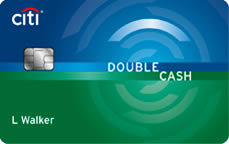
- You only need to pay attention to bonus rewards that are better than 2% back. Because you should be earning 2% or more with your general-purpose card, earning 2% on a bonus category is not particularly enticing. Only pay attention to cards that have category bonuses of 3% or more. Just remember, that depending on the type of points, a card that only earns 2x points, may be earning more than 3% in value.

As an example, the Hilton card’s 6x rewards on groceries sounds a lot better than the Amex’s Premier Reward’s 2x rewards. However, the Hilton points are worth around 2.7 cents per dollar, and the Membership Rewards points are worth around 3 cents per dollar. So, the 3x Membership Reward points is actually the more valuable reward rate. See more detail below.
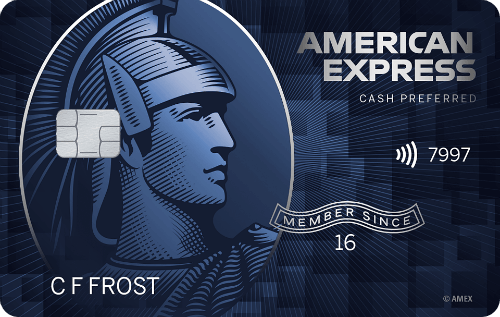
An example may make this clearer. The Amex Blue Preferred card offers an amazing 6% cash back on your first $6,000 worth of supermarket spending. If you spend $5,000 on groceries each year, you’ll earn $300 cash back. But the real added value of the card is lower. If you already have the Chase Unlimited combo, you could have used your Unlimited card to earn 7,500 Ultimate Rewards points on those same amount of purchases. If you value the Ultimate Reward points at 1.7 cents each, that works out to $130. The Blue Cash card only earns $170 in additional rewards. And, in order to earn those extra rewards, you’ll need to pay $95 per year, for the additional card.
The final net benefit works out to $75 per year, not the $300 you might earn in rewards. If you spend less on groceries, you will earn less in extra rewards. If you spend the full $6,000, you can earn slightly more.
When you are determining whether it makes sense to get a card for ongoing use, we recommend ignoring any waiver of the first-year’s annual fee . You are focusing on whether these cards make sense for the long run. The waived annual fee, is essentially just part of the signup bonus for the card, and doesn't affect the long term value proposition.
Even more importantly, there is a limit to how many credit cards you can collect during any span of time. You’ll get more value from focusing on good signup bonuses, rather than on increasing the rewards you earn directly from your spending. Concentrate on signup bonuses first, and worry about optimizing your reward rates later.

What type of points to focus on?
Before you can determine which cards to get for different spending categories, you need to make some decisions about which types of points to earn.
We display a "value" for the reward rate of every card, but that is calculated from a "base" value per point. But, depending on your plans and situation, these points can be much more valuable, or much less valuable, than the base values we use. The "real" value per point differs for each person, depending on how they expect to use their points, how much they spend each year, and how many points they already have. How Much are Points Worth?
- It is hard to go wrong with cards that earn Ultimate Reward points. If you have the Chase Sapphire Reserve card, you can use your points (like cash) to purchase a broad range of travel through the Chase website at 1.5 cents per point. You can easily get more value by using your points with Hyatt award nights and less-expensive Southwest Airlines tickets. And you leave open the possibility of getting much more value per point by transferring your points to one of Ultimate Reward's airline partners to use for frequent flyer tickets. Ultimate Rewards Guide.
- If you highly value business and first class award tickets, and have the ability and the patience to build up large quantities of points and find available award space, you should always try to earn as many "transferable" points as you can. You'll typically get 3 - 10 cents per point when you use your points to book business and first class frequent flyer tickets, so flexible credit card points that can be transferred to multiple frequent flyer programs are much more valuable than cash-back-like cards. Introduction to 'Transferable' Reward Points.
- If there is no good Ultimate Rewards option, you don't expect to use your points for premium-cabin award tickets, or you simply can't justify paying annual fees, you are usually best off with cash-back cards. It is hard to find opportunities to get good value from economy-class frequent flyer tickets. When airfares are high, award space is usually not available. When airfares are low, you would not be getting much value from your points. You are better off earning cash-like points that you can use to subsidize a very broad range of travel purchases, without needing to worry about finding award space, or sticking to the mainstream airlines and hotel chains.
- If you don't want to hassle with savings up huge quantities of points, and trying to find the relatively rare opportunities to get good value from frequent flyer tickets, Membership Rewards and ThankYou points are worth considerably less than our base values. For most trips, you can only expect to get 1 - 1.25 cents per point from Membership Reward or ThankYou points, so value them accordingly. Your opportunity to get more (on coach tickets) will require patience, flexibility, and/or luck.
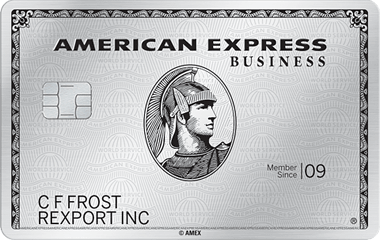
- If you've decided to make the Amex BUSINESS Platinum card part of your core credit card collection, Membership Rewards cards become a more attractive option (for people who don't expect to redeem for premium-cabin seats). You can use your points at 1.54 cents each to purchase airfare on your favorite airline. Membership Rewards Guide.
It is pretty safe to assume that you can easily get at least 1.5 - 2 cents in value from your Ultimate Reward points. As a result, if there is an Ultimate Rewards card that has good bonus category rates, it will generally earn more valuable rewards than other cards. The main obstacle is whether you are blocked from getting the Sapphire Reserve, or some of the other cards, by the Chase 5/24 rule. Dealing with the Chase 5/24 Rule.

In general, you should go with whichever transferable point option earns you the most transferable points per dollar, as each of the programs has a decent set of airline partners. If you are planning to redeem for premium-cabin frequent flyer tickets, the ability to get good value from Ultimate Reward's other redemption options doesn't provide any added value. Membership Reward's larger number of airline partners, occasional transfer bonuses, easier points accumulation, and ability to purchase additional points (if necessary), makes it the better option.
All other things being equal, given a choice, our preference for these types of points is Membership Rewards, Ultimate Rewards, and then ThankYou points.
The best cards for earning bonus rewards
The following cards are our normal recommendations for earning bonus rewards on different categories (in a rough priority order, which works for many people). You might already have one or two of these cards, based on their other benefits.
If you want to see some other options for each category, which might work better for your individual circumstances, make sure to view our “Best Options” guides.
Also, Doctor of Credit has good set of reference pages, and Frequent Miler has a webpage that provide relatively up-to-date information on the options for different bonus categories.
|
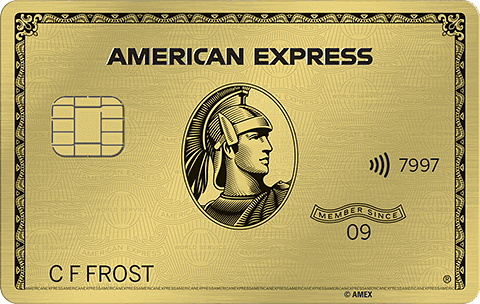
1. If you are comfortable earning Membership Reward points, you are going to want the Amex Gold card. It earns 4x Membership Rewards at US Restaurants and on your first $25,000 of US Grocery Store spending. Assuming you don't naturally spend $25,000 per year on groceries, you can purchase gift cards (at your Supermarket) to extend the 4x Membership Reward earning rate to other businesses. There are two downsides. In order to get good value from your Membership Reward points, you need to be able to use them for frequent flyer tickets. And the annual fee is a hefty $250 pr year, although it can be partially offset by a $100 airline incidental credit, and a $10/month credit that you can use several participating restaurant chains.
| |
|
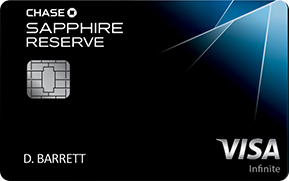
2. If you have the Sapphire Reserve card, it is the best option for travel spending, and often the best option for restaurant spending. If you are using the Chase Unlimited combination for your everyday spending, or you are getting the Sapphire Reserve for its valuable travel benefits, you will want to use it for your travel and overseas restaurant spending as well. For beginners, or anyone else who wants to avoid the hassles associated with redeeming for frequent flyer tickets, the Sapphire Reserve is the best option for all restaurant spending. It earns 3x Ultimate Reward points, valued at 5.1 cents per dollar, on these categories.
| |
|
3. Get the U.S. Bank Altitude Reserve card to earn 4.5% on every payment with mobile wallets, such as Apple Pay. Everyone can use the Altitude Reserve card to boost their rewards at many brick and mortar businesses, on purchases made through apps on your phone, and at an ever-increasing number of online stores. If you have many Samsung devices, you can earn bonus rewards from any business that uses a credit card swipe machine.
The Altitude Reserve is also a great option for travel purchases, for anyone who doesn't have the Sapphire Reserve or Citi Prestige cards. If you can't (or don't want to) get the Sapphire Reserve card, are not interested in the Citi Prestige Card, or don't want to accumulate any additional ThankYou points, the Altitude Reserve makes a great option for travel spending. It earns 4.5% on a broad range of travel purchases. $400 annual fee, but an automatic $325 travel credit brings the effective annual cost down to $75. Which Premium Reward Card is Right for You? | |
|
4. If you don't have the Sapphire Reserve card, and you are willing to deal with some complexity, get the Wells Fargo "combo". The Wells Fargo Propel card earns 3x GoFar points on restaurants, travel, gas, and streaming services. Normally, the points are only worth 1 cent each. But, if you also have the Wells Fargo Visa Signature card, you can use your points at 1.5 cents each to purchase airfare through Wells Fargo. This raises the effective bonus reward rate to 4.5% back on these categories, and you don't have to pay an annual fee for either card. However, you can only get one Wells Fargo card every 15 months, so it take some time to put this plan into action. Best Credit Cards for Restaurant Spending. Best Credit Cards for Travel Spending. Best Credit Cards for Gas Spending. An less complicated alternative is to get the Uber Credit Card. However, it only earns 4% on restaurants and 3% on travel. | |
|
5. If you have a business, get a small business card that earns good rewards for office supplies, telecommunications, and/or advertising services. Your best options are one of the Ink Preferred Card, Ink Cash Card, the First National Bank Business Edition Card, or the Amex SimplyCash Business Card. You are likely to be still be able to get one of these, even if your business is very small, or hasn't made any money yet. Unlock Extra Reward Points with Business Credit Cards | |
|
6. If you have one of the Chase Sapphire cards (or the Ink Preferred), get the Chase Freedom card as well, and take advantage of its rotating categories. The Freedom card normally earns 5% cash back on a set of rotating categories. However, if you have a Sapphire or Ink Preferred card as well, it earn 5x Ultimate Rewards points (that can be transferred to airline and hotel partners) instead, bringing the value up to 8.5 cents per dollar. While this card offers an amazing reward rate, it is limited to $1,500 in spending each quarter, within a specific schedule of categories defined by Chase. If you love getting 5%+ rewards, and can deal with the rotating category system, you can get the Discover it Card, as well. It works similarly but “only” earns the stated 5%, except during the first year, when your rewards are doubled.
| |
|
7. Consider getting one or more cards that earns extra reward for your retail purchases. The Blue Cash Preferred Card earns 3% back at department stores, the AT&T Access Card earns either 3 cents or 4.5 cents per dollar at online retailers, and the U.S. Bank Cash+ Card (and to a lesser extent the VantageWest Connect Credit Card, Huntington Voice Credit Card, and Synovus Travel Rewards Card) let you earn 5% back at your choice of different categories of stores (up to maximum of $2,000 spend per quarter). There are also rotating category cards, and individual merchant cards, that can be worthwhile for the right folks.
| |
|
8. Fill out your “quiver” with cards that optimize other categories. Besides the main bonus categories discussed above, there are specific cards that earn good bonus rewards in other categories and/or earn somewhat higher rates in specific categories that were already covered. For example, while the Sapphire Reserve and Citi Prestige cards offer the best rates on a broad set of travel purchases, the American Express Platinum card earns a higher rate on airfare. If you buy enough airplane tickets, it may be worthwhile to use the Platinum card for airfare purchases, and one of the other cards for your other travel purchases.
|





- Some Chase and Citibank cards earn less-flexible reward points, which can only be redeemed for 1 cent each, on things like gift cards.
- However, if you combine these cards with one of Chase’s or Citibank’s premium cards, you can redeem these points for full value—transferring them to airline or hotel programs, or getting a higher-than-normal value when you use them to purchase travel through the credit card company’s travel portal.
- Most often, the credit card company will advertise these cards as x% cash-back cards. But, the real earning rate can be significantly higher.
- For example, the points you earn from the Chase Freedom card are usually worth 1 cent each, but if you have a Sapphire or Ink Reserve card, you can convert them to 1 frequent flyer mile instead. Or, the points you earn from online purchases with the Citibank AT&T Access card are normally worth 2 cents per dollar, but if you have the Citi Premier or Prestige card, you can get use your points to get 2 airline miles instead.
Reward Combos
If you want to concentrate the types of points you earn, you can put together collections of cards in the same family.
| Ultimate Rewards |
Start with the Chase Unlimited combo:
Add some combination of the following three cards to bump up the Ultimate Reward points you earn.
There are no Ultimate Reward cards that provide bonus rewards for Groceries. Your best bet is to combine it with a the Blue Cash Preferred Card for 6% back on groceries, and 3% back on gas. |
| Membership Rewards |
If you are willing and able to use a business card, start with the Blue Business Plus Card for 2x Membership Rewards on any purchase. Otherwise, use the Everyday Preferred Card (and make sure to make 30 transactions per month) to earn 1.5x Membership Reward points on everyday purchases, and 4.5x on your first $6,000 of grocery store purchases, and 3x on gas. Then get the Amex Gold Card. You'll earn 4x Membership Reward points at US Restaurants and on your first $25,000 worth of US grocery store spending. If you are willing to make the extra effort, use any extra grocery store capacity to purchase gift cards and use them at other locations. If you can justify the annual fee, leverage the Amex Platinum Card for 5x on Airfare and pre-paid hotels booked through Amex Travel. You can bump up your rewards with the Amex Business Gold Rewards Card.
|
| Cash |
Start with one of Lua error in Module:Link at line 366: attempt to index field '?' (a nil value). for 2-3% on any non-bonus category purchases OR use the Chase Unlimited Combo for a minimum of 2.25% back on non-bonus categories and 4.5% back on Restaurants and Travel. Get the Altitude Reserve Card to earn 4.5% on Travel and Digital Wallet Purchases. This provides less incremental value if you are already getting 3x Ultimate Rewards on travel from the Sapphire Reserve card. Augment your rewards with one or more of the following cards:
|
Increasing your reward rate with gift cards (advanced)
The best reward rates differ wildly between categories. For example, the best regular reward rate for department stores is 3 cents per dollar, and the best reward rate for restaurants is about 6 cents per dollar, but it is possible to earn up to about 8 cents per dollar at grocery stores, and 9 cents per dollar at Office supply stores.
Furthermore, since most of the cards with the highest reward rates have annual fees, or other restrictions, the rates you can get with your actual collection of cards may be different.

One way to increase the rewards from your spending is to buy gift cards at a merchant where you earn high reward rates, and then use the gift cards at a merchant that offers lower reward rates. For example, if you can get 10 cents per dollar for gift cards at Office supply stores, you'll earn higher rewards by using those gift cards, rather than one of your other credit cards, whenever you can. Of course, buying, activating, carrying, and using gift cards requires extra effort.