Capital One Introduces a New Transferable Point Program and the Highest Signup Bonus of All Time

Capital One had a huge and unexpected announcement today. Starting in December, you'll have the option of transferring your Capital One "miles" to one of a dozen different airline programs, becoming the next major "transferable point" reward program. In addition, they introduced new, and potentially very valuable, signup bonuses for both the Venture and Spark cards.
With this change, the Capital One Venture card becomes a lot more interesting, and the Capital One Spark's signup offer becomes potentially the most valuable signup bonus of all time.
Jump to:
A new option for your Capital One points: Converting to frequent flyer miles
For years, the marketing message of the Capital One Venture Card was that it earned "miles" that you could use on any airline, without any blackout dates. Capital One tried to capitalize on the frustration that often accompanied trying to use frequent flyer miles to book award tickets.
But, the Venture Card was really just a cleverly disguised 2% cashback card (just one where you were limited to using your cash to "erase" travel purchases on your credit card bill). 2% wasn't bad, and you didn't need to spend a bunch of time learning how to use your points, or worrying about finding good frequent flyer opportunities. But, unlike real frequent flyer miles, or transferable currencies like Chase's Ultimate Rewards, you could never get more value from your points than 1 cent each.
All that has changed. Capital One now allows you to convert your "fake" Capital One miles into actual airline miles.
- Starting in December, the miles you earn from the Capital One Venture, Venture One, and Spark cards can be transferred directly to a any of a dozen frequent flyer programs. Capital One miles join Amex's Membership Rewards points, Chase's Ultimate Rewards points, and Citibank's ThankYou points as the latest valuable "transferable" reward currency. Introduction to 'Transferable' Reward Points.
- You'll receive 1.5 frequent flyer miles for every 2 Capital One "miles" you transfer. For example, if you transfer 40,000 Capital One miles to Air Canada's Aeroplan program, you'll wind up with 30,000 Aeroplan miles (which you can use to redeem frequent flyer awards on Air Canada, United Airlines, any other Star Alliance airline, or any of Air Canada's other partners). As of now, you can't transfer points you earn from other Capital One cards, such as the Savor card, just the ones that earn "miles".
- If you are going to transfer your points to airline miles, your base earning rate works out to 1.5 real airline miles per dollar. This is much better than the typical 1 mile per dollar you'd earn from an airline card. Ultimate Rewards offers the same earning rate with its Freedom Unlimited card, but only if you also have a Sapphire or Ink Preferred card. American Express offers the same earning rate with the Everyday Preferred card, but only if you always make at least 30 transactions per month. The Venture card is the only card that earns this many frequent flyer miles without any other caveats.
- Capital One's initial set of transfer partners is roughly comparable to Citibank's. Capital One is hoping to continue to expand the set of transfer partner (and so are we). It is still too early to know how quickly points will transfer to these programs, and whether Capital One will offer occasional transfer bonuses.
- Capital One still provides the option of using your points to "erase" any travel purchase at 1 cent each (2 cents per dollar spent). If you don't want to mess around with frequent flyer tickets, nothing has changed. You can still use your Capital One miles, at 1 cent each, to offset any travel purchase.
- Transferring your points to partners is a better deal than using them to purchase airline tickets, assuming you are getting more than about 1.33 cents per airline mile. For example, if you are booking an opportunity to book an award ticket on Delta for 25,000 Flying Blue miles, it would require 33,333 Capital One Miles. If the ticket costs more than $333.33 (1.33 cents x 25,000 Flying Blue Miles), it is cheaper to transfer the points. If it costs less than $333.33 it would be cheaper to purchase the ticket and use your miles to offset the purchase price. Of course, you have to make some adjustments for taxes and fees, miles earned, and any added change and cancellation flexibility.
- Our normal recommendation for the best credit card to use for your everyday spending is the combination of the Chase Freedom Unlimited and Sapphire Reserve card. This combination provides the best of both worlds, the ability to get good value from your points with easy redemption options, and the upside of getting more value from your points when you can find a good opportunity to redeem frequent flyer tickets.
- Capital One's new program offers the same one-two punch. You can get 2 cents per dollar without any effort. Or you can get 2 - 6 cents per dollar, or even more, when you find good opportunities to transfer your points to airline programs to redeem frequent flyer tickets. Like the Chase Unlimited combo, the Venture Card now allows you to get into the frequent flyer game, while still giving you a good way to cash out your points.
- However, at least for now, the Venture card isn't quite as good of an option as the Freedom Unlimited combo.
- If you are going to cash out your points, you'll get 2.25 cents per dollar from Chase, and only 2 cents per dollar from Capital One.
- With Chase, you can frequently get 3 cents or more per dollar by redeeming for Hyatt hotels nights, without much effort.
- And if you are going to convert to frequent flyer miles, Chase gives you a slightly better set of partners.
- Chase also has a better "suite" of cards that allow you to earn bonus rewards on a variety of categories.
| Star Alliance (United) |
SkyTeam (Delta) |
Oneworld (American) |
Other |
|---|---|---|---|
| Air Canada (Aeroplan) |
Air France / KLM (Flying Blue) | Cathay Pacific (Asia Miles) |
Etihad |
| Avianca | Alitalia | Qantas | Qatar |
| EVA Air | Aeromexico | Finnair | Hainan
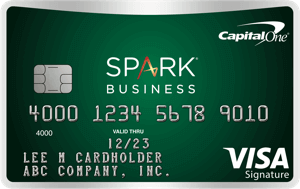
Template:Capital One Announcement/Table </ul> It is a great to have another option for using earning transferable reward points. Unfortunately, it is often very difficult to get approved for Capital One credit cards. They not only tend to reject anyone who has too many recent credit cards or inquires, they also often reject people who always pay their bills on time. They seem to prefer customers who they can charge extra fees and interest (and you don't want to be one of those customers). Potential new competition for the Freedom Unlimited Combo Even after you take advantage of its travel credit, the Chase Unlimited Combo has a higher annual fee ($150 vs $95). But, it comes with a set of benefits and high bonus category reward rates that make that worthwhile. So our general recommendation remains unchanged. But, if you strongly prefer having only a single card, the Venture card is probably now your best single option. And it is also a compelling option for anyone who can't get approved for the Chase Freedom Unlimited Combo, but is somehow able to get approved for the Venture card. Get a Great General Purpose Reward Card and Use It for All of Your Spending. New Venture signup bonusAs part of its announcement, Capital One is providing an increased signup bonus on the Venture card. You'll get 75,000 "miles" ($5,000 initial spend). That works out to $750 in reimbursed travel expenses, or 56,250 real airline miles (with the new transfer program). The highest ever signup offer of any cardFinally, Capital One announced new signup bonuses for the Spark business cards. The Spark Cash card is offering a $500 bonus ($3,000 initial spend) and the Spark Miles cards is offering 50,000 bonus miles ($5,000 initial spend). As a reminder, 50,000 Capital One miles is worth $500 in cash, or 37,500 in real airline miles.
What makes these offers special is that if you spend an additional $45,000 within the first six months ($50,000 total), you'll receive an additional $1,500 bonus with the Spark Cash card, or an additional 150,000 mile bonus on the Spark Miles card. In other words, if you can hit the full $50,000 spending requirement on the Spark Miles card, you'll receive a total of 200,000 bonus miles (plus the 100,000 miles for the spending). Just the bonus component is worth $2,000 in cash, or it can be converted into 150,000 airline miles with any of the dozen partner programs. Of course, not everyone can generate $50,000 in charges over the first six months. But, if you have a way to spend this much money, above and beyond whatever you need to continue to meet the signup bonuses on other new credit cards, this offer can be extremely lucrative. For example, many people can increase their credit card spending, assuming they are willing to pay some extra fees. You can pay your taxes for a fee of 2%, pay most other bills with for fee of 2.5% (with Plastiq), or generate extra credit card spending through manufactured spending techniques. At a fee of 2 to 2.5%, it would cost $1,000 to $1,250 to qualify for the full bonus, and earn a total of 300,000 Capital One miles. At 1 cent each, the miles would be worth $3,000. If you can get 2 cents of value per mile via a frequent flyer redemption, you can convert the 300,000 Spark miles to 225,000 frequent flyer miles, which would be worth $4,500. Template:Capital One Announcement/Main Template:Capital One Announcement/Page |